Let me be honest with you: when I first heard someone say that a church in the Volta Region was running a community science lab, I almost laughed. Not out of disrespect—but because the mental image just didn't compute. A church? Running a science lab? In Ho?
Then I visited Christ Embassy in Ho. And I had to sit down and rethink everything I thought I knew about faith communities and their role in rural development.
Here's what most people miss: faith communities in Ghana's Volta Region aren't just preaching salvation—they're quietly building the infrastructure for scientific literacy, environmental stewardship, and public health. And Christ Embassy? They're doing it in a way that should make the government take notes.
Let me walk you through how this actually works, because it's not what you expect.
The Lab That Defied Every Stereotype
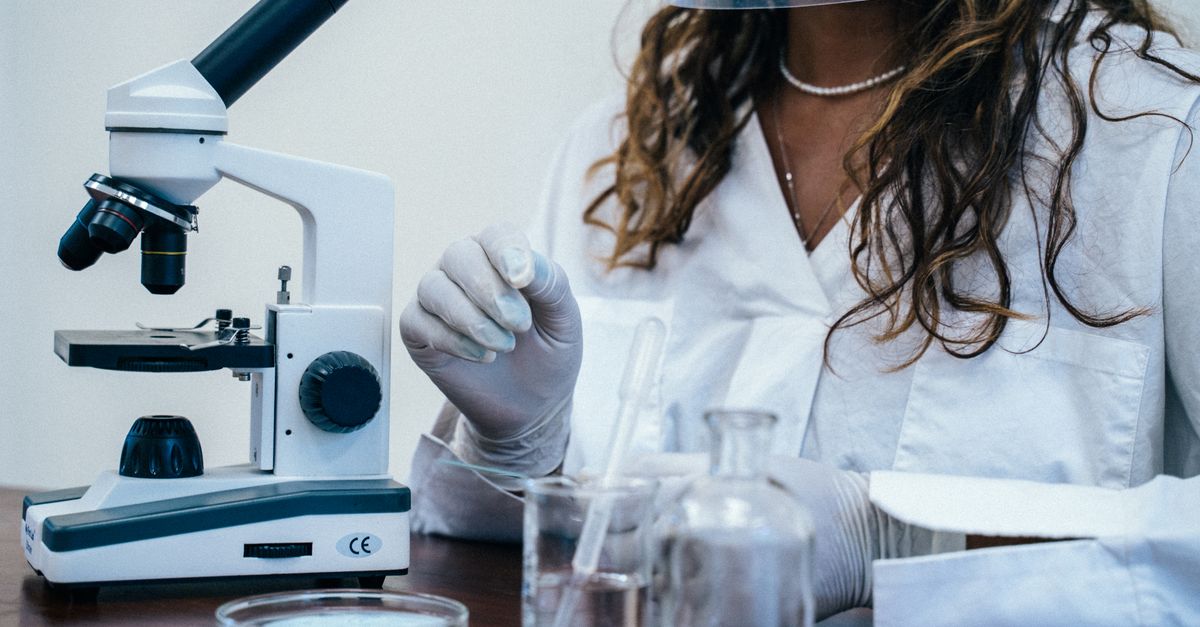
I'll never forget walking into the Christ Embassy Ho Zone community center for the first time. The building smelled like fresh paint and antiseptic—not incense. There were microscopes on tables, not Bibles. A young woman in a lab coat was explaining how to prepare a slide of onion cells to a group of teenagers who looked like they'd rather be anywhere else.
But they weren't bored. They were focused.
Here's the thing that shocked me: this wasn't a one-off event. It's a weekly program called "Science for Tomorrow," run entirely by volunteer professionals from the congregation—biologists, chemists, nurses, and even an engineer from the Volta River Authority.
I sat down with Pastor Emmanuel, the lead pastor of the Ho branch, and asked him point-blank: "Why science? Why not stick to what churches usually do—feeding programs, clothing drives, prayer meetings?"
He looked at me like I'd asked why water is wet.
"Look around Ho," he said. "The schools don't have functional labs. The government is doing what it can, but it's not enough. We have members who are doctors, pharmacists, professors. If they're not using their knowledge to serve the community, what's the point of being a church?"
That hit me hard. He's not wrong. The Volta Region has some of the lowest science pass rates in the country. The equipment in most public school labs is either broken or decades old. And here's a church stepping into that gap—not with preaching, but with pipettes.
The Hidden Connection Between Faith and Science Literacy
Let's address the elephant in the room: isn't there supposed to be tension between faith and science?
I used to think that too. But here's what I've found after spending time in communities like this: the conflict narrative is a Western luxury. In Ghana, people don't see evolution vs. creation as a battle. They see science as a tool—and faith as the reason to use that tool for good.
Christ Embassy's approach is surprisingly sophisticated. They don't try to "prove" the Bible with science. They don't teach intelligent design as an alternative to biology. Instead, they operate on a simple principle: God gave you a brain. Use it.
The "Science for Tomorrow" program has three main pillars:
- Practical Lab Skills – Students learn to use microscopes, prepare slides, conduct basic chemistry experiments. Things their schools can't afford to teach.
- Environmental Stewardship – The church runs a tree-planting initiative along the Volta River that's planted over 2,000 seedlings this year alone. They frame it as caring for God's creation—but the science behind soil conservation and watershed protection is rigorous.
- Health Literacy – Free blood pressure screenings, malaria prevention workshops, and nutrition talks. No altar calls. Just data and advice.
This is the kind of community science infrastructure that NGOs dream of building—but it's being done by a church.
Why the Volta Region Is the Perfect Testing Ground
Here's something most people outside Ghana don't realize: the Volta Region has one of the highest concentrations of educated professionals in the country. Doctors, engineers, academics—many of them return to their hometowns after training in Accra, Kumasi, or abroad.
But there's a gap. These professionals often feel disconnected from the community. They have skills, but no platform to share them. The churches, on the other hand, have the platform—but often lack the technical expertise.
Christ Embassy in Ho figured out the bridge: turn the church into a hub for practical skill transfer.
The numbers are telling. In the last two years, the program has reached over 400 students from 12 different schools in the Ho municipality. They've sent three students to national science competitions. One student—a young woman named Akua—got a scholarship to study biomedical engineering at KNUST after participating in the program.
"When I first came here, I didn't even know what a pipette was," Akua told me. "Now I want to design medical devices for rural hospitals."
That's not just a feel-good story. That's the kind of human capital development that changes regions.

The Environmental Work Nobody's Talking About
Let me shift gears for a moment, because this is where things get really interesting.
Christ Embassy's environmental initiatives in the Volta Region are, frankly, more ambitious than what most local government agencies are doing. They've partnered with the Volta Basin Authority on a water quality monitoring project that tests for contaminants in the river every quarter.
Wait—a church testing water quality? Yes.
Here's how it works: volunteers collect water samples from five points along the Volta River near Ho. They test for pH, turbidity, bacterial contamination, and heavy metals. The data is shared with the local health directorate and used to issue public warnings about unsafe water sources.
This is science in service of real human need. And it's happening because the church has the organizational structure and the trust of the community.
Pastor Emmanuel told me something that stuck with me: "Government officials come and go. NGOs change their priorities every funding cycle. But the church is here. We're not going anywhere."
That permanence matters. When you're trying to build long-term scientific capacity—whether it's water testing or teaching kids to use a centrifuge—you need institutions that won't disappear when the grant runs out.
Christ Embassy in Ho is proving that faith institutions can be exactly that: permanent, trusted, and scientifically literate.
The Surprising Role of Technology and Data
I'll admit, I was skeptical when I heard the church had a "data team." But then I saw their work.
They're using simple tools—Google Forms, WhatsApp groups, and a shared Google Drive—to track everything. Student attendance, test scores, health outcomes from their screenings, tree survival rates from the planting program.
This is data-driven community work, and it's effective.
For example, they noticed that attendance dropped during certain weeks. After analyzing the data, they realized it coincided with market days in Ho—when many families rely on older children to help sell goods. So they shifted the program schedule. Attendance went back up.
That level of responsiveness is rare in any organization, let alone a church.
They're also experimenting with citizen science projects—having community members collect rainfall data, report mosquito breeding sites, and track bird populations along the river. The data goes to the University of Ghana's ecology department.
Imagine if every church in the Volta Region did this. You'd have a distributed sensor network covering the entire region—run by volunteers who are motivated by their faith.
The Real Challenge: Sustainability and Scale
Let me be honest about the problems, because no good story is without them.
The program at Christ Embassy Ho runs entirely on volunteer time and donations. There's no major grant funding. The microscopes are second-hand, donated by a hospital in Accra. The chemicals for experiments are bought out of the pastor's pocket.
This is not sustainable at scale.
I asked Dr. Ama about this. She shrugged. "We do what we can with what we have. If someone wants to help us buy a spectrophotometer, I won't say no."
But here's the thing: the model works on a small scale. The question is whether it can be replicated. There are dozens of churches in the Volta Region with similar potential—educated congregations, community trust, empty rooms that could become labs.
What's missing is coordination and investment. If the Ghana Education Service or Ministry of Environment recognized what Christ Embassy is doing and supported it—even with small grants or equipment donations—the impact could multiply.
This isn't about faith vs. science. It's about using every available institution to solve real problems.

What This Means for the Future of Science in Ghana's Rural Communities
I've been writing about science and community development for years. I've seen the fancy labs in Accra. I've visited the well-funded NGO projects. But nothing has impressed me more than what I saw in Ho.
Not because the equipment is state-of-the-art—it's not. Not because the data is perfect—it's messy and incomplete.
But because the motivation is real. These people aren't doing science for a grant report or a publication. They're doing it because they believe their faith calls them to serve their community with the tools they have.
And the tools they have? They're good enough to change lives.
Akua, the student who got the scholarship, told me something on my last day: "Before this program, I thought science was for people in Accra. Now I know it's for me."
That's the kind of shift in mindset that no government policy can manufacture.
The Last Thing I Want You to Take Away
Here's my honest conclusion—and I don't use that word lightly:
Faith communities in the Volta Region are not a replacement for government or scientific institutions. But they are a powerful complement that we've been ignoring.
Christ Embassy Ho is proof that you don't need millions of dollars or a fancy university partnership to build scientific capacity. You need a willing congregation, a few professionals who care, and a leader who sees science as part of their spiritual mission.
If you're reading this and you work in development, education, or science policy: stop overlooking churches. They're already doing the work. They just need you to see it.
If you're reading this and you're part of a faith community: ask yourself what's sitting in your congregation. Is there a doctor who could teach health literacy? An engineer who could run a water quality test? A teacher who could show kids how to use a microscope?
The resources are there. The question is whether you'll use them.
I know where I stand. And after Ho, I'll never look at a church the same way again.