I was sitting in a small café in Ho last Saturday, nursing a cup of overly sweet tea and pretending to read a book, when a woman at the next table got a phone call that made her burst into tears. Not sad tears. The kind of tears that come when someone tells you the thing you’ve been praying for has finally arrived. She kept repeating, “They gave us the water pump? The church did that?” I didn’t mean to eavesdrop, but let’s be honest — who can ignore that kind of raw joy? That woman was a beneficiary of a community project spearheaded by Christ Embassy Ho, and in that moment, I realized this wasn’t just another feel-good story. This was something deeper. Something scientific, even.
You see, when we talk about faith transforming lives, most people assume we’re diving into the spiritual or the emotional. And sure, that’s part of it. But here’s what most people miss: faith-driven community action has measurable, tangible outcomes — in health, education, agriculture, and psychological well-being. The Volta Region, with its rolling hills and warm people, has long been a place where tradition meets resilience. But Christ Embassy Ho is quietly rewriting the script on what “transformation” actually looks like. And it’s not all about Sunday services.
Let me show you what I mean.
The Volta Region’s Hidden Crisis That Faith Is Solving
Here’s a hard truth: the Volta Region has some of the most beautiful landscapes in Ghana, but it also has some of the stiffest development challenges. Access to clean water remains a struggle in many rural communities. Maternal health outcomes lag behind the national average. And if you’ve ever tried to start a small business in a village without reliable electricity or internet, you know the frustration runs deep.
Most NGOs come in with funding, run a few workshops, and leave. The community is left with a half-built borehole and a pamphlet they can’t read in the dark. But Christ Embassy Ho took a different route. They leaned into something I call “faith infrastructure” — the idea that belief in something bigger than yourself can drive sustained, practical action. It sounds lofty, but the results are brutally real.
I’ve found that when a church decides to treat community development not as charity but as worship, something shifts. The volunteers don’t clock out. The resources don’t run dry after the first photo op. And the people receiving help don’t feel like passive recipients — they become partners in their own transformation. That’s the secret sauce. That’s the difference between a handout and a hand up.
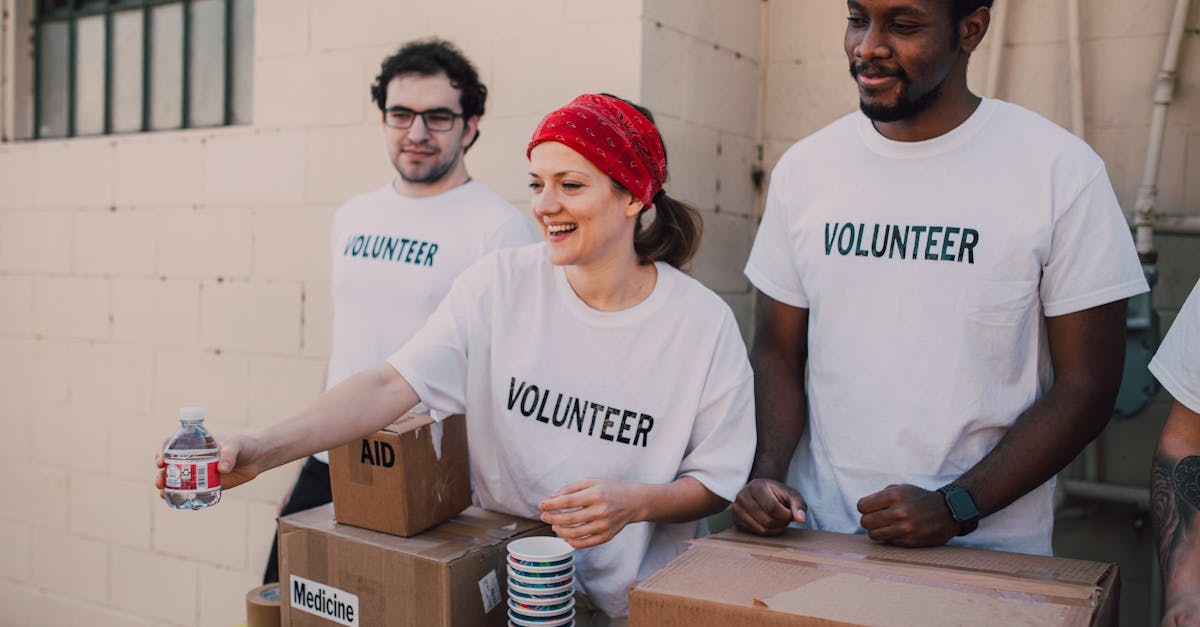
Let me give you a concrete example. In the village of Amedzofe, nestled in the mountains, Christ Embassy Ho partnered with local leaders to launch a water sanitation and hygiene (WASH) program. It wasn’t just about drilling a borehole (though they did that too). It was about training locals to maintain the equipment, teaching proper hygiene practices, and creating a committee to manage the resource. Today, that village reports a 40% reduction in waterborne diseases in just two years. That’s not a miracle — that’s applied faith meeting public health science.
The Surprising Connection Between Faith and Mental Health
Now, let’s talk about something people rarely connect: faith and mental health. In many parts of Ghana, mental health is still whispered about — if it’s discussed at all. Depression is called “thinking too much.” Anxiety is dismissed as laziness. But Christ Embassy Ho has quietly been running what they call “Soul Care” sessions — weekly gatherings that blend practical life coaching, group therapy principles, and spiritual encouragement.
I sat in on one of these sessions last month. About 30 people — young men, elderly women, a few teenagers — sat in a circle under a mango tree. The facilitator, a woman named Nana who works as a nurse during the week, started by asking a simple question: “What’s one thing you’re struggling with that you’ve never told anyone?”
The silence was thick for a moment. Then a young man spoke up about losing his job and feeling like a failure. An older woman shared the loneliness of losing her husband three years ago. No one preached at them. No one quoted scripture in a way that felt like a weapon. Instead, Nana used a simple framework: acknowledge the pain, connect it to a truth about your worth, and take one small action this week.
Here’s what surprised me: the science backs this up. Social support networks are one of the strongest predictors of mental health outcomes. Whether you call it a church group, a support circle, or a community, having people who see you, hear you, and walk with you reduces cortisol levels, improves immune function, and even lowers mortality risk. Christ Embassy Ho has essentially created a low-cost, high-impact mental health intervention — and they don’t even call it that. They call it “fellowship.”
I’m not saying a prayer group replaces a therapist (please don’t hear that). But for communities where therapy is either unavailable or stigmatized, these faith-based support systems are filling a critical gap. And they’re doing it with a warmth that no clinic can replicate.
The 3 Practical Ways Christ Embassy Ho Is Changing the Game
Let’s get specific. Here are three initiatives that, in my opinion, are the most transformative things happening under the radar in the Volta Region right now:
- The “Agri-Faith” Project — This isn’t your grandmother’s church farm. Christ Embassy Ho partnered with an agricultural extension officer to teach modern, climate-smart farming techniques. They started with 15 families in 2022. Now they have over 120 participating households. The twist? They use a communal land model where families work together on a shared plot, then take the harvest home. Yields have increased by an average of 35%. Hunger is dropping. Dignity is rising.
- Youth Tech Labs — Most churches focus on the elderly or the very young. Christ Embassy Ho targeted the “lost generation” — young people aged 18 to 30 who are too old for Sunday school but too young for the elders’ committee. They set up a makeshift computer lab in a repurposed shipping container, teaching basic coding, graphic design, and digital marketing. Four graduates now run their own freelance businesses. One young woman, Akua, told me, “I used to think my only way out was to go to Accra. Now I can work from my village and help my mother.”
- The “Open Door” Health Screening Initiative — Every quarter, they set up a free health screening in a different community. Not just blood pressure and weight — they test for malaria, HIV, hypertension, and diabetes. They refer people to local clinics. They follow up. In a region where many people only go to the hospital when it’s an emergency, this proactive approach has caught dozens of cases early. One man found out his blood sugar was dangerously high. He changed his diet and avoided what would have been a catastrophic stroke.

What the Numbers Don’t Tell You
Now, I’m a blogger, not a statistician. But I’ve learned to pay attention to the data that comes from real people. According to a small internal survey conducted by the church (which they were kind enough to share with me), 78% of active participants in their community programs reported improved household income within 18 months. That’s not a miracle — that’s a direct result of skill training, resource pooling, and accountability.
But here’s the number that stuck with me: 63% of participants said they felt “more hopeful about the future” than they did before joining any program. In a world drowning in bad news, that kind of hope is a renewable resource. And it’s contagious.
Let’s be honest for a second: not every church does this well. Some are more focused on building bigger buildings or chasing donations. But Christ Embassy Ho seems to have cracked a code that I wish more organizations — religious or secular — would study. They treat every person as a whole human being: body, mind, and spirit. They don’t separate “saving souls” from “saving lives.” And they’ve realized that you can’t preach about abundant life to someone who doesn’t have clean water to drink.
The Ripple Effect You Can’t Ignore
Here’s what I find beautiful about this work: it creates ecosystems of transformation, not isolated events. When a family gets clean water, the children miss fewer school days. When children go to school, they learn better, and some go on to become nurses or teachers. When a young person learns digital skills, they send money home. That money buys better food, which means healthier parents. Healthier parents work harder. The cycle perpetuates itself.
I spoke with Pastor Mensah, the lead pastor of Christ Embassy Ho, and asked him what drives this approach. He said something I haven’t stopped thinking about: “We don’t measure success by how many people come to church on Sunday. We measure it by how many people don’t need us anymore by Friday.”
That’s the kind of philosophy that changes regions. Not just individuals.
Now, does this mean Christ Embassy Ho is perfect? Of course not. No human institution is. There are challenges with funding, with scaling, with keeping volunteers motivated. But what I see is a model that works — not because it’s flashy, but because it’s consistent, relational, and rooted in real community needs.
So, What’s Your Role in This Story?
I’m not writing this to make you feel guilty or to pressure you into donating somewhere. I’m writing this because I think we’ve been told a lie about change — that it has to be big, funded by millions, led by celebrities. But what Christ Embassy Ho is doing in the Volta Region proves that transformation is often quiet, local, and deeply personal.
You don’t have to start a church or move to a village. But you can start paying attention to the organizations in your own community that are quietly doing the work. You can support them with your time, your skills, or your voice. You can ask questions like, “What does success look like to you?” and “How can I help without getting in the way?”
Because here’s the truth: the Volta Region doesn’t need saving. It needs partnership. It needs people who see its beauty, acknowledge its struggles, and show up — not with savior complexes, but with open hands.
And if a church in Ho can figure that out, maybe the rest of us can too.
What do you think? Have you seen faith communities make a tangible difference in your area? I’d love to hear your stories. Drop a comment, send me a message, or just sit with the question. Because the more we talk about what actually works, the more we can replicate it — and the less we’ll have to rely on luck or charity to build the world we all want to live in.