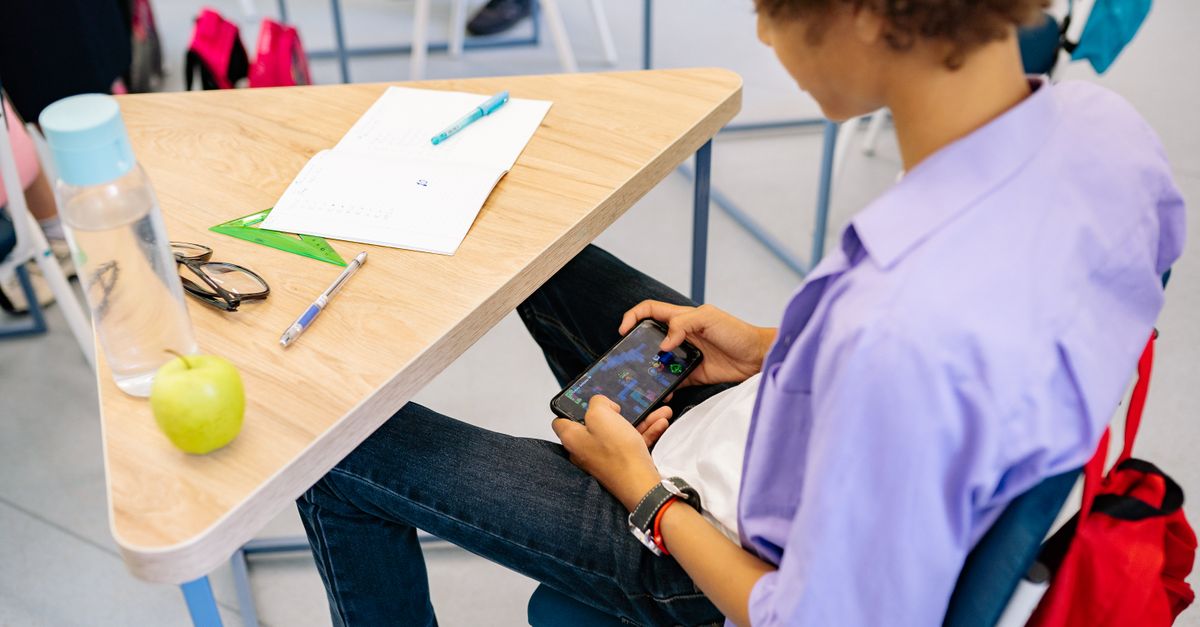
Let me tell you something that might sound a little crazy: I’ve seen a room full of teenagers voluntarily solve math problems for 45 minutes straight, and it wasn’t because they were bribed with extra credit. It was because they were playing a game.
I know, I know. “Gamification” has become one of those buzzwords that gets tossed around like confetti at a tech conference. But here’s the truth: when done right, gamification in classrooms isn’t just a gimmick. It’s a psychological superpower.
We’ve all been told that attention spans are shrinking, that students are glued to their phones, and that traditional lectures are about as exciting as watching paint dry. But what if the problem isn’t the students? What if it’s the way we deliver the content?
Let’s break down why learning through play is actually boosting student engagement in ways that homework and pop quizzes never could.
Why Your Students Check Out (And How Games Fix It)
Let’s be honest for a second. How many times have you been in a classroom — either as a student or a teacher — where the room feels like a library at 3 AM? Eyes glazed over. Heads down. The only sound is the clock ticking and someone nervously clicking a pen.
The issue isn’t laziness. The issue is a lack of intrinsic motivation. When students see a worksheet, their brain screams: “This is work. This is punishment.” But when they see a progress bar, a leaderboard, or a level-up notification? Their brain lights up like a pinball machine.
Here’s what most people miss: Gamification taps into the brain’s reward system. It triggers dopamine release — the same chemical that makes you feel good when you check off a to-do list or win a round of Mario Kart. When students earn points for answering a question correctly or unlock a “badge” for finishing a challenging module, they’re not just learning. They’re playing.
And let’s be real: humans are wired to play. We learn faster, remember longer, and actually enjoy the process when it feels like a game.
The 3 Pillars of Classroom Gamification (That Actually Work)
I’ve experimented with gamification in my own classroom, and I’ve seen what works and what flops. You can’t just slap a “points system” on a boring lecture and call it a day. That’s like putting a racing stripe on a broken car.
Here are the three pillars that actually move the needle:
- Immediate Feedback Loops — In a traditional classroom, you hand in a paper and wait three days for a grade. In a gamified classroom, you know instantly if you got it right. That instant feedback keeps students engaged because they don’t have to wonder. They know.
- Visible Progress — Nothing kills motivation faster than feeling stuck. Gamification uses progress bars, experience points (XP), and levels to show students that they are moving forward. Even if they fail a question, they see that they’ve earned XP for trying. Failure becomes data, not defeat.
- Autonomy and Choice — Most classrooms are dictatorships. The teacher decides everything. Gamification gives students choices: “Do you want to take the quiz, or do you want to complete the side quest for bonus points?” Suddenly, they feel in control. And when students feel in control, they invest.

The Surprising Subjects Where Gamification Shines (Hint: It’s Not Just Math)
You might think gamification only works for drill-and-kill subjects like math facts or vocabulary. But that’s where you’re wrong.
I’ve seen history classes transformed into full-on Assassin’s Creed style quests where students “unlock” historical documents by completing research challenges. I’ve seen English teachers turn essay writing into a Dungeons & Dragons style campaign where each paragraph is a “level” and the conclusion is the “final boss.”
*The secret? Gamification works best when it’s thematically integrated. Don’t just add points to a grammar lesson. Turn the entire semester into a space exploration mission. Each unit is a planet. Each test is a launch sequence. Each homework assignment is a fuel refill.
Here’s the kicker: It doesn’t require expensive software or a computer lab. I’ve seen teachers use simple paper progress charts, sticker badges, and a class-wide “leaderboard” drawn on the whiteboard. The technology is just the icing. The game thinking is the cake.
But Wait — Does Gamification Actually Improve Learning?
This is the million-dollar question, right? Because we’ve all seen fads come and go. “Oh, we’re doing flipped classrooms now?” “Wait, now it’s project-based learning?”
The research is actually solid. A 2020 meta-analysis published in the Journal of Educational Psychology found that gamification significantly improved student motivation, engagement, and even academic performance — when implemented correctly. The key? It needs to be meaningful. If the game elements feel arbitrary or disconnected from the content, students see through it faster than a bad Netflix plot twist.
I’ve found that the best gamified classrooms don’t just add points. They add meaning. When a student earns a “Mastery Badge” in fractions, it’s not just a digital sticker. It’s a symbol that says: “I conquered something hard.” That feeling is addictive.
And here’s the part no one talks about: Gamification also reduces anxiety. Think about it. In a traditional quiz, getting a question wrong feels like a failure. In a game, getting a question wrong just means you respawn and try again. The stakes are lower. The pressure is off. And when the pressure is off, real learning happens.

The Hidden Trap: When Gamification Backfires
I’d be lying if I said it’s all sunshine and leaderboards. There’s a dark side to gamification that most bloggers don’t tell you about.
The trap is over-justification. When you over-reward students with points and badges for every single action, they stop caring about the learning. They start caring about the points. It’s the difference between playing a game because it’s fun and playing a game because you’re addicted to the loot box.
If you’re not careful, you can turn a classroom into a dopamine casino where students only engage when there’s a shiny reward waiting. That’s not education. That’s exploitation.
The fix? Use gamification to spark curiosity, not to replace curiosity. The points should be the seasoning, not the meal. If a student asks, “What do I get for finishing this module?” you’ve probably gone too far. The real win is when they ask, “What happens next?”
How to Start Tomorrow (Without Buying a Thing)
You don’t need a budget. You don’t need coding skills. You don’t need a classroom full of iPads.
Here’s a simple three-step plan to start gamifying your classroom tomorrow:
- Step 1: Pick one unit. Don’t try to gamify your entire year. Choose one topic that students usually find boring (looking at you, grammar and algebra).
- Step 2: Add a narrative. Give the unit a theme. “The Great Grammar Heist.” “Operation: Solve for X.” Make it sound like a mission, not a lesson.
- Step 3: Add one game mechanic. Start with XP points for participation. Or a class-wide progress bar. Or a “power-up” that lets students skip one homework assignment.

The Bottom Line: Play Is Not the Enemy of Learning
Here’s my final thought, and I mean this from the bottom of my heart: We’ve been lied to about what learning looks like.
Somewhere along the way, we decided that learning must be serious, quiet, and a little painful. That if students are laughing, they’re not learning. That if they’re having fun, they’re wasting time.
But I’ve seen the opposite. I’ve seen students stay after the bell to finish a “game.” I’ve seen them argue about who got the highest score on a quiz — not because they wanted to brag, but because they wanted to prove they understood the material*.
Gamification isn’t about turning education into a circus. It’s about remembering what we already knew as kids: learning is supposed to be fun. The question is whether we have the courage to let it be.
So go ahead. Try it. Start small. See what happens.
And if a student asks you, “Wait, are we learning or playing?” — just smile and say, “Both.”





