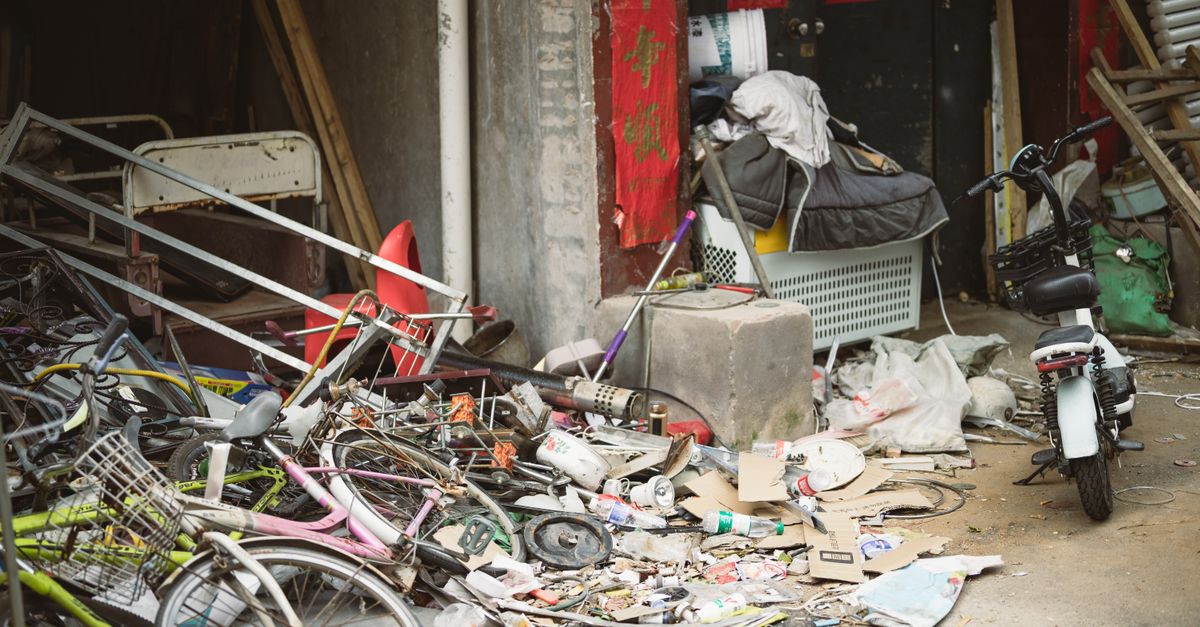
I used to have a drawer that I couldn't close. Not because it was broken — because it was full of stuff I hadn't touched in four years. Old charging cables for phones I no longer owned. Takeout menus from restaurants that had closed. A single glove. Just one. I kept it "in case I found the other one," which, let's be honest, was never going to happen.
Sound familiar?
That drawer was a tiny version of a much bigger problem. My entire home was full of things I kept for reasons I couldn't defend. So I tried something drastic, and honestly a little terrifying: the One-In-One-Out rule for 30 days. It didn't just change my home. It completely rewired how I think about owning anything at all.
The Rule That Sounds Too Simple to Actually Work
Here's the deal. Every time something new comes into your home, something else has to leave. One in, one out. That's it. No 40-gallon trash bags, no dramatic Netflix-style purge weekend, no motivational playlist required.
I know what you're thinking. That's it? That's the whole rule?
Yes. And that simplicity is exactly why it works. Most decluttering advice fails because it demands a massive, exhausting upfront effort. You spend a Saturday in a frenzy, fill your car with donations, feel amazing for a week — then slowly fill the house back up because you never changed the behavior. The clutter always comes back when the system that created it stays the same.
The One-In-One-Out rule flips that. It's not a cleanup. It's a maintenance habit — like flossing, but for your house.

Week One Was Genuinely Uncomfortable
I want to be honest about this part, because most articles about decluttering skip it. The first week felt awful.
Day three, a package arrived — a new pair of running shoes. Great, right? Except now the rule kicked in. I had to pick something to remove. I stood in my closet for twenty minutes holding a pair of old sneakers like they were a childhood pet. I'd worn them maybe twice in two years. But getting rid of them felt like losing money.
Here's what most people miss: the discomfort isn't about the object. It's about the money you already spent. You're not grieving the sneakers. You're grieving the $120 you wasted.
Once I named that feeling, it lost most of its power. The money was gone whether the shoes sat in my closet or not. Keeping them didn't recover a single dollar — it just cost me space, attention, and a little bit of peace every time I opened that door.
By day seven, something shifted. I started looking at new purchases differently. Before adding anything to my cart, I'd ask: What's leaving if this comes in? Half the time, the answer was "nothing I'm willing to give up." And just like that, the purchase died in the cart.
The Hidden Cost of Everything You Own
Let's talk about the number nobody wants to do the math on.
Every object in your home charges you rent. Not in cash — in attention. It needs to be stored, cleaned, moved, insured, organized, and eventually dealt with. A $30 blender that you use twice a year isn't a $30 blender. It's a $30 blender plus a decade of mental overhead.
I've found that modern homes aren't cluttered because people are lazy. They're cluttered because buying is frictionless and discarding is emotionally expensive. One-click checkout takes two seconds. Deciding what to let go of takes an afternoon of guilt. The system is rigged against you, and it's not your fault.
The One-In-One-Out rule levels the playing field. It adds friction exactly where you need it — at the point of entry.

How to Actually Run the 30-Day Experiment
Don't overthink this. Here's the exact framework I used:
- Pick your boundary. I chose the whole house, but you can absolutely start with one room or even one category — clothes, kitchen gadgets, books. Smaller boundaries are easier to defend.
- Define "in." Anything physical that enters permanently counts: purchases, gifts, freebies, mail you decide to keep. Consumables like food and toiletries don't count, or you'll drive yourself insane.
- Choose your "out" immediately. Don't wait. The moment something new arrives, pick what leaves. Same day. This is the whole trick.
- Have a holding zone. I used a single laundry basket by the front door. Everything "out" went there, and I dropped it at a donation center every Sunday.
- Track it. I kept a note on my phone. By day 30, I'd removed 61 items. Sixty-one. From a home I thought was already "pretty organized."
The Part That Surprised Me Most
Around week three, the rule stopped being about stuff.
I started applying it to my calendar. New meeting request? Something else has to come off the schedule. My phone? New app downloaded, an old one gets deleted. Even my email inbox got the treatment — every subscription added meant one had to go.
That's when I realized the One-In-One-Out rule was never really a decluttering hack. It's a decision-making filter. It forces you to confront the trade-off that's always there but usually invisible. Nothing in life is truly free — not the shoes, not the app, not the Tuesday night commitment you said yes to out of politeness.
Let's be honest: most of us aren't drowning in things we love. We're drowning in things we tolerated, accepted, or forgot to say no to.
Thirty Days Later, My Home Felt Different — and So Did I
The drawer closes now. That sounds like a small thing, and it is. But small things stack.
I'm not going to pretend my house looks like a magazine spread. There's still a stack of books by my chair and a box of cables I'm weirdly attached to. I'm a work in progress, not a minimalist influencer.
But the baseline has changed. My home has a calm to it that wasn't there before — not because it's empty, but because everything in it has earned its place. Nothing is here by accident. Nothing is here out of guilt.
So here's my challenge to you. Don't plan a big purge. Don't buy the storage bins. Just try the rule for one week. Buy one thing, remove one thing. See how it feels.
Then ask yourself the question that changed everything for me: if everything in your home had to justify its spot today, what would you be saying goodbye to?
You probably already know the answer. The drawer does too.





