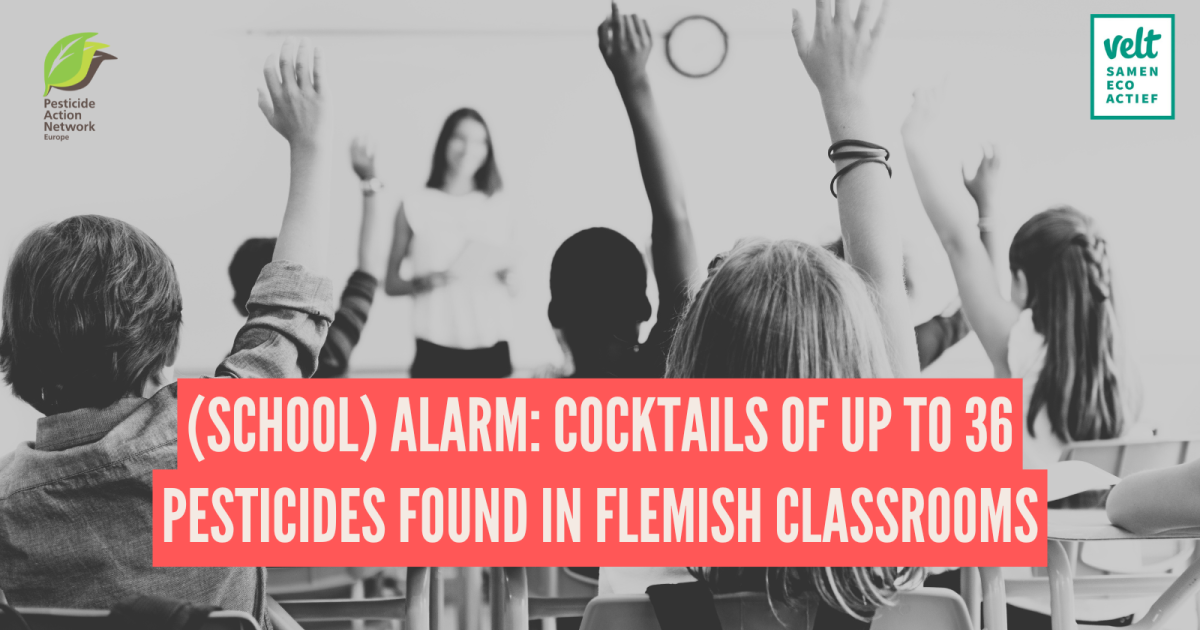
Dust collected from ten primary school classrooms across Flanders contained 63 different pesticides, with an average of 18 per room and as many as 36 in two of them, according to a report published on 22 October by Velt, the Flemish Association for Ecological Living and Gardening, which is a member of the NGO network PAN Europe. The organisation describes the study as the first pesticide research ever carried out inside European schools.
Samples were taken from classrooms in all five Flemish provinces and analysed in an accredited laboratory for 540 pesticide residues, Velt reports. The findings appear in its new publication, Pesticides at school: exploratory research.
Why it matters
Children spend much of their week in classrooms, and the report argues that their developing bodies respond more sharply to toxic chemicals than adults do. Geert Gommers, a pesticide expert at Velt, called the results perplexing and said children are especially sensitive to the harm these substances can cause, according to PAN Europe's summary of the report.
The group also points to a wider pattern: earlier research has detected pesticide mixtures in homes, including bedrooms, so children may be exposed at school, at home and outdoors without any break. PAN Europe says no risk assessment currently covers continuous exposure to pesticide cocktails through house dust.
Hazardous properties and a banned fungicide
According to the report, most of the substances identified are classed as hazardous to human health. Close to one-third have endocrine-disrupting properties, about 19% are toxic to reproduction and roughly 16% are neurotoxic, based on the University of Hertfordshire's PPDB and BPDB databases. Velt notes that these shares would rise if effects described as "possible" were counted too.
PAN Europe stresses that hormone-disrupting pesticides can cause harm at very low doses, which means no safe concentration can be set. EU law requires such substances to be withdrawn once they are identified as endocrine disruptors, yet the group says they keep reaching the market while Brussels and national governments repeatedly delay phasing them out.
Among the compounds detected at the highest concentrations were propiconazole, captan, dodine, tebuconazole and permethrin. Propiconazole was banned in agriculture in 2020 over reproductive toxicity, endocrine effects and groundwater contamination by its metabolites, while captan, used in fruit orchards, is described as endocrine-disrupting and carcinogenic. Permethrin is no longer permitted for crop protection because of risks to biodiversity and human health, including neurotoxicity, but remains authorised as a biocide.
The report also lists six triazole fungicides, a group with particularly dangerous profiles that include reproductive toxicity and carcinogenic effects. Their breakdown products contribute to serious water pollution, and heavy use is linked to rising cases of resistant fungal infections such as Aspergillus fumigatus. Many triazoles are designated Candidates for Substitution, yet member states have not replaced them despite alternatives being available, according to PAN Europe.
Twelve of the 63 pesticides are PFAS pesticides, flagged for their toxicity and persistence. Their metabolite trifluoroacetic acid (TFA) is classified in the EU as toxic to reproduction and is described as very persistent and very mobile, spreading through European waters. Campaigners have called repeatedly for PFAS pesticides to be banned.
Policy fight over EU rules
Kristine De Schamphelaere, a policy officer at PAN Europe, said it is unacceptable for children to spend hours learning and playing among cocktails of toxic pesticides, and criticised member states for failing to protect them. She also warned that the EU is now moving to weaken pesticide rules and ignore fresh scientific evidence.
The report singles out the European Commission's Omnibus X proposal, which PAN Europe says would remove periodic toxicity reviews for many pesticides, set aside the latest science and keep banned substances on the market for longer.
Velt links the classroom findings to farming nearby. Available data show that proximity to treated fields is an important factor in whether pesticides turn up in indoor dust, the report states. The Sustainable Use of Pesticides Directive obliges member states to shield the public, vulnerable groups such as children, water and nature from exposure, but PAN Europe says those obligations are not being implemented. De Schamphelaere argued that the absence of non-sprayed buffer zones near residential areas is producing exactly these results.
The study echoes a 2022 UNICEF report that placed Belgium among the EU countries where children face the greatest exposure to hazardous pesticides, and PAN Europe cites more recent research confirming high exposure of Belgian children to neurotoxic insecticides.
The organisation is calling for tighter risk assessment and authorisation frameworks rather than looser ones, and joins scientists, the UN, health bodies and civil society groups in arguing that safer farming alternatives should be scaled up.
Watch whether the European Parliament and member states amend the Omnibus X text on periodic toxicity reviews, and whether Flanders introduces buffer zones or other measures to keep spray drift away from schools.





