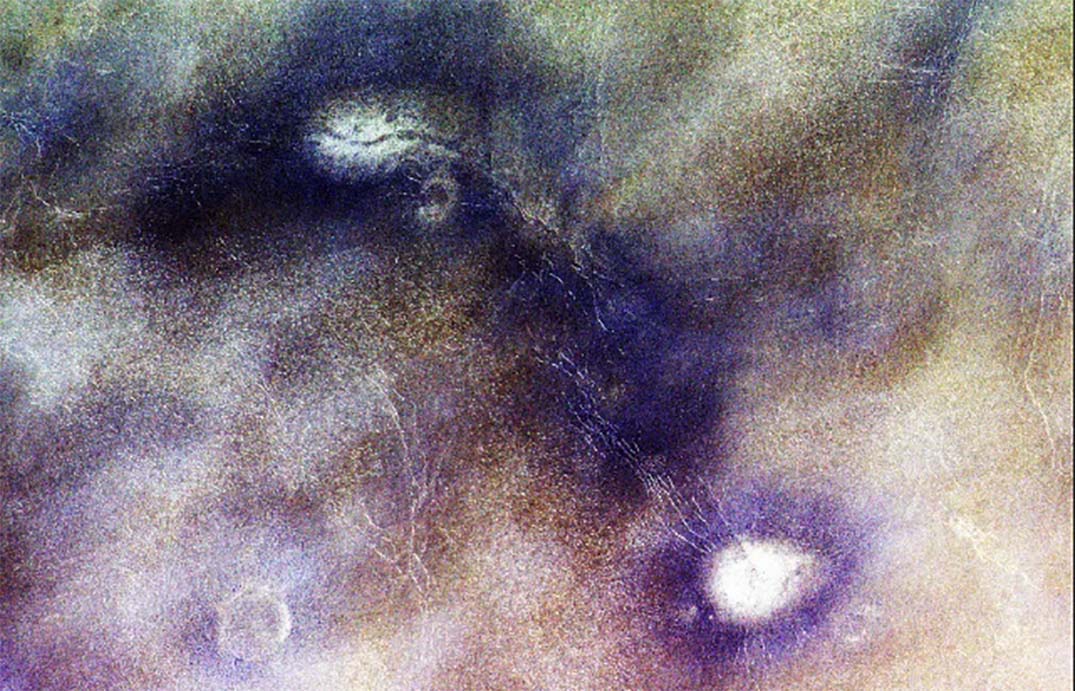
An international research team has concluded that spikes of hydrogen chloride detected above volcanic fissures on Mars most likely come from hot magma beneath the surface, pointing to dormant rather than extinct volcanism. The work, published in Science Advances and led by Alexander Trokhimovskiy, draws on atmospheric and geological data from the European Space Agency's ExoMars Trace Gas Orbiter (TGO). IT-Online reports the findings.
The gas was first identified in the martian atmosphere by TGO in 2021. Because hydrogen chloride commonly escapes from magmatic vents on Earth, scientists began asking whether a similar process was at work on Mars.
Why it matters
The result challenges the picture of Mars as a geologically finished world. Daniel Mège, a professor at the Space Research Centre of the Polish Academy of Sciences and a co-lead author of the paper, said the findings indicate Mars has held on to enough internal heat to sustain volcanic activity until recently, and perhaps still does.
The implications reach beyond geology. The team suggests that magmatic gases such as hydrogen chloride may have been more plentiful in the past, feeding a denser atmosphere and a warmer climate that could have allowed liquid water to spread across much of the planet. If lava moving through the crust encounters groundwater, the result could be warm niches where life might take hold.
A seasonal signal in the wrong season
On Mars, hydrogen chloride follows a seasonal rhythm. It peaks during northern hemisphere winter and largely vanishes in summer, a pattern that appears tied to the planet's dust and water cycles.
The team found one exception: a recurring spike in the same place and the same season, above volcanic fissures on the flanks of Alba Mons, in early northern summer. The detection was strongly localised in space and timed just after winter frosts sublimate, according to the reporting. TGO's Atmospheric Chemistry Suite, using infrared spectrometers, made the measurement.
Follow-up observations with the orbiter's CaSSIS camera revealed fresh, narrow fissures in the Alba Mons region, some hundreds of metres long, accompanied by colour changes on the surface.
Mège described the detection as a smoking gun and compared the search to finding a needle in a haystack, noting that the orbiter picked out a handful of molecules from a possibly intermittent source while continuously moving along its orbit to monitor the whole martian atmosphere.
Fumaroles, ice and a buried plumbing system
The researchers propose that magmatic gases rise through the fissures in a manner resembling fumaroles on Earth. During winter, temperatures on Mars fall to about -120°C, and ice would block the openings. As that ice sublimates in early summer, the fissures would release chloride.
The discolouration around the fissures may be residue left by gases escaping from the planet's interior, similar to deposits found around volcanic gas vents on Earth. The team links the seepage to a dormant magma chamber — a volcanic plumbing system beneath the surface.
Mège said the spatial distribution of the seeping gas made a volcanic origin immediately apparent to him, but that it still had to be demonstrated. A large share of the work, he added, involved examining every possible chemical process in the martian atmosphere, requiring rigour, criticism and creativity to account for the hydrogen chloride.
Mars hosts the largest volcanoes in the Solar System, though how active they are remains uncertain. Orbital imagery shows some volcanoes appear to have erupted within the last few million years, and seismometers have recorded marsquakes.
Mège said searching for martian life in the seeping fissures of the Alba Mons region would make considerable sense. Active hydrothermal systems, he suggested, could hold the ingredients and energy microorganisms need, and could shelter them from the harsh and shifting conditions above the surface.
Colin Wilson, ESA's project scientist for the ExoMars Trace Gas Orbiter, said the findings may prove to be the mission's greatest success yet.
Watch for follow-up observations of the Alba Mons fissures and for further analysis of whether the gas releases recur on the same seasonal schedule.





