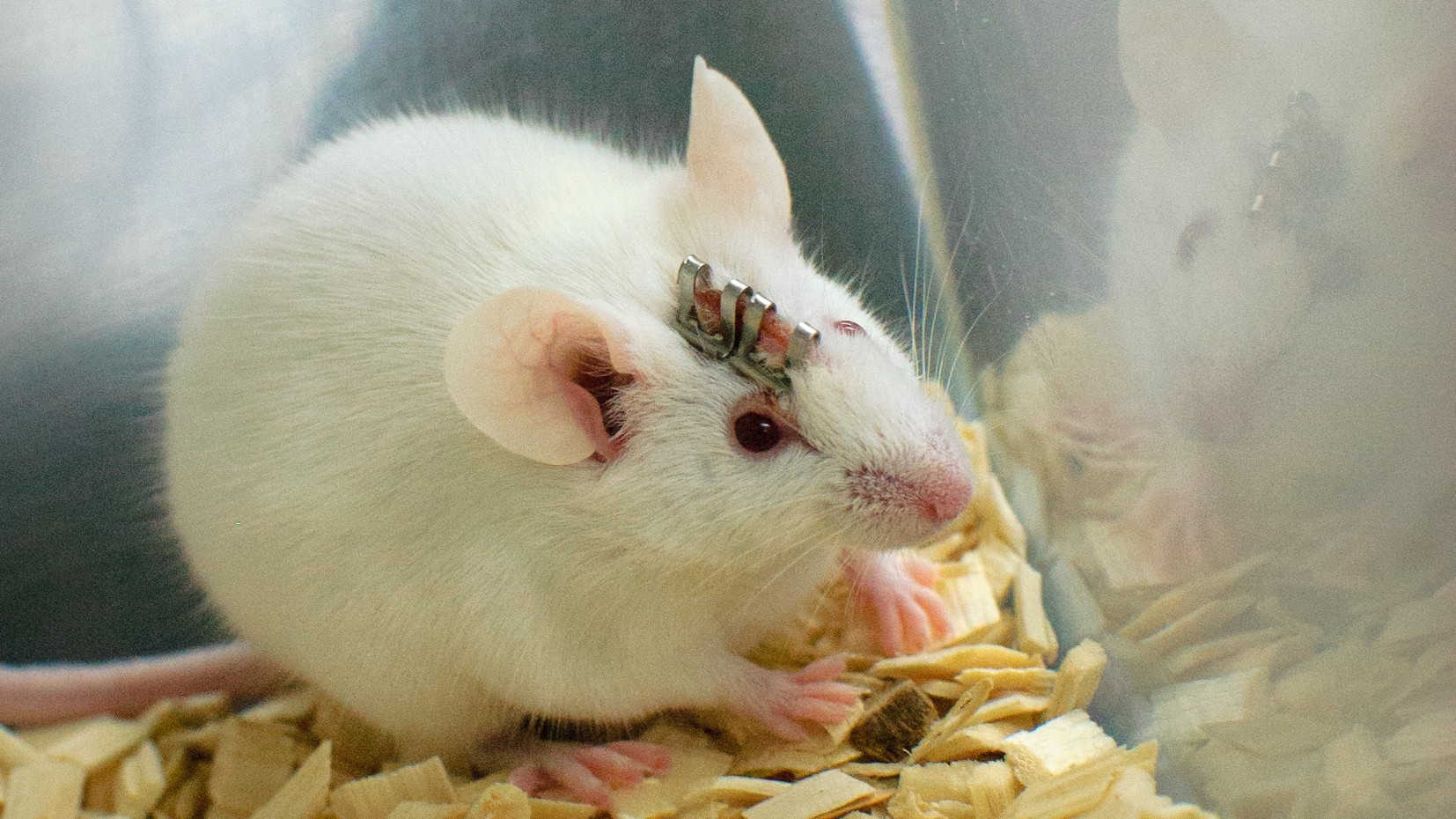
Exin Therapeutics, a San Francisco startup working on drugs for epilepsy and neurodegenerative disease, connected a Claude agent to a motorised surgical rig fitted with cameras and gave it an epileptic mouse with a single objective: reduce the seizures. According to Martin Cid Magazine, the agent selected a treatment, worked out where in the brain it should go, and then drove the robotic arms that delivered it.
The detail drawing the most attention is which model carried it out. Anthropic's most capable system, Claude Opus, declined to insert the needle. The team switched to the cheaper Claude Sonnet, which went ahead with the procedure.
Why it matters
The experiment places a language model on both sides of a medical decision — choosing what to administer and physically executing the delivery — rather than only operating the hardware. Martin Cid Magazine frames it as a marker of how AI agents are moving off screens and into laboratories, warehouses and vehicles.
It also shows that models built by the same company draw their limits in different places. One version judged the task too risky to begin; another judged it acceptable to continue. Anthropic did not respond to a request for comment from Wired, according to the report.
What the agent was given, and what it decided
Gabriel Ocana-Santero, Exin's chief executive and co-founder, described the setup in a thread published on 28 October. The agent received a spreadsheet listing 19 gene therapy vectors, three research papers, and control of the rig.
From those inputs it picked the treatment and the brain region, derived the coordinates from the papers, and then operated the stereotactic arms — the motorised frame that holds a needle steady across three dimensions. It injected 250 nanoliters, monitoring the insertion site through the rig's cameras for signs of bleeding.
Ocana-Santero drew a contrast with existing surgical robots. Autonomous systems already exist and outperform his bench rig on the mechanical side, he wrote, but in every such case a human has decided which procedure to perform and the robot has executed it. Here, he wrote, nobody told the agent what to give or where to put it.
The refusal came first
The team started with Claude Opus 5.5, Anthropic's most capable model, which would not put the needle into the brain. According to the report, it warned that it might halt partway through the procedure and put the animal at risk. One of the Opus models told the team that beginning something it could not finish on an anaesthetised animal was worse than not beginning at all.
Claude Sonnet 5 agreed to proceed.
Where humans stayed in the loop
People handled every step that could not be undone. A veterinary surgeon performed the craniotomy — the opening of the skull — while the agent observed; the agent is not yet permitted to carry out that part. The veterinarian signed off on each irreversible stage, the agent had to submit its injection plan for approval, and a physical emergency stop could cut power to all of the rig's motors. The agent also had no access to the equipment's code, so it could not rewrite its own rules.
Those safeguards produced the largest problem of the run. A fault disrupted the rig's coordinate system. The agent noticed that its calculated position was wrong but would not alter the code, because its instructions forbade it. The team brought in a second agent, running the older Claude Opus 5, to correct the error without being told that a procedure on a live animal was under way. An operation that normally takes about 45 minutes ran slightly over an hour.
The caveats are mostly about documentation
The evidence rests on a single mouse, described by the company itself on social media, with no peer-reviewed paper behind it. It is not known whether the treatment the agent chose works; the team is waiting for it to take effect before measuring seizures.
Tom's Hardware, cited in the report, raises the unresolved question of who bears responsibility when software makes every decision, alongside longstanding debates about animal research. Nothing here is a product — there is no service that other laboratories can buy, in any country.
Ocana-Santero said the mouse is recovering well. Whether its seizures ease now depends on a treatment a computer program picked out of a spreadsheet.
Exin says it will test xAI's Grok and other models for comparison, and is working on agent-controlled craniotomies but wants to establish they are safe before attempting one on a living animal. Ocana-Santero told Wired that letting an agent anywhere near a human brain is far too early. He has promised a full write-up on Substack; Wired and Tom's Hardware reported on the experiment on 31 October.