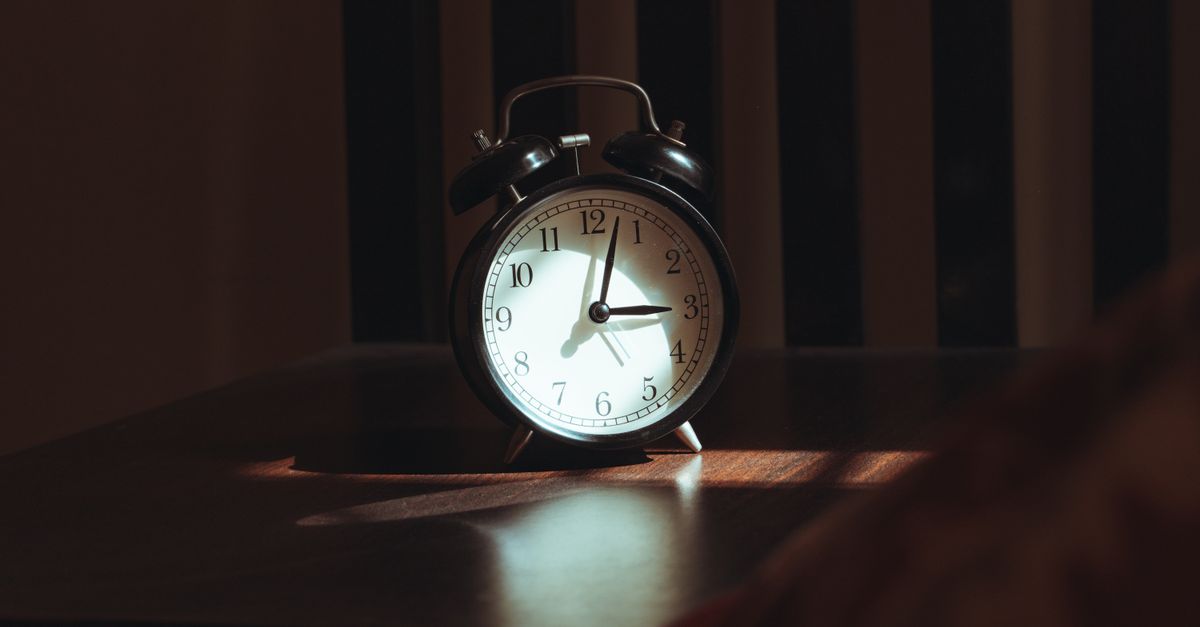
I remember the exact moment the penny dropped. I was sitting in my kitchen at 2 AM, scrolling through my phone after another sleepless night, and I stumbled across a post from a sleep specialist. It wasn't a fancy infographic or a viral video. It was a single sentence: "Your sleep schedule doesn't matter as much as you think. What matters is your sleep consistency."
At first, I laughed. Here I was, a self-proclaimed health nerd who had tried every supplement, every meditation app, and every blackout curtain known to humanity. But this guy was telling me my 10 PM bedtime wasn't the magic bullet? He was telling me that the variability in my sleep-wake times — the constant shifting between weekdays and weekends — was the real enemy.
Let's be honest. I was skeptical. But I tried it. For one week, I went to bed and woke up at the exact same time, even on Saturday. I didn't change anything else. No new supplements, no new routines. And for the first time in years, I felt... human.
That's when I realized: the biggest health breakthroughs aren't secrets. They're the things we actively ignore. And that's exactly what this article is about. We're going to look at one specific, often-overlooked concept that can change how you think about your body's performance.
The Hidden Law Your Body Already Follows (But You Don't)
I'm talking about circadian rhythm alignment — but not in the way you've heard it before. You've probably read the generic advice: "Go to bed earlier," "Get morning sunlight," "Avoid blue light." And that's fine. But here's what most people miss: *it's not about when you do things. It's about the consistency of the signal.
Think about it. Your body is a biological machine with a master clock — the suprachiasmatic nucleus (SCN) in your brain. This clock doesn't care if you're a night owl or an early bird. It cares about regularity. It's like a dog that expects its walk at 7 AM every day. If you walk it at 7 AM on Monday, 9 AM on Tuesday, and then skip Wednesday, that dog is going to be confused and anxious. Your body is the same.
Here's the science: every cell in your body has its own clock. These peripheral clocks sync with the master clock via signals like light, food, and exercise. When you change your sleep time by even 30 minutes on the weekend, you're essentially sending a confusing signal to every cell in your body. It's like telling your liver, "Hey, wake up!" and then immediately saying, "Never mind, go back to sleep."
The result? Hormonal chaos. Cortisol spikes at the wrong time. Melatonin production gets delayed. Insulin sensitivity drops. And you wake up feeling groggy, even if you got 8 hours.
I've found that most people think they need to "fix" their sleep duration. They obsess over getting 8 hours. But the real culprit is often the variability in their schedule. You can sleep 7 hours consistently and feel better than someone who sleeps 9 hours but shifts their bedtime by 2 hours every night.

The 3 Things You're Doing Wrong (That Feel Right)
Let's get specific. I'm going to call out three habits that seem healthy but are actually sabotaging your circadian rhythm.
1. The "Catch-Up Sleep" Trap
You know the drill. You sleep poorly during the week, so you "reward" yourself by sleeping in until 11 AM on Saturday. It feels amazing in the moment. But here's the problem: you've just created a mini-jet lag. Your body's internal clock has shifted. Now, when Sunday night rolls around and you try to go to bed at 10 PM, your body is like, "Bro, I just woke up 12 hours ago. What are you doing?"
This is called social jet lag, and it's a real phenomenon. Studies show that people who experience even 1 hour of social jet lag have a significantly higher risk of obesity, heart disease, and metabolic syndrome. The fix? Don't vary your wake-up time by more than 30 minutes, even on weekends. Yes, it sucks. But your body will thank you.
2. The "I'll Eat When I'm Hungry" Myth
You've heard the advice: "Listen to your body. Eat intuitively." And I agree — to a point. But here's where it gets tricky: your appetite is heavily influenced by your circadian rhythm. If you're consistently eating late at night, your body's hunger signals become scrambled. You start craving sugar at 10 PM because your clock thinks it's daytime.
The solution? Time-restricted eating (TRE). Not the strict 16:8 fasting that everyone talks about. Just a consistent eating window. For me, I eat between 8 AM and 6 PM. No snacks after 6. Doesn't matter if I'm hungry. I've found that within 3 days, my evening cravings vanish. It's like my body realizes, "Oh, we're not doing that anymore," and resets.
3. The "Late-Night Exercise" Mistake
I love a good evening workout. There's nothing like a sweat session to blow off steam. But here's the truth: intense exercise within 2 hours of bedtime can delay melatonin production by up to 30 minutes. Your body temperature rises, your heart rate stays elevated, and your brain thinks it's time to be alert.
Does that mean you can't exercise at night? No. But shift to low-intensity activities: yoga, stretching, walking. Save the HIIT for the morning or early afternoon. Your circadian rhythm will thank you.

The Surprising Hack: Light Is Your Most Powerful Drug
You've heard about blue light blocking glasses. You've heard about turning off screens an hour before bed. But I want to talk about something more fundamental: the timing and intensity of light exposure.
Here's the thing most people miss: your circadian rhythm is primarily set by light, not by your schedule. You can go to bed at 10 PM every night, but if you're not getting enough bright light in the morning, your body doesn't know it's daytime. It's like trying to set a clock without knowing what time it is.
The secret? Get 10-15 minutes of natural sunlight within 30 minutes of waking. Not through a window. Not with sunglasses. Direct sunlight. This signals your SCN that the day has started, and it begins a cascade of hormonal events: cortisol rises (good for alertness), melatonin production stops, and your body starts preparing for sleep 14-16 hours later.
I've found that this single habit is more powerful than any supplement or sleep aid. And it's free. It just requires you to step outside. If you live in a cloudy climate, a light therapy box (10,000 lux) works too. But the real thing is better.
The One Question Nobody Asks (But Should)
Here's a question I ask everyone who comes to me with sleep issues: "What time do you wake up on weekends compared to weekdays?"
If the answer is more than 1 hour different, I know exactly where to start. And it's not about fixing sleep. It's about fixing consistency.
I had a client — let's call him James — who was a classic case. He worked a 9-to-5, slept 7 hours during the week, but on weekends, he'd sleep until 11 AM. He felt like garbage every Monday. He thought he needed more sleep. He tried melatonin, blackout curtains, white noise machines. Nothing worked.
I told him: "Wake up at 7 AM this Saturday. No exceptions. Go to bed at 11 PM. Don't change anything else." He looked at me like I was insane. But he tried it. One week later, he said, "I feel like I've been reset. I don't even need coffee."
The lesson? Your body doesn't need more sleep. It needs predictable sleep.
Why Your "Healthy Lifestyle" Might Be Backfiring
Let's zoom out for a second. We live in a culture that worships productivity. We wake up at 5 AM, crush a workout, chug a green smoothie, and meditate for 20 minutes. But if your circadian rhythm is misaligned, all those habits are less effective.
Think about it: If you eat a perfectly healthy meal at 10 PM, your body processes it differently than if you ate it at noon. The same calories, the same nutrients, but different metabolic outcomes. That's because your digestive enzymes, insulin sensitivity, and gut motility all follow a circadian rhythm.
This is why time-restricted eating is so powerful — it aligns your food intake with your body's natural metabolic peaks. You're not just eating healthy food. You're eating it at the right time.
I've also noticed that people who prioritize circadian health often report better mood, higher energy, and even clearer skin. It's not magic. It's biology. When your body's clocks are in sync, everything works better.
The 7-Day Circadian Reset (No Gimmicks)
Here's a simple plan you can start today. No supplements, no fancy gadgets. Just consistent behavior.
- Wake up at the same time every day, including weekends. Pick a time. Stick to it. Set an alarm if you have to.
- Get morning sunlight within 30 minutes of waking. 10-15 minutes. Direct exposure.
- Eat your first meal within 1 hour of waking. This signals your body that the day has started.
- Stop eating by 6 PM (or 3 hours before bedtime). This gives your digestive system time to rest.
- Avoid intense exercise after 7 PM. Stick to walking, stretching, or yoga.
- Dim the lights 1 hour before bed. Use warm, dim lighting. No screens if possible.
- Go to bed at the same time every night. Aim for 7-8 hours before your wake time.

The Truth Nobody Wants to Hear
Here's the hard part: this isn't a quick fix. It's a lifestyle shift. You can't do this for 3 days and expect results. It takes at least* 2 weeks for your circadian rhythm to fully adjust. And during that time, you might feel worse before you feel better. Your body is essentially going through a mini withdrawal from its irregular schedule.
But if you stick with it, the payoff is huge. Better sleep, more energy, improved mood, and even better metabolic health. And the best part? You don't need to buy anything. You don't need to follow a complicated protocol. You just need to respect your body's natural clock.
So here's my challenge to you: For the next 7 days, commit to a consistent wake-up time. Don't change anything else. Just wake up at the same time every day. See how you feel. I promise you, by day 5, you'll notice a difference.
And if you need help staying accountable, share this article with a friend. Do it together. Because the truth is, most of us know what we should be doing. We just need a little nudge to actually do it.
Your body is already trying to sync with the world around you. Stop fighting it. Start aligning with it.