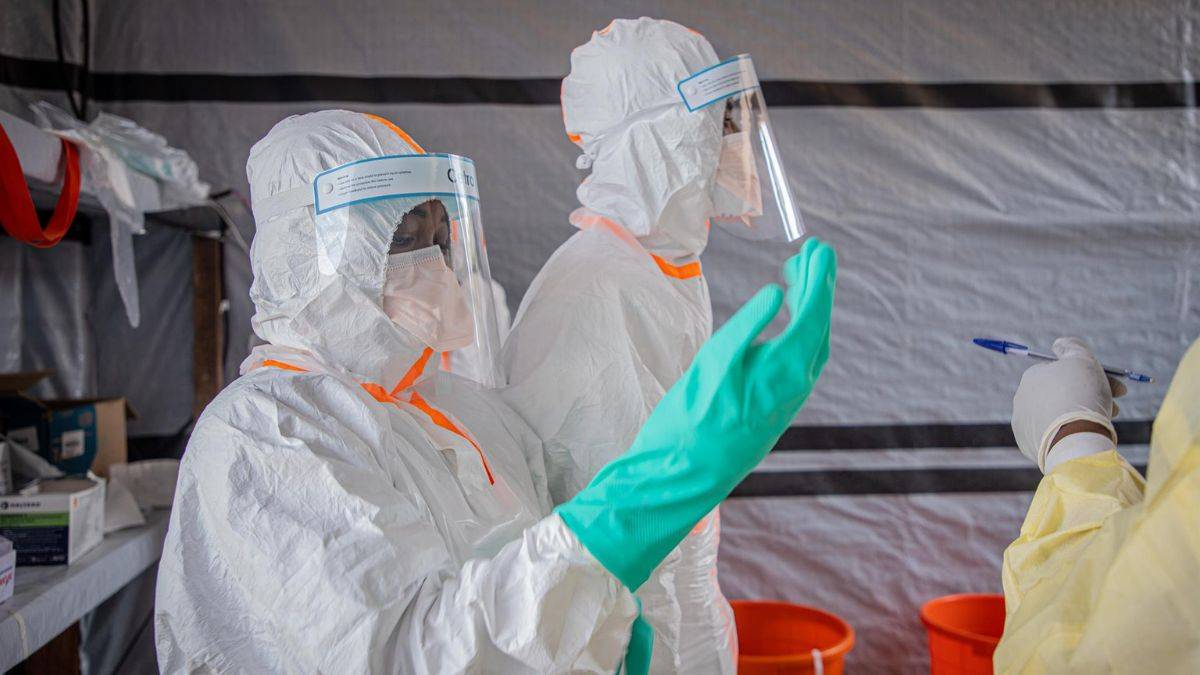
Europe's public health agencies are stepping up preparations against an Ebola outbreak in the Democratic Republic of the Congo that has now killed more than 4,900 people and infected over 10,000 since May, according to ConSalud. The European Centre for Disease Prevention and Control (ECDC) has sent specialists to Nigeria and Kenya and issued guidance for member states on handling imported cases.
ConSalud reports that the current outbreak is the second-largest ever recorded, behind only the 2014–2016 West African epidemic, which caused more than 11,000 deaths and 28,616 cases, including the Spanish nursing assistant Teresa Romero. The publication puts the overall fatality rate of the present outbreak at 48.6 percent.
Why it matters
The outbreak is driven by the Bundibugyo strain of the virus, for which no vaccine exists, according to ConSalud. Although the strain is not the most aggressive form of Ebola, the absence of a vaccine narrows the tools available to responders.
Bárbara González, a professor of Environmental Epidemiology and Public Health at the Universidad Europea, told ConSalud that the virus does not transmit easily and that containing it is "totally viable." Even so, the outlet notes that the risk of spread to other countries persists for as long as the outbreak remains active.
Cases reach beyond Congo's borders
Neighbouring countries have not been spared. ConSalud reports that Kenya and Uganda have each detected initial cases linked to this outbreak, and that Nigeria recorded its first case last week — the country's first detection in more than a decade.
Two patients were transferred to Switzerland this week for treatment, according to the outlet: a Swiss woman with Ebola and a man suspected of infection.
The ECDC's response has unfolded in stages. It first sent experts to support the Africa CDC, then launched a research mission examining exit screening at airports in the Democratic Republic of the Congo. In September, the agency strengthened its presence in the country with two epidemiologists to reinforce surveillance and the overall response to what it described as the "severity" of the outbreak.
This week the agency announced deployments to Nigeria and Kenya. ConSalud reports that the team in Abuja, led by an epidemiological intelligence specialist, will advise and provide technical support to the EU delegation there. Support has also been offered to Nigerian authorities on surveillance, contact tracing, infection prevention and control, and emergency preparedness and response. The European Commission has allocated 2.1 million euros for diagnostic tests intended to speed up treatment.
Guidance for member states
The ECDC assesses the likelihood of the virus spreading within Europe as "very low," according to ConSalud. The agency links the limited risk mainly to travellers and health workers returning from affected areas. The outlet also cites a study from Zhejiang Chinese Medical University in Hangzhou suggesting the EU faces a greater risk of increased chikungunya transmission than of Ebola.
In its document "Preparedness and response to imported cases of Ebola in an EU/EEA country," the ECDC calls on member states to review their internal procedures and strengthen the readiness of their systems so they can react quickly and effectively if needed. The guidance sets out steps covering points of entry, community settings, transport arrangements and isolation hospitals.
Among its recommendations, the agency advises exit screening in areas affected by the outbreak. ConSalud notes that while unlikely, a person exposed to the virus could enter a European country and initially be treated at a level of care "that does not have the necessary means to treat and manage a case of Ebola virus disease." The guidance therefore prioritises training and the establishment of protocols for caring for people who may have symptoms but have not been identified.
Where a patient is a suspected or confirmed case, the document calls for planning a safe transfer to a designated treatment centre — typically a tertiary hospital with specialised staff and equipment capable of handling laboratory diagnosis and providing appropriate care while protecting personnel and the environment.
"The threats to health do not know borders. Our response does not either," the guidance states, as quoted by ConSalud.
What to watch
With no vaccine for the Bundibugyo strain and cases now confirmed in Nigeria, Kenya and Uganda, the coming weeks will show whether exit screening and the ECDC's expanded field presence can keep the outbreak contained to the region.





