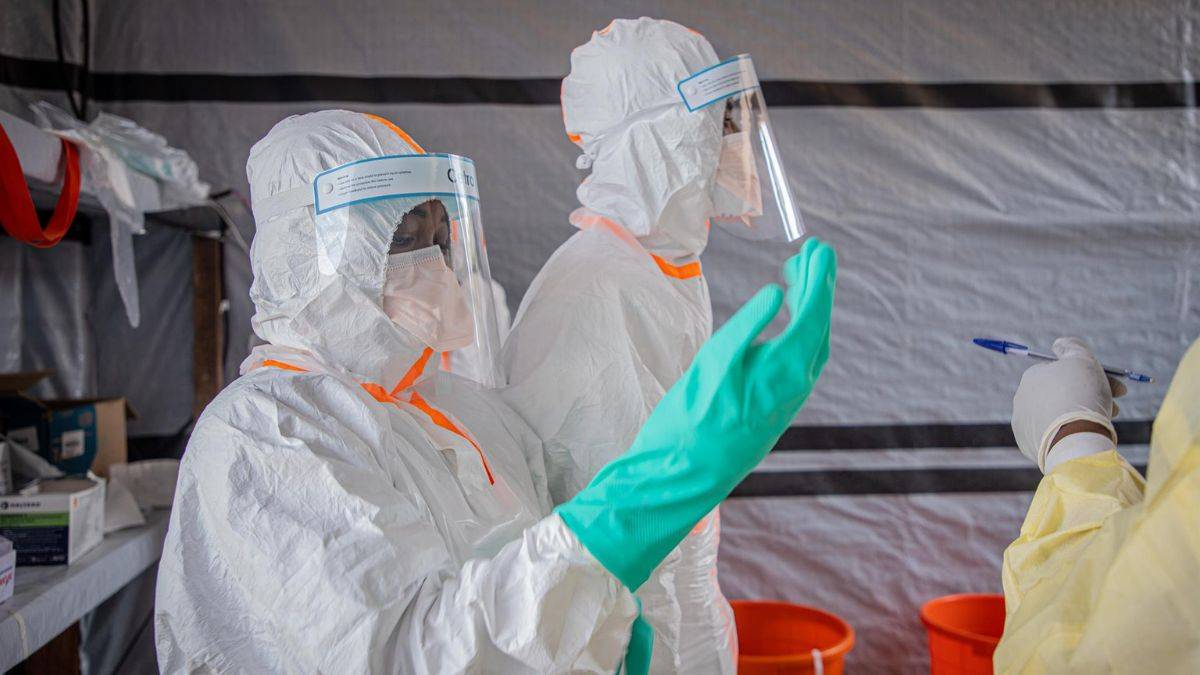
The Ebola outbreak in the Democratic Republic of Congo has now caused more than 4,900 deaths and surpassed 10,200 cases since May, according to ConSalud, which puts the overall fatality rate at 48.6%. In response, the European Centre for Disease Prevention and Control (ECDC) has sent specialists to Nigeria and Kenya and is pressing EU member states to review their internal procedures for handling imported cases. The agency continues to describe the likelihood of the virus spreading within Europe as very low.
Why it matters
By ConSalud's account, this is already the second-largest Ebola outbreak on record, behind only the 2014–2016 West African epidemic, which produced more than 11,000 deaths and 28,616 cases — among them the Spanish nursing assistant Teresa Romero. The current event is on course to become the deadliest documented outbreak to date, the outlet reports.
What sharpens the concern is the strain involved. This outbreak is driven by the Bundibugyo virus, for which no vaccine exists. ConSalud notes that while the strain carries a high fatality rate, it is not the most aggressive of the Ebola viruses. Bárbara González, a professor of Environmental Epidemiology and Public Health at the Universidad Europea, told ConSalud that the virus does not transmit easily and that containing it is "totally viable." Even so, the outlet reports, the risk of spread to other countries persists for as long as the outbreak remains active.
Cases reach beyond Congo's borders
The outbreak is no longer confined to Congo. Kenya and Uganda have each detected initial cases linked to this event, according to ConSalud. Last week, Nigeria recorded its first case after more than a decade without one.
Two patients have been transferred to Switzerland for treatment, ConSalud reports: a Swiss woman with Ebola and a man suspected of infection.
European countries are also contributing to containment in the affected region. The ECDC first sent experts to support the Africa CDC, then launched a research mission examining exit screening at airports in the Democratic Republic of Congo. In September, the agency strengthened its presence in the country with two epidemiologists to reinforce surveillance and the overall response, citing the "severity" of the outbreak.
The team now deployed to Abuja is led by an epidemiological intelligence specialist and will advise and provide technical support to the EU delegation in Nigeria. Support has also been offered to Nigerian authorities on surveillance, contact tracing, infection prevention and control, and emergency preparedness and response. The European Commission has allocated €2.1 million to diagnostic testing to speed up treatment, according to ConSalud.
What the ECDC is asking member states to do
In its guidance document on preparedness and response to imported Ebola cases in an EU/EEA country, the ECDC calls on national authorities to revisit their procedures and strengthen readiness so that any response can be fast and effective. The guidance sets out steps covering points of entry, community settings, transport arrangements and isolation hospitals.
Among its recommendations is exit screening in areas affected by the outbreak. Although the probability of an exposed person entering a European country is low, the ECDC notes that such a patient could initially be seen at a level of care without the means to treat and manage Ebola virus disease. The agency therefore emphasises training and protocols for handling people who may have symptoms but have not been identified.
Where a patient is a suspected or confirmed case, the guidance calls for a safe transfer to a designated treatment centre — typically a tertiary hospital with specialised staff and equipment capable of managing laboratory diagnosis and providing appropriate care while protecting personnel and the environment.
ConSalud also points to a study from Zhejiang Chinese Medical University in Hangzhou suggesting the EU faces a greater risk of increased chikungunya transmission than of Ebola. The outlet frames prevention as the key to avoiding infections during travel and maintaining control. "Health threats know no borders. Neither does our response," the ECDC said, as quoted by ConSalud.
What to watch
The immediate question is whether the Bundibugyo outbreak can be contained without a vaccine, and whether the cases now appearing in Kenya, Uganda and Nigeria are isolated introductions or the start of wider regional spread. The ECDC's expanded footprint in West and East Africa, and the readiness reviews it has requested from member states, will be the measures to track in the coming weeks.





