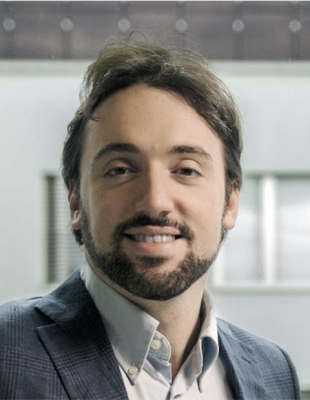
Gioele La Manno, an assistant professor at the Swiss Federal Institute of Technology Lausanne (EPFL), has been named the 2026 winner of the Eppendorf & Science Prize in Neurobiology, DongA Science reports. The journal Science announced the selection on 29 October, citing his work on how the brain's lipids are organized and how that organization relates to the diversity of its cells. The award recognizes his team's three-dimensional atlas of lipid distribution in the mouse brain, which identified 539 regions with distinct lipid compositions.
According to DongA Science, the prize has been given annually by Science since 2002 to researchers aged 35 or younger who have carried out or led work in molecular, cellular, systems or organismal biology and made outstanding contributions to neurobiology. The winner receives $25,000, and a prize essay is published in Science.
Why it matters
Lipids are essential building blocks of nerve cells, yet neuroscience has long treated them as passive material. In his prize essay, La Manno described the conventional view: lipids were seen as structurally necessary, like the concrete walls of an apartment building, but repetitive and, in a sense, dull. His team's map challenges that assumption by showing that lipid composition varies in precise, previously unmapped patterns across the brain — patterns that gene expression data alone cannot account for.
That matters because it points to a layer of brain organization that sits apart from the genetic blueprint most research relies on. If the distribution of lipids cannot be predicted from the activity of the enzymes that produce them, then mapping lipids directly becomes a way to ask questions that gene-based studies could not answer.
Building a lipid atlas, slice by slice
To construct the map, the researchers sectioned mouse brains thinly and analyzed each slice with imaging mass spectrometry, combining several computational methods to assemble the data into a three-dimensional picture of lipid distribution across the whole adult mouse brain. DongA Science reports that the atlas incorporates roughly 7.2 million pixels of mass spectrometry imaging data collected from 11 mice.
Analysis of the map revealed the 539 distinct regions the team calls "lipizones." Their lipid compositions differ from one another. Many of the lipizones lined up with anatomical structures already known to science, but the map also exposed boundaries that gene analysis or tissue staining had not captured. In the brain's white matter, lipid composition divided the tissue into multiple compartments arranged in a mosaic-like pattern.
La Manno said a complete map makes it possible to pose questions that could not previously be answered, according to DongA Science. His team reasoned that if lipid distribution were simply a product of gene expression, it should be possible to predict where a given lipid appears by looking at expression of the gene for the enzyme that synthesizes it.
The comparison did not bear that out. Across the brain, the average correlation between expression of lipid-synthesizing enzymes and the distribution of the lipids those enzymes produce was close to zero. Even using the full set of gene expression data, the researchers could explain only about half of the observable lipid distribution patterns. The finding suggests lipid distribution offers a separate line of evidence for understanding how the brain is organized.
From pregnancy to myelin
The completed atlas can be used to study how the brain and its metabolism are reorganized during physiological changes such as pregnancy. The team applied the map to analyze shifts in lipid composition in the brains of mice during pregnancy. In white matter, about 100 lipizones changed, and levels of galactosylceramide — a lipid involved in forming myelin, the sheath that protects nerve cells — increased.
La Manno said the brain lipid map has opened a new direction for investigating the brain's tissue structure. Decoding it will take decades, he added, but the processes that produce such fine-grained order may carry broad biological significance.
The prize essay is due to appear in Science, where readers can follow La Manno's account of the work.





