
I still remember the first time I tried to learn guitar. I was 14, sitting cross-legged on my bedroom floor, watching a YouTube tutorial from some guy named "Marty." He was cheerful, strumming an acoustic, and making it look effortless. I had my cheap Yamaha, my fingers were already sore, and I kept muting the B string no matter what I did. After 20 minutes, I thought: Maybe I’m just not musical.
I quit. For three years.
Then, in college, I picked up a bass guitar on a whim. No tutorials. No pressure. Just me and a bassline from a Daft Punk song I loved. Something clicked. Not because I suddenly had talent, but because I stopped trying to learn music the way school taught me to learn everything else. I stopped cramming theory and started playing badly on purpose.
That’s the dirty secret about music education: most of it is taught backwards. We teach scales before feel. We teach reading before listening. We teach rules before rebellion. And we wonder why so many people give up before they ever find their voice.
Let’s be honest: the way we’ve been taught music is often the enemy of actually making music.
The Myth of "Natural Talent" (And Why It’s Holding You Back)
Here’s what most people miss: talent is just accelerated interest. I’ve seen kids who couldn’t hold a rhythm for their first six months suddenly shredding after a year. I’ve also seen prodigies burn out by 16 because they were pushed too hard, too fast.
The real barrier isn’t ability — it’s permission. Permission to suck. Permission to be messy. Permission to not know the Dorian mode yet.
I’ve found that the most successful musicians I know have one thing in common: they weren’t afraid to sound terrible in private. They recorded themselves, cringed, and did it again. They didn’t wait for a teacher to tell them they were ready. They just did.
Think about the last time you tried to learn a song. Did you spend more time Googling the chord progression than actually playing it? Did you stop because you couldn’t nail the solo on take three? That’s not a failure of talent. That’s a failure of education philosophy — the idea that learning must be linear, clean, and correct from day one.
Why Music Theory Is Overrated (At First)
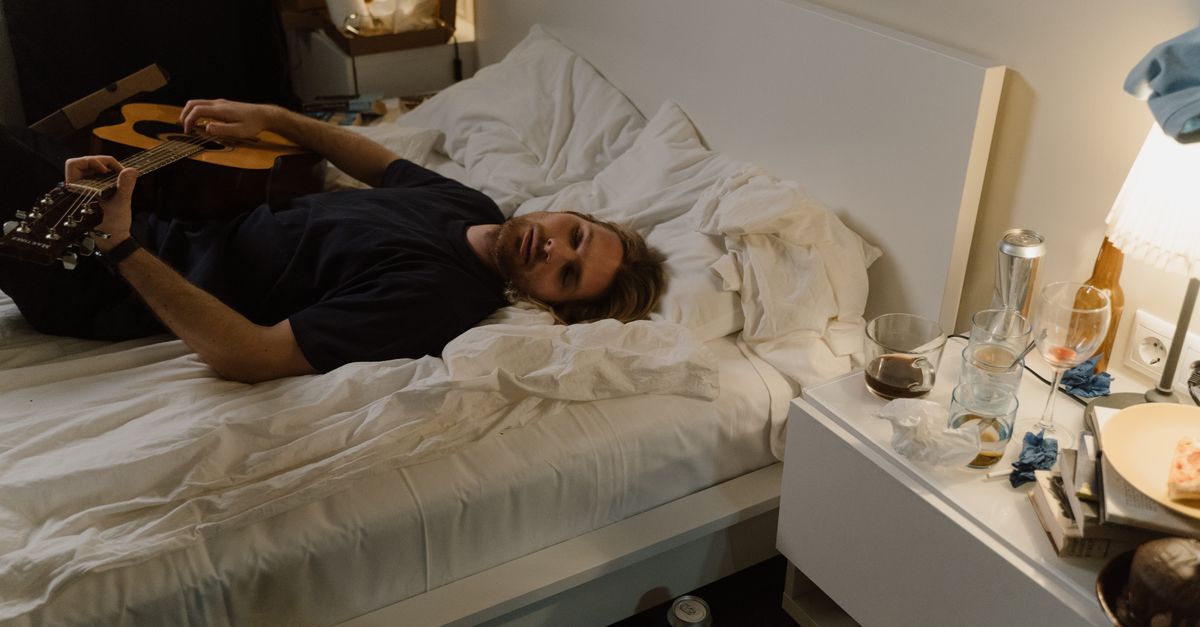
I’m going to say something controversial: music theory is a tool, not a foundation. It’s like learning grammar before you’ve ever told a story. Sure, you can do it, but it’s going to suck the soul out of the process.
When I started bass, I didn’t know what a root note was. I just found the low E, played along with the kick drum, and felt the groove in my chest. That’s music education at its most primal — ears before eyes, feel before theory.
Here’s a secret most teachers won’t tell you: many professional musicians can’t read sheet music fluently. Paul McCartney never learned. Jimi Hendrix couldn’t. Django Reinhardt had three working fingers and revolutionized jazz. They learned by listening, mimicking, and breaking rules.
I’m not saying theory is useless. It’s incredibly powerful — once you have a context for it. If you’ve been playing for six months and you’re stuck, learning the pentatonic scale can unlock a whole new world. But if you’re trying to figure out the circle of fifths on day three, you’re building a house without a foundation.
Real music education should start with three things:
- A song you love — something that makes you want to move
- Permission to be bad — no judgment, no metronome, no pressure
- A simple pattern — three chords, a bassline, a drum beat
The Hidden Curriculum: Ear Training vs. Eye Training
Most music education is visual. We look at notation, tabs, charts. We follow the dots. But music is an auditory art form. The best musicians I’ve met trained their ears first.
I remember a jazz pianist telling me, “If you can’t hum it, you can’t play it.” That stuck with me. Because what’s the point of reading a complex chord voicing if you can’t hear whether it’s major or minor? What’s the point of knowing the key signature if you can’t tell when someone’s playing out of tune?
Here’s a simple exercise that changed everything for me: pick a song you know well, and try to play it by ear. No tabs, no sheet music, no YouTube. Just you, your instrument, and your memory. Start with the bass note. Then find the next one. Then the rhythm. It’s slow, frustrating, and absolutely essential.
I’ve found that people who learn this way develop a deeper connection to music. They don’t just play notes — they feel phrases. They anticipate changes. They develop something that no book can teach: musical intuition.
The Digital Trap: Why YouTube University Might Be Failing You
Let’s talk about the elephant in the room. We live in the golden age of music education. There are thousands of free tutorials, apps, backing tracks, and masterclasses. You can learn anything from sitar to beatboxing from your couch.
But here’s the catch: information is not education. Watching 50 tutorials on how to play a blues solo doesn’t make you a blues player. It makes you a watcher.
I see this all the time. People collect tabs like stamps. They watch “How to Improvise” videos but never actually improvise without a safety net. They buy courses, download PDFs, and bookmark resources — but their playing stays stagnant.
Why? Because learning music requires feedback loops that passive consumption can’t provide. You need to:
- Play something wrong
- Hear that it’s wrong
- Adjust
- Play again
I’m not saying ditch online resources. I’m saying use them like tools, not crutches. Watch a lesson, then close the laptop and play for 20 minutes without looking at anything. Record yourself. Listen back. Cringe. Repeat.
That’s how you actually get better. Not by consuming more content, but by applying less of it more deeply.
The Teacher Problem (And How to Fix It)
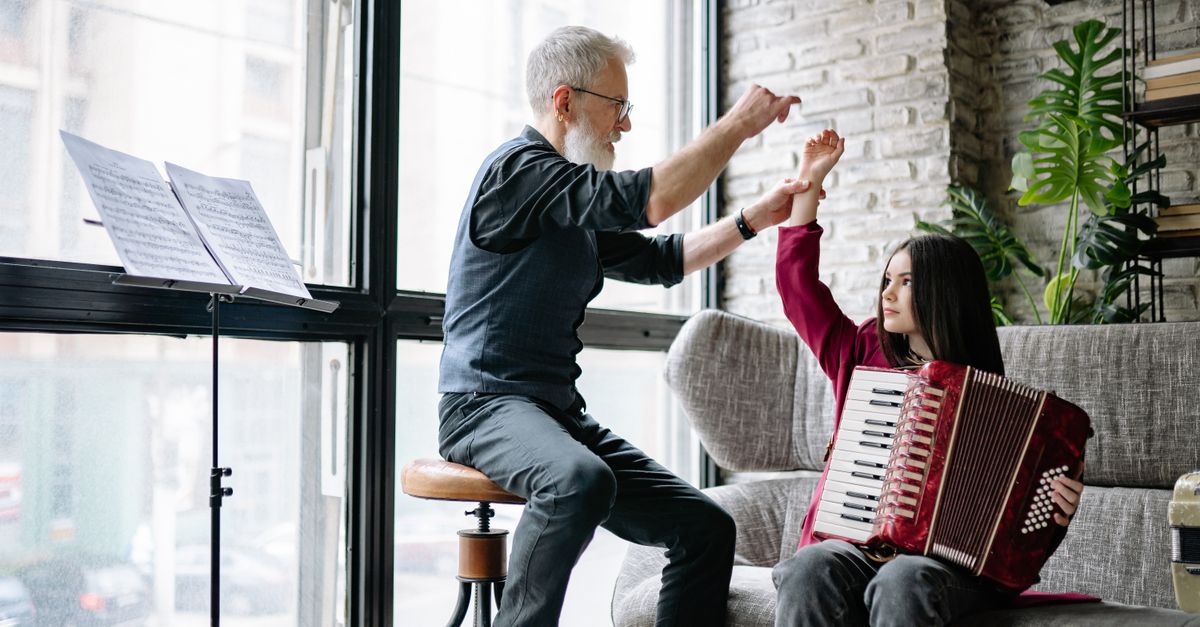
Let’s be real: not all music teachers are created equal. I’ve had teachers who were incredible musicians but terrible educators. They’d play something flawless, then look at me like I was broken when I couldn’t replicate it. They’d drone on about modes while my eyes glazed over.
The best teachers I’ve had did two things:
- They met me where I was — they didn’t force their agenda on my ears
- They gave me something to chase — a lick, a song, a challenge that was just out of reach
Here’s what I look for in a teacher today:
- They play music I actually want to learn — not just classical études
- They ask what I hear in my head — not just what’s on the page
- They make mistakes in front of me — so I know it’s okay to be human
The Final Frontier: Unlearning to Learn
Here’s the paradox I’ve discovered: the best music education is often unlearning. Unlearning the idea that you need to be perfect. Unlearning the habit of comparing yourself to pros. Unlearning the belief that theory comes before expression.
I spent years trying to play like John Mayer. I studied his bends, his phrasing, his gear. And I sounded like a pale imitation. The moment I started playing like me — with my own clumsy timing, my own limited vocabulary, my own emotional fingerprint — people started saying, “Hey, that sounds good.”
Not because I was technically better. Because I was present.
Real music education isn’t about accumulating knowledge. It’s about removing the barriers between what you hear in your head and what comes out of your hands. That’s it. Everything else — scales, theory, technique — is just scaffolding. Useful, but temporary.
So here’s my challenge to you: for the next week, learn one song by ear. No tabs. No videos. Just you, your instrument, and your intuition. Don’t worry if it’s wrong. Don’t worry if it’s simple. Just play.
You might be surprised at what your ears already know.
Because the truth is, you don’t need to be taught music. You already have music inside you. You just need permission to let it out.
**


