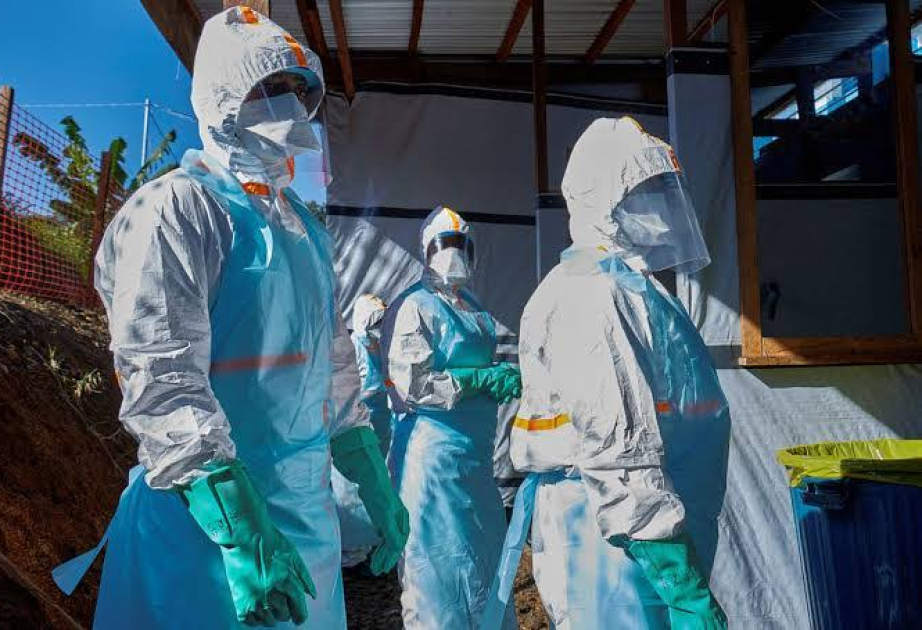
The Ebola outbreak in the Democratic Republic of the Congo has killed 4,992 people among 10,274 confirmed cases, according to the latest situation report from the country's National Institute of Public Health, released Friday and cited by azərtac. The figures, which cover the period up to October 28, put the case fatality rate at 48.6 percent.
The same day, the Africa Centers for Disease Control and Prevention paid tribute on the social media platform X to Dr. Marie-France Shogogo, a physician who died of Ebola in Beni, in North Kivu Province. The continental agency used the tribute to call for stronger protection of health workers on the front line.
Why it matters
The outbreak, declared on May 15 and caused by the Bundibugyo Ebola virus, is now the second-largest Ebola outbreak ever recorded, azərtac reports. The toll is approaching 5,000 deaths, and the virus has spread to 67 health zones in eight of the DRC's 26 provinces.
The loss of doctors carries consequences beyond the individuals concerned. Each death among medical staff removes experienced responders from treatment centers at a time when the health system in eastern DRC is already under heavy strain, and it raises questions about how well those caring for patients are themselves safeguarded.
Three doctors lost in under 72 hours in Beni
Local health sources told reporters that three doctors died of Ebola within less than 72 hours at an Ebola treatment center in Beni, according to azərtac. The cluster of deaths illustrates the exposure facing medical personnel working in the outbreak zone.
Dr. Shogogo's death prompted the Africa CDC's public tribute, in which the agency pressed for greater protection of frontline health workers. Several Nigerian outlets, including Premium Times Nigeria, Daily Post Nigeria and Legit News, reported her death and the agency's response.
Beni itself remains one of the hardest-hit areas. The Beni health zone has recorded 661 cases and 443 deaths, a case fatality rate of 67.0 percent, according to the INSP report cited by azərtac. That rate is well above the national figure of 48.6 percent.
North Kivu Province as a whole has logged 2,391 confirmed cases and 1,341 deaths, the report shows.
Treatment capacity and contact tracing under pressure
The INSP report also points to strain on the province's healthcare system. Ebola treatment facilities in North Kivu are running at 86.3 percent of their capacity, according to azərtac.
Contact tracing is another weak point. Only 82.2 percent of identified contacts are being monitored, the report found, short of the 95 percent target. Contacts who are not followed up can carry the virus onward undetected, which complicates efforts to break chains of transmission.
The outbreak is caused by the Bundibugyo strain of the Ebola virus, a detail that matters for how the response is organized, including laboratory confirmation and clinical management. The DRC declared the outbreak on May 15.
The figures released Friday are a snapshot as of October 28 and may be revised as surveillance and reporting continue.
What to watch: whether the proportion of contacts under monitoring rises toward the 95 percent target, and whether treatment capacity in North Kivu holds as cases continue to be reported.





