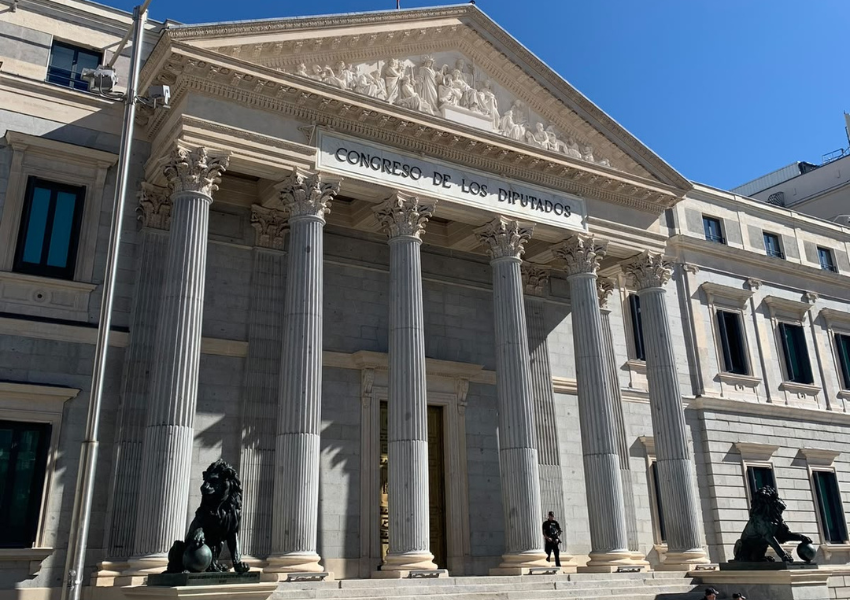
The Unión Médica y Facultativa (UMYF) has written to every parliamentary group in Spain's Congress of Deputies from the most recent legislature with two requests, according to Metges de Catalunya. First, the union wants a meeting with each of the candidacies standing in the general election of 29 November, so it can learn directly where each party stands and what commitments they are prepared to make on the demands of doctors and other facultativos. Second, it wants those positions written into the parties' election manifestos. UMYF has asked the parties to reply to the meeting request within 10 days.
The new statewide confederation of medical unions says it represents more than half of the facultativos working in the Sistema Nacional de Salud (SNS). It wants the debate over public healthcare — and specifically over the working conditions of doctors — to be one of the main themes of the coming campaign.
Why it matters
The Estatuto Médico, a demand for a dedicated legal framework for doctors and facultativos, has been at the centre of a dispute that has kept the profession mobilised for more than a year, Metges de Catalunya reports. By pressing parties to take a public position before polling day, UMYF is trying to turn that dispute into an election issue rather than a negotiation that can be deferred until after a new government is formed.
The timing gives the effort extra weight. A campaign is one of the few moments when parties are under pressure to answer questions they would otherwise leave open, and a written manifesto commitment is harder to walk back than a verbal assurance. UMYF's request is designed to produce exactly that kind of record.
Three actions in Madrid before the vote
To keep up the pressure on the streets and to stop the conflict slipping out of public view, UMYF has called three actions in Madrid to take place before the election. Metges de Catalunya's account does not specify the dates or the form these actions will take.
The decision to concentrate activity in the capital reflects where the union believes the decision will ultimately be made. A statute for doctors would require action at the state level, not only in the regional health services that employ most of the workforce. Bringing the campaign to Madrid puts the demand in front of the parties and the national media at the point when both are most attentive.
A profession already in open conflict
UMYF's move lands in the middle of an unusually active period of medical protest across Spain. Metges de Catalunya's roundup of reporting points to disputes running in several regions at once, each with its own timetable and its own negotiating history.
In Andalusia, the Sindicato Médico Andaluz has said it will call an indefinite medical strike starting on 13 November 2026. An indefinite action is a significant step: unlike a fixed-date walkout, it has no automatic end point and puts the burden on the regional government to produce an offer that the union is willing to accept.
In Madrid, the region's medical unions plan to strike from October through December, according to Diario Público, which attributes the action to what the unions describe as a blockage by the regional government led by Isabel Díaz Ayuso. A strike running across three months overlaps directly with the general election campaign and its immediate aftermath.
El Periódico reports that doctors intend to keep up mobilisations during the election campaign itself, with the stated aims of maintaining pressure and making the profession's discontent visible. That reporting and UMYF's three planned Madrid actions point in the same direction: the unions do not intend to pause while the country votes.
El Español, meanwhile, has mapped how uneven the picture is across the country, noting that some regions have suspended planned medical strikes while others are going ahead, and that the calendars differ from one community to another. The result is a patchwork rather than a single national stoppage — which is precisely the kind of fragmentation a new statewide confederation would want to address.
What UMYF is asking for, and from whom
The two requests sent to the parliamentary groups are narrow and procedural on their face. A meeting, and a line in a manifesto. But both are aimed at the same outcome: a clear and explicit statement from each party on whether it supports a statute of its own for doctors and facultativos, as Metges de Catalunya describes the demand.
The 10-day deadline for answering the meeting request is short by the standards of institutional correspondence. It suggests UMYF wants the conversations to happen while the campaign is still taking shape, when a party's position can still be presented as a choice rather than a reaction to events.
UMYF's claim to speak for more than half of SNS facultativos is central to its leverage. A confederation that can plausibly claim majority representation among the doctors it is asking parties to legislate for is harder to dismiss as one voice among many. Metges de Catalunya reports the figure as UMYF's own.
The wider stakes
Public healthcare has been a recurring fault line in Spanish politics, and the conditions under which doctors work sit at the centre of it. Staffing, pay, temporary contracts and the ability to plan a career within the public system are the practical issues behind the demand for a separate statute.
For the parties, the calculation is not straightforward. Committing to a statute for doctors means committing to a specific piece of legislation with budgetary and organisational consequences for a system run largely by the regional governments. Staying silent carries its own cost when a profession that has been on strike for more than a year is watching, and when unions have made clear they will keep mobilising through the campaign.
That is the trade-off UMYF is trying to force into the open. By asking for positions in writing, and by scheduling actions in Madrid before polling day, the confederation is making it harder for any party to treat the Estatuto Médico as a matter to be settled quietly after the votes are counted.
The immediate test is the 10-day window. How many parliamentary groups agree to meet, and whether any of them put a commitment on the Estatuto Médico into their manifestos before 29 November, will show how much traction the demand has gained as an election issue.





