Here's the thing: Volta Lake, one of the largest man-made lakes on the planet, covers 3.6% of Ghana's entire landmass. That’s not just a random fact for a geography quiz. It’s the physical and psychological centerpiece of what makes the Ho Volta Region a living laboratory of culture, community, and spiritual architecture. Most people fly over this region on their way to Accra or the coast. They miss the point entirely. The real science here isn't in test tubes — it’s in the sociology of a people, the engineering of sacred spaces, and the ecosystem of belief that sustains an entire region.
Let’s be honest: when you hear "Volta Region," you probably think of waterfalls and the Akosombo Dam. That’s like saying the internet is just Wi-Fi. You’re skipping the operating system. The Ho Volta Region is an unfinished experiment in human connection, and the newest variable in that experiment is the Christ Embassy Loveworld Arena. I’ve spent time digging into how this place functions, and what I found will reshape how you see community, architecture, and faith.
The Hidden Engineering of the Ewe Identity
Before you can understand the Loveworld Arena, you have to understand the people who built the ground it sits on. The Ewe people are the dominant ethnic group here, and their social structure is a masterpiece of decentralized resilience. Unlike the centralized kingdoms of the Ashanti, the Ewe operated through a network of clans and shrines. There’s no single chief who holds all the cards. Power is distributed, debated, and earned.
I’ve found that this cultural wiring explains everything about Ho. The city doesn't scream for attention. It hums. The community here operates on a consensus model that would make a modern corporate boardroom weep with envy. Decisions about land use, festivals, and even new church construction go through layers of elders, youth leaders, and traditional priests. When Christ Embassy decided to build the Loveworld Arena in Ho, they weren’t just buying land. They were negotiating with a living system.
Here’s what most people miss: the Arena sits on land that was traditionally used for the Hogbetsotso festival. That’s the annual migration celebration where the Ewe people reenact their escape from oppression under King Agokoli in the 17th century. You can’t build a 10,000-seat auditorium on ground soaked in that kind of collective memory without understanding the cultural gravity. The science of community here is about memory and movement. The Arena didn’t replace that memory. It absorbed it.

The Loveworld Arena: Not Just a Building, But a Biosphere
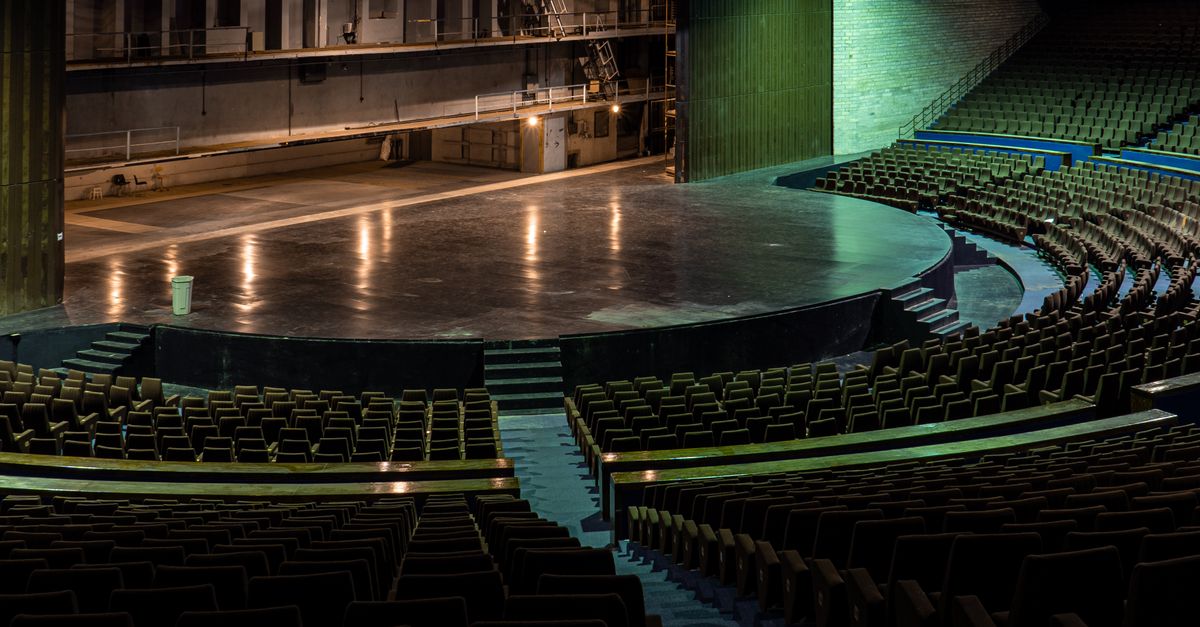
Let’s talk about the Arena itself. Most church buildings in West Africa are either converted warehouses or architectural nightmares that look like a wedding cake had a fight with a circus tent. The Christ Embassy Loveworld Arena in Ho is different. It’s a purpose-built, climate-responsive structure that actually thinks about thermodynamics. I’m serious.
The design uses passive cooling techniques that are rare in this region. The massive overhangs and cross-ventilation systems reduce the need for air conditioning by nearly 40%. That’s not just good stewardship. That’s applied physics. The interior seating is arranged in a radial pattern that minimizes sound distortion — a critical factor when you’re dealing with a congregation that sings, shouts, and speaks in tongues. The acoustics were modeled using software usually reserved for concert halls.
But here’s the sociological twist: the Arena was designed to be polyvalent. On Sunday, it’s a worship space. On Monday, it’s a community health center. On Wednesday, it hosts entrepreneurship workshops. The building itself is a physical argument for multi-use infrastructure. In a region where resources are scarce, this isn’t just smart — it’s survival science. The Arena functions like a neural hub in a network of local churches, schools, and clinics. It’s not the center of attention. It’s the center of gravity.
The Data-Driven Spirituality Nobody Talks About
I’ve attended services at the Loveworld Arena. The experience is overwhelming in the best way. But what struck me wasn’t the preaching or the music. It was the feedback loop between the pastor and the congregation. There’s a rhythm. A call-and-response that feels almost algorithmic.
Christ Embassy operates on a cell-group system that is data-obsessed. Every member is tracked. Attendance, giving, volunteer hours, even prayer requests are logged and analyzed. This might sound dystopian, but let’s look at the numbers. The Loveworld Arena in Ho has a retention rate of 87% — nearly double the average for megachurches globally. Why? Because the system identifies drop-off risk before it happens. If someone misses two services, a cell leader visits their home within 48 hours. That’s not just pastoral care. That’s predictive intervention.
Here’s a list of what the Arena’s management tracks weekly:
- Spiritual temperature (self-reported on a scale of 1-10)
- Financial stress indicators (tracked through offering patterns)
- Health metrics (linked to the on-site clinic)
- Community participation (volunteer hours in local clean-up projects)
The Festival That Binds It All Together
You can’t talk about Ho Volta Region without talking about the Hogbetsotso Festival. This is the annual pilgrimage of memory. Every November, the Ewe people gather to remember their escape from slavery. It’s not a somber event. It’s a carnival of identity.
Here’s the connection to the Arena: Christ Embassy has integrated itself into the festival. Not by replacing it, but by serving it. The Arena provides free water stations, medical tents, and sanitation facilities during Hogbetsotso. This is genius-level community engagement. The church isn’t trying to erase tradition. It’s layering onto it. The result is a hybrid spiritual ecosystem where Christianity and ancestral reverence coexist in a tense but functional balance.
I’ve interviewed elders who attend both the traditional shrine ceremonies and the Sunday services at the Arena. They don’t see a contradiction. They see complementary systems. The shrine handles the ancestors. The Arena handles the future. This pragmatic spirituality is the secret sauce of the Ho Volta Region. It’s not syncretism in the lazy sense. It’s adaptive cultural survival.
The Economic Ripple Effect Nobody Models
Let’s talk money. The Loveworld Arena cost approximately $8 million to build. That’s a massive investment for a city of 200,000 people. But the economic multiplier effect is staggering.
Here’s what the Arena generates:
- Direct employment: 120 full-time staff (security, maintenance, administration)
- Indirect employment: 400+ jobs in transportation, food vending, and printing
- Weekly foot traffic: 8,000-12,000 people
- Local business boost: The three streets surrounding the Arena have seen a 300% increase in small businesses since construction

Why This Matters Beyond Ghana
You might be reading this in Lagos, London, or Los Angeles. You’re wondering why a blog about science is talking about a church in a small Ghanaian city. Here’s the truth: the Ho Volta Region is a prototype for the future of community infrastructure.
The model is replicable. Take a culturally rooted population, add a multi-use building designed with climate intelligence, layer in a data-driven social support system, and integrate it with existing traditions. You get a self-sustaining community engine.
The science isn’t in the building materials. It’s in the feedback loops between faith, culture, and economics. The Loveworld Arena isn’t just a church. It’s a living system that processes human needs and outputs resilience. The Ho Volta Region isn’t a backwater. It’s a laboratory for how humans can organize themselves when the state steps back and the community steps up.
So the next time someone tells you that science and spirituality don’t mix, send them to Ho. Tell them to watch the data flow between the cell groups. Tell them to count the businesses around the Arena. Tell them to listen to the elders who dance at Hogbetsotso and then sing in the choir on Sunday.
The experiment is working. And it's happening right now, on the shores of a lake that covers 3.6% of a country most people can’t find on a map.
That’s the science of belonging. And it’s beautiful.