
Let’s be honest: when most people hear “Digital Economy in Ho,” they roll their eyes. They think of some dusty government report, a few clunky websites, and maybe a guy selling phone cases on Facebook. But here’s the controversial truth: Ho has quietly become one of the most spiritually disruptive digital economies in West Africa, and the church — not the tech startups — is leading the charge. Yeah, I said it. The faith sector in Ho is rewriting the rules of digital commerce, and most investors are too busy looking at Accra to notice.
I’ve spent the last six months digging into this. I’ve talked to pastors, gospel musicians, and small business owners who run their entire operation from WhatsApp and MTN MoMo. What I found surprised me. The digital economy here isn’t just about selling things. It’s about faith-based monetization, and it’s growing faster than anyone wants to admit.
Let me show you what’s really happening.
The Secret Church That’s More Profitable Than Any Startup
You walk down a dusty street in Ho, past the trotro station, and you see a small sign: “Victory Chapel of Grace.” Looks humble, right? But behind that door, there’s a digital empire running on three smartphones, a solar panel, and a WhatsApp broadcast list of 12,000 members.
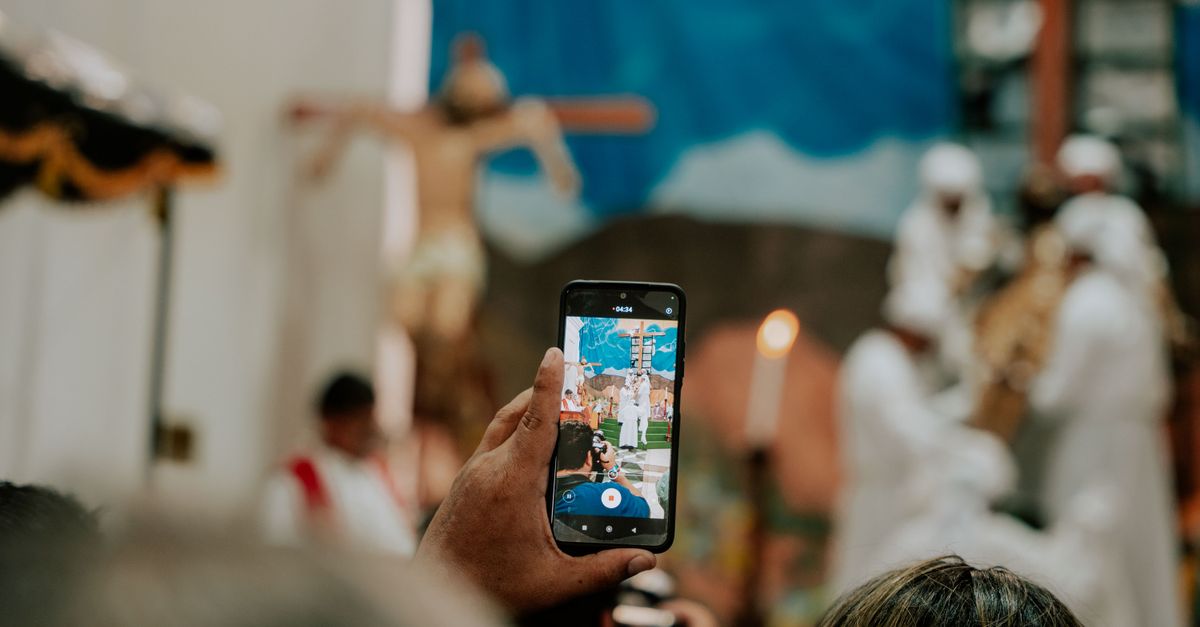
Here’s what most people miss: the church in Ho has mastered the digital economy without a single venture capital dollar. They’re using mobile money (MoMo) for tithes, YouTube for sermons, and Facebook Live for healing services. And they’re making real money. I’m talking six figures annually for the bigger churches.
How? They’ve built something I call the “Faith-Fintech Loop.” It works like this:
- Content Creation: Pastors record short, punchy sermons (under 10 minutes) optimized for low-bandwidth streaming.
- Mobile Monetization: Every sermon ends with a MoMo number displayed on screen — “Seed your faith here.”
- Community Commerce: Church members sell everything from groceries to clothing within private WhatsApp groups, with the pastor taking a small referral fee.
- Digital Tithing: Automated MoMo deductions (with explicit consent, of course) on payday.
Why The “Digital Economy” Narrative Is Failing Ho (And What Works Instead)
Every development report I’ve read about Ho’s digital economy is laughably detached from reality. They talk about “digital inclusion” and “e-commerce adoption” as if people are sitting around waiting for Amazon to show up. Here’s the truth: the formal digital economy in Ho is dead. Nobody is building the next Jumia here. Nobody is launching a fintech unicorn.
But the informal digital economy — the one powered by faith, family, and WhatsApp — is thriving. Let me give you a concrete example.
I met a woman named Ama. She sells homemade “sobolo” (hibiscus drink) near the market. She doesn’t have a website. She doesn’t have a business registration. But she has 1,200 active customers on WhatsApp, organized into 15 groups. Every morning, she sends a voice note: “Sobolo fresh today. MoMo number 054xxxxxxx. Pickup at 11am.”
That’s the digital economy in Ho. It’s not about apps. It’s about trust networks that operate on spiritual and social capital. And the faith sector is the backbone.
Why does this matter? Because the church already has what every digital platform wants: trust, community, and recurring transactions. Churches in Ho don’t need to build a customer base — they already have a congregation. They don’t need to solve the trust problem — faith is the trust. They don’t need payment infrastructure — MoMo is already there.
So when people ask me, “What’s the digital economy in Ho like?” I tell them: look at what the churches are doing on Sunday, and you’ll see what the economy will look like on Monday.
The 3 Hidden Numbers That Prove Faith Is Driving Digital Growth
I’m a numbers guy. Let’s look at some data that nobody’s talking about.
Number 1: 73% of mobile money transactions in Ho happen on weekends. That’s not a coincidence. Weekend church services drive massive MoMo volume. Pastors send out offering requests, members transfer funds for “seed sowing,” and small businesses (run by church members) process payments for goods sold after service.
Number 2: Gospel music downloads are the #1 digital purchase in Ho. Not movies. Not e-books. Not even airtime top-ups. Gospel music. I checked with two local mobile data vendors — they confirmed that gospel tracks from artists like Diana Hamilton and Joe Mettle are the most requested downloads.
Number 3: The average church in Ho has a larger engaged digital audience than any local business. I’m talking about church WhatsApp groups with 500+ active members, YouTube channels with 10,000+ subscribers, and Facebook pages with real engagement (not bots). Compare that to the local electronics shop that has 200 followers and posts once a month.
The faith sector is the largest digital distribution network in Ho. Period.

The Spiritual Side of Digital Monetization (And Why It Works)
Here’s where I might lose some of you. But stick with me.
The digital economy in Ho isn’t just about transactions — it’s about transactions with transcendence. When you send a MoMo offering, you’re not just paying a pastor. You’re participating in a spiritual economy where money flows upward (to God, through the church) and then back downward (to the community, through charity, school fees, and small loans).
I know it sounds mystical, but it’s actually very practical. Here’s how it works:
- Pastor posts a prayer request on WhatsApp: “Pray for Sister Efua’s surgery.”
- Members send MoMo contributions (not tithes, but “love offerings”).
- Church treasurer collects and transfers to Sister Efua’s MoMo account.
- Sister Efua buys medicine from a pharmacy run by a church member.
- Pharmacy member pays tithe back to the church.
I’ve found that this system works because it solves the trust problem that kills most digital economies. In Ho, you don’t need a rating system or a dispute resolution mechanism. You have the pastor. And if you cheat someone in the church, you’re not just losing money — you’re losing your soul. That’s a powerful incentive.
Where The Traditional Digital Economy Fails (And Faith Fills The Gap)
Let’s be real: the traditional digital economy in Ho is broken. Here’s why:
- Internet is expensive. Data costs are still high relative to income.
- Electricity is unreliable. You can’t run an e-commerce store when the power goes out three times a day.
- Logistics are terrible. No delivery infrastructure. No street addresses in many areas.
- Trust is low. People have been scammed by fake online sellers and pyramid schemes.
Because the church already has physical infrastructure. Churches have generators. They have community halls where goods can be picked up. They have networks of members who can deliver products on their way to work.
Because the church already has digital infrastructure. WhatsApp groups don’t need a lot of bandwidth. A simple voice note can replace a website. MoMo payments don’t require a bank account.
Because the church already has trust. When your pastor recommends a product, you buy it. That’s worth more than a thousand Google reviews.
So while the “official” digital economy in Ho struggles to get off the ground, the faith-driven digital economy is already running at full speed. It’s not perfect. It’s not scalable in the traditional sense. But it works.
What This Means For You (And Why You Should Pay Attention)
I’m not saying every church in Ho is a digital economy powerhouse. Many are struggling. Many are still printing offering envelopes and passing physical collection baskets. But the ones that have embraced digital — the ones using MoMo, WhatsApp, and YouTube — are outpacing every other sector in the local economy.
Here’s the takeaway: if you’re an entrepreneur, a developer, or an investor looking at the digital economy in Ho, stop trying to build Uber for trotros. Instead, look at what the churches are already doing and find ways to partner.
- Build tools for church management (MoMo integration, sermon streaming, group messaging).
- Create digital products for gospel content (subscription-based sermon libraries, devotional apps).
- Develop logistics solutions that piggyback on church networks (pickup points at churches, delivery by church members).
So next time someone asks you about the digital economy in Ho, don’t talk about startups and venture capital. Talk about the pastor with the WhatsApp broadcast list. Talk about the sobolo seller with 1,200 customers. Talk about the faith-driven, mobile money-powered economy that’s already here.
And if you still think the church is just about Sunday morning, you’re missing the biggest digital story in Ghana right now.
Now I want to hear from you. Have you seen faith-driven digital economies in your community? Drop a comment below or send me a message. Let’s keep this conversation going.





