I still remember the exact moment I realized CRISPR wasn't just hype. I was sitting in a cramped university library in 2015, reading a paper about editing a gene in human embryos that could theoretically wipe out a disease forever. My coffee went cold. I didn't care. That was the day I stopped thinking about gene editing as sci-fi and started thinking of it as the closest thing we have to a biological undo button.
Fast forward to now, and we're standing on the edge of something bigger. Something faster. Something that could erase Huntington's, sickle cell, Tay-Sachs, and dozens of other inherited diseases from family trees within our lifetime.
Welcome to CRISPR 3.0. And no, that's not a marketing label I invented to sound clever. It's the natural evolution of a technology that's gone from "nearly impossible" to "basically routine" in under a decade.
The Version Nobody Saw Coming
Here's what most people miss: CRISPR 1.0 was the "scissors." It cut DNA at a targeted spot. Revolutionary, sure, but messy. It often left scars, off-target edits, and a lot of collateral damage.
CRISPR 2.0 introduced base editing and prime editing — think of it as a pencil instead of scissors. You could rewrite a single letter of DNA without breaking the strand. That was the leap that made inherited disease treatment genuinely realistic.
CRISPR 3.0? That's the version that combines precision editing with delivery systems so elegant they can reach almost any tissue in the body — brain, liver, muscle, even the retina. We're not just cutting or rewriting anymore. We're rewriting and delivering with surgical accuracy.
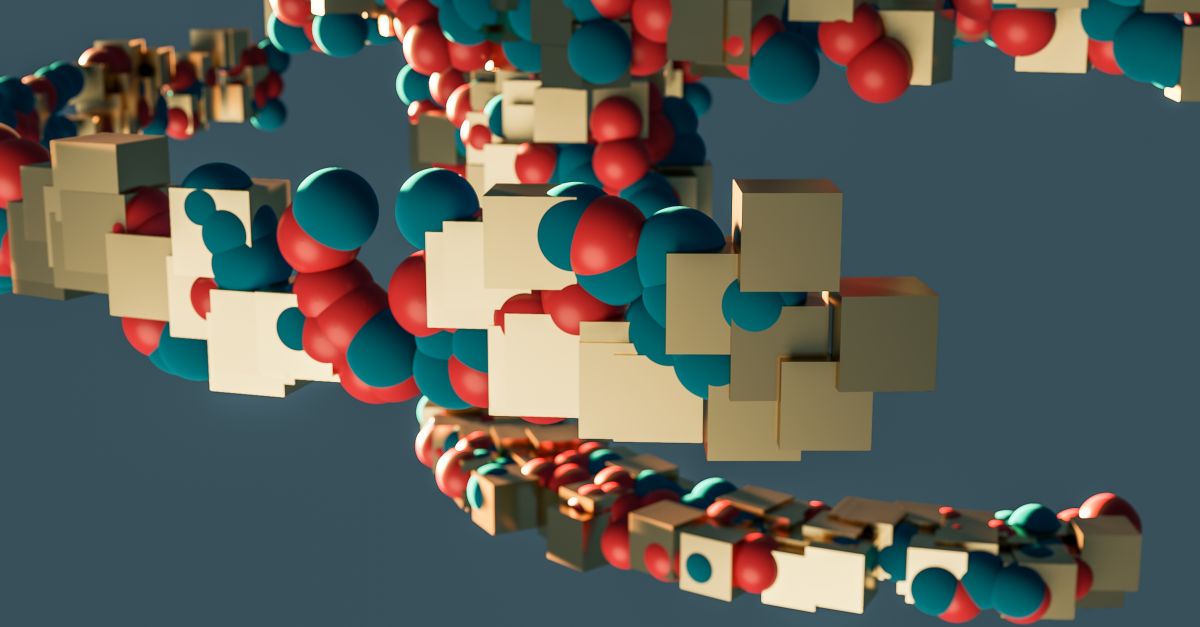
I've found that most articles gloss over the delivery problem, and that's a mistake. Knowing how to edit a gene is one thing. Getting the editing machinery into the right cell in a living human being is a completely different beast. CRISPR 3.0 solves that. And it's why the timeline for eliminating inherited diseases just got a lot shorter.
Why Sickle Cell Was the Tipping Point
Let's be honest — sickle cell disease was always the test case. It's caused by a single mutation in a single gene. If you can't fix that, you can't fix anything.
In late 2023, the UK approved Casgevy, the first CRISPR-based therapy for sickle cell disease and beta-thalassemia. That wasn't just a win for patients. It was proof of concept for an entire generation of therapies.
Think about what that means. A disease that has haunted families for centuries — one that causes excruciating pain crises and shortened lifespans — is now treatable with a one-time edit. Not management. Not symptom relief. An actual fix.
Now extrapolate. Huntington's disease? One dominant mutation. Tay-Sachs? One recessive mutation. Cystic fibrosis? A handful of well-mapped mutations. Duchenne muscular dystrophy? A single gene. The blueprint for erasing each of them already exists.
The bottleneck isn't science anymore. It's money, regulation, and access.
The Three Things Standing in the Way
Here's where I get a little less optimistic and a lot more honest.
1. The cost problem. Casgevy costs over $2 million per patient. That's not a cure for the masses. That's a cure for the wealthy. Until manufacturing gets cheaper — and it will, because mRNA vaccine tech showed us how fast that curve can bend — we're looking at a two-tier system.
2. The regulation maze. The FDA, EMA, and every other agency on the planet are still figuring out how to evaluate therapies that permanently alter your genome. Long-term safety data takes years to collect. You can't rush that, even if patients are dying.
3. The ethics conversation nobody wants to have. Germline editing — editing embryos so the change passes to future generations — is the nuclear option. It's how you truly eliminate a disease from a bloodline. It's also how you open a Pandora's box of designer babies and eugenics. I'm not going to pretend I have the answer. Nobody does.
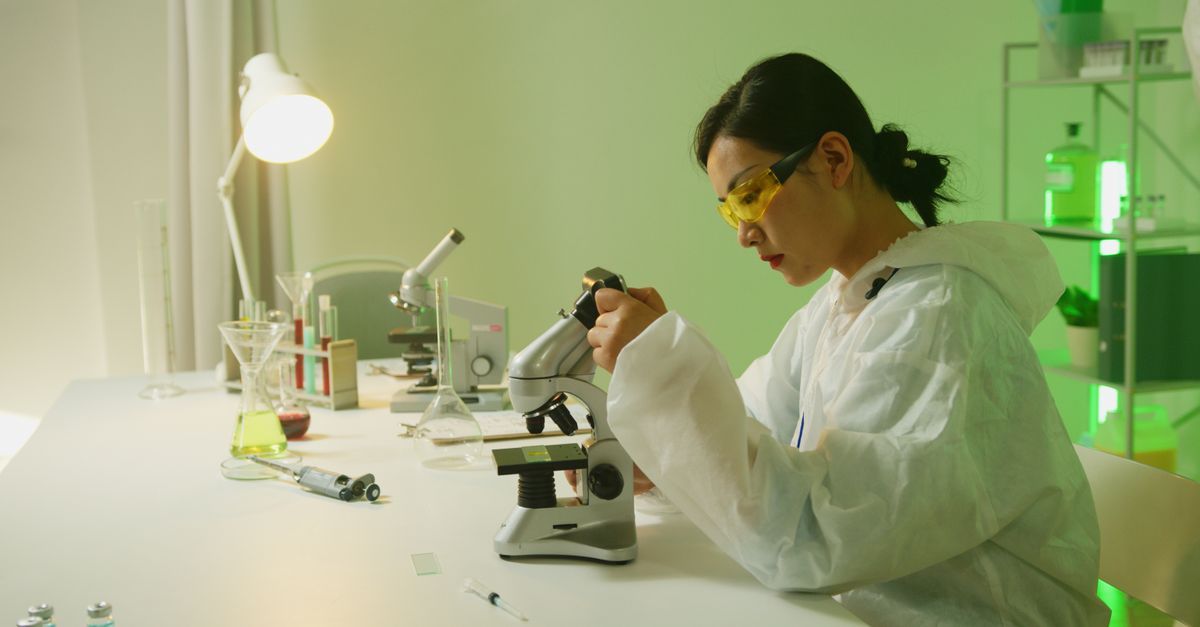
But here's the thing: somatic editing (editing cells in a living patient, not embryos) is already happening. That alone could functionally eliminate inherited diseases in people who are already alive. You don't need to touch the germline to give a child with sickle cell a normal life.
A Decade Is Not a Fantasy
Let me put a stake in the ground. By 2035, I believe we'll see:
- At least 10 FDA-approved CRISPR therapies targeting monogenic diseases
- Costs dropping below $200,000 per treatment as manufacturing scales
- In vivo editing (editing directly inside the body) replacing the brutal stem-cell extraction process used today
- Newborn screening programs that identify inherited diseases and offer immediate gene-editing intervention
I've talked to researchers who believe we're closer to five years than ten for the first wave of these treatments. I've also talked to ethicists who think we're moving dangerously fast. Both are probably right.
The Real Question Isn't "Can We" — It's "Who Gets To"
Here's what keeps me up at night. CRISPR 3.0 will work. That's not the question anymore. The question is whether it becomes a tool for equity or another wedge driven between the haves and the have-nots.
If a child in rural Guatemala has the same access to a $50,000 cure as a child in Boston, we've done something extraordinary. If not, we've just created a new kind of privilege — one written into your DNA.
I don't have a neat answer. But I do know that pretending the technology is the hard part is a cop-out. The hard part is us.
So here's my challenge to you: pay attention to this space. Not just the breakthroughs, but the pricing, the policy, the access. Because the next decade of gene editing won't be decided in a lab. It'll be decided in boardrooms, parliaments, and insurance offices.
And if we get it right, the word "inherited" might stop being a life sentence.