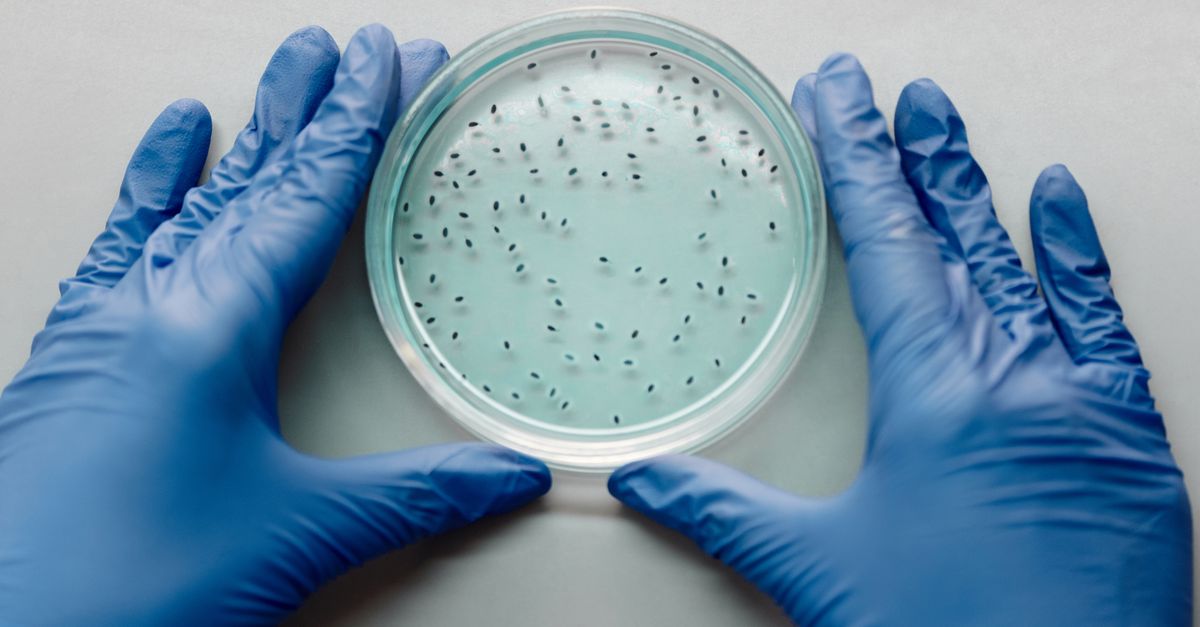
The FDA just approved the first CRISPR-based therapy for sickle cell disease, and the internet responded with a collective shrug.
That's insane to me. We're talking about a one-time treatment that functionally cures a genetic blood disorder that has tormented families for generations — and most people scrolled right past it to watch another video of a raccoon stealing pizza. I get it. Science headlines are exhausting. Every week something is "revolutionary" and then you never hear about it again.
But here's the thing: this isn't hype. This is the moment gene editing stopped being a lab curiosity and became actual medicine. And the second generation of these tools — what researchers are calling CRISPR 2.0 — is quietly rewriting what's possible for diseases we've spent decades calling incurable.
Let's talk about why this time is different.

The Original CRISPR Had a Dirty Little Secret
I've found that most CRISPR coverage glosses over the part that actually matters: precision.
Original CRISPR-Cas9 works like molecular scissors. You program it to cut DNA at a specific spot, and the cell repairs the break. Simple enough in theory. But in practice? Those scissors sometimes cut in the wrong place. Off-target edits. Chromosomal chaos. For a disease like sickle cell, where you're editing cells outside the body and can screen them before infusion, that's manageable.
For editing inside a living human being? That's a different beast entirely.
This is what most people miss about the first generation of gene editing: it was never precise enough to safely edit most tissues in a living body. The sickle cell approval involved extracting a patient's stem cells, editing them in a lab, and reinfusing them. Miraculous, yes. But also expensive, logistically brutal, and limited to a handful of conditions where that workflow makes sense.
CRISPR 2.0 changes the math.
Base Editing: The "Pencil" That Replaced the "Scissors"
Here's where it gets genuinely exciting.
A newer class of tools called base editors doesn't cut DNA at all. Instead, they chemically convert one DNA letter into another — a C to a T, an A to a G — without breaking the double helix. Think of it as the difference between using scissors and using a pencil with an eraser.
That distinction matters enormously for safety.
I remember reading about the first base-editing trial for leukemia in 2022, and honestly, I didn't appreciate what I was looking at. A patient with T-cell acute lymphoblastic leukemia — a cancer that had resisted every conventional treatment — went into remission after receiving engineered donor cells that had been base-edited to remove specific markers. No cutting. No collateral damage.
More than a dozen base-editing therapies are now in clinical development for conditions ranging from hypercholesterolemia (yes, a one-shot treatment for high cholesterol) to genetic forms of blindness.
And it doesn't stop there.
Prime Editing Is the One That Keeps Me Up at Night
If base editing is a pencil, prime editing is a word processor.
Developed by the same lab that pioneered base editing, prime editing can perform essentially any small DNA change — insertions, deletions, and all twelve possible letter-to-letter conversions — with remarkable precision. No double-strand breaks. No reliance on the cell's own repair machinery, which is where things usually go wrong.
Let's be honest: when prime editing was first published, I assumed it would take a decade to reach patients. The biology was elegant, but the delivery problem — getting these massive molecular machines into the right cells — seemed insurmountable.
Then in 2024, researchers demonstrated prime editing in non-human primates, correcting disease-causing mutations in the liver with a single infusion. And in early 2025, the first human trials for chronic granulomatous disease began.
We're not talking about theoretical anymore.
The Diseases That Are About to Lose Their "Incurable" Label
Let me be specific, because vague optimism is worthless.
The pipeline looks like this:
- Sickle cell disease and beta-thalassemia — already approved, with next-gen editors aiming to reduce the brutal chemotherapy conditioning required before treatment.
- Hereditary transthyretin amyloidosis — a fatal nerve and heart disease. CRISPR-based therapy is in late-stage trials with data showing dramatic reductions in the disease-causing protein.
- Familial hypercholesterolemia — a one-time treatment that could replace lifelong statins for people with the genetic form.
- Leber congenital amaurosis — a childhood blindness. Early trials show measurable vision improvement after a single injection.
- Duchenne muscular dystrophy — still early, but base editors are showing promise in restoring dystrophin production in animal models.
But the bigger story is what happens next.
Why This Time Actually Feels Different
I've been burned by science hype before. The "cancer cure" that was actually a mouse study. The "aging reversal" that was a press release with no data. So why am I genuinely optimistic about next-gen gene editing?
Three reasons.
First, the delivery problem is finally cracking. Lipid nanoparticles — the same technology behind mRNA vaccines — can now ferry editing machinery to the liver, and new viral vectors are reaching muscle, eye, and even brain tissue. Delivery has always been the bottleneck. That bottleneck is widening.
Second, the safety data is holding up. Thousands of patients have now received some form of gene editing, and the catastrophic off-target events that critics predicted haven't materialized. That's not proof of long-term safety, but it's a hell of a lot better than the alternative.
Third, the cost is starting to fall. The first approved CRISPR therapy costs over $2 million per patient. That's obscene. But as competition enters the market and manufacturing scales, analysts project prices could drop by 80% within a decade. Still expensive. But not "only billionaires get cured" expensive.

The Uncomfortable Question Nobody Wants to Ask
Here's my controversial take for the day: the biggest barrier to curing these diseases isn't science anymore.
It's access.
We have a functional cure for sickle cell disease — a disease that disproportionately affects Black patients and has historically received a fraction of the research funding of comparable conditions. And the treatment costs more than most people will earn in a lifetime. Insurance companies are already balking at coverage.
What's the point of curing a disease if only the wealthy can afford the cure?
This is the conversation we need to be having right now, before the pipeline delivers twenty more therapies that sit behind an insurmountable paywall. Gene editing has the potential to be the most democratizing force in medicine since antibiotics. Or it could become the most stratified.
The science is ready. The question is whether the system is.
If you or someone you love has been told a genetic disease is "incurable," I'd genuinely encourage you to look at clinical trial registries like ClinicalTrials.gov. The word "incurable" has an expiration date now — it's just a matter of whether you can reach it in time. And that, more than any molecular breakthrough, is what we should be fighting to change.





