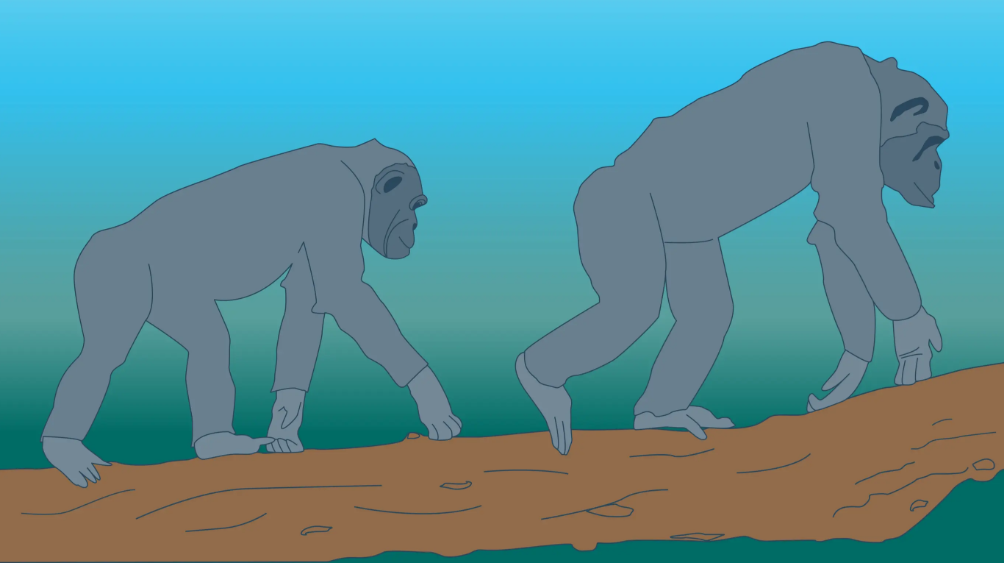
People who hold leadership positions describe themselves as more willing to take risks than those who do not, and chimpanzees show the same pattern, according to research involving the University of Portsmouth. The study, published in The Leadership Quarterly, compared survey data from more than 40,000 adults with caregiver assessments of 86 chimpanzees. Because the link appears in both species, the researchers suggest it may have evolutionary origins that long predate modern human societies, Mirage News reports.
The international team was led by the Max Planck Institute for Human Development in Germany, working with the University of Portsmouth and Dresden University of Technology.
Why it matters
The findings offer a possible window into why risk-taking and social rank so often go together. If a willingness to accept risk is tied to holding status in both humans and one of our closest living relatives, that connection may be far older than any human institution. According to Mirage News, the researchers argue the pattern could have helped individuals attain and keep social standing for millions of years.
The study also raises a question that reaches into workplaces and boardrooms: whether cautious people are less likely to be promoted, or whether positions of authority gradually make people bolder. The authors are explicit that their data cannot yet settle it.
How the human side was measured
For the human portion, the team drew on the German Socio-Economic Panel, a long-running national survey. Each year between 2015 and 2020, participants indicated whether they held a leadership role and rated their general readiness to take risks on a scale from 0 to 10.
The gap between the two extremes was clear. Respondents who reported no leadership position across the full six years averaged 4.96 on the scale. Those who were leaders throughout averaged 6.2. The researchers also found that people with higher earnings rated themselves as more willing to take risks.
Caregivers rated every chimpanzee
To test whether the pattern extends beyond humans, the team turned to all 86 chimpanzees housed at Ngamba Island Chimpanzee Sanctuary in Uganda and Sweetwaters Chimpanzee Sanctuary in Kenya. The animals ranged in age from 2 to 40 and were assessed by caregivers who had worked with them over long periods.
Those caregivers scored each chimpanzee's willingness to take risks in several settings: searching for food, coming across snakes, vying for rank, and meeting unfamiliar people, along with a broader overall rating of risk tolerance. In a separate exercise, the caregivers placed every animal in its group on a hierarchy running from the alpha male downward.
The scores followed the rank order. Chimpanzees in the top fifth of their group's hierarchy averaged 2.8 on a 0 to 4 risk scale, while those in the bottom fifth averaged 1.5.
Dr Esther Herrmann, co-senior author at the University of Portsmouth's Centre for Comparative and Evolutionary Psychology, said chimpanzees offer a unique view of the evolutionary foundations of leadership. She said the results suggest a readiness to take risks may have been connected to gaining and holding social status for millions of years.
Males scored higher, but the leadership link held for both sexes
In both species, males rated higher than females on willingness to take risks. The association between leadership and risk-taking, however, was equally strong for men and women, and for male and female chimpanzees.
Lead author Dr Lou Marie Haux, a postdoctoral researcher at the Max Planck Institute for Human Development, described the finding as pointing to a possible evolutionary origin while stressing its limits. She said the work establishes a correlation rather than a causal relationship, and that it remains unclear whether risk-prone individuals are more likely to rise to leadership or whether holding a leadership role makes people more inclined to take risks.
The long-term survey data lean toward the first explanation, according to the reporting: a greater appetite for risk often shows up before a person takes on a leadership position. The authors note that confirming this would require further study.
Dr Herrmann said comparing the patterns in other great apes, bonobos among them, would help build a fuller picture of how the link between leadership and risk evolved.
Watch for follow-up work extending the same assessments to bonobos and other great apes, which the authors say is the next step toward understanding where this shared trait came from.