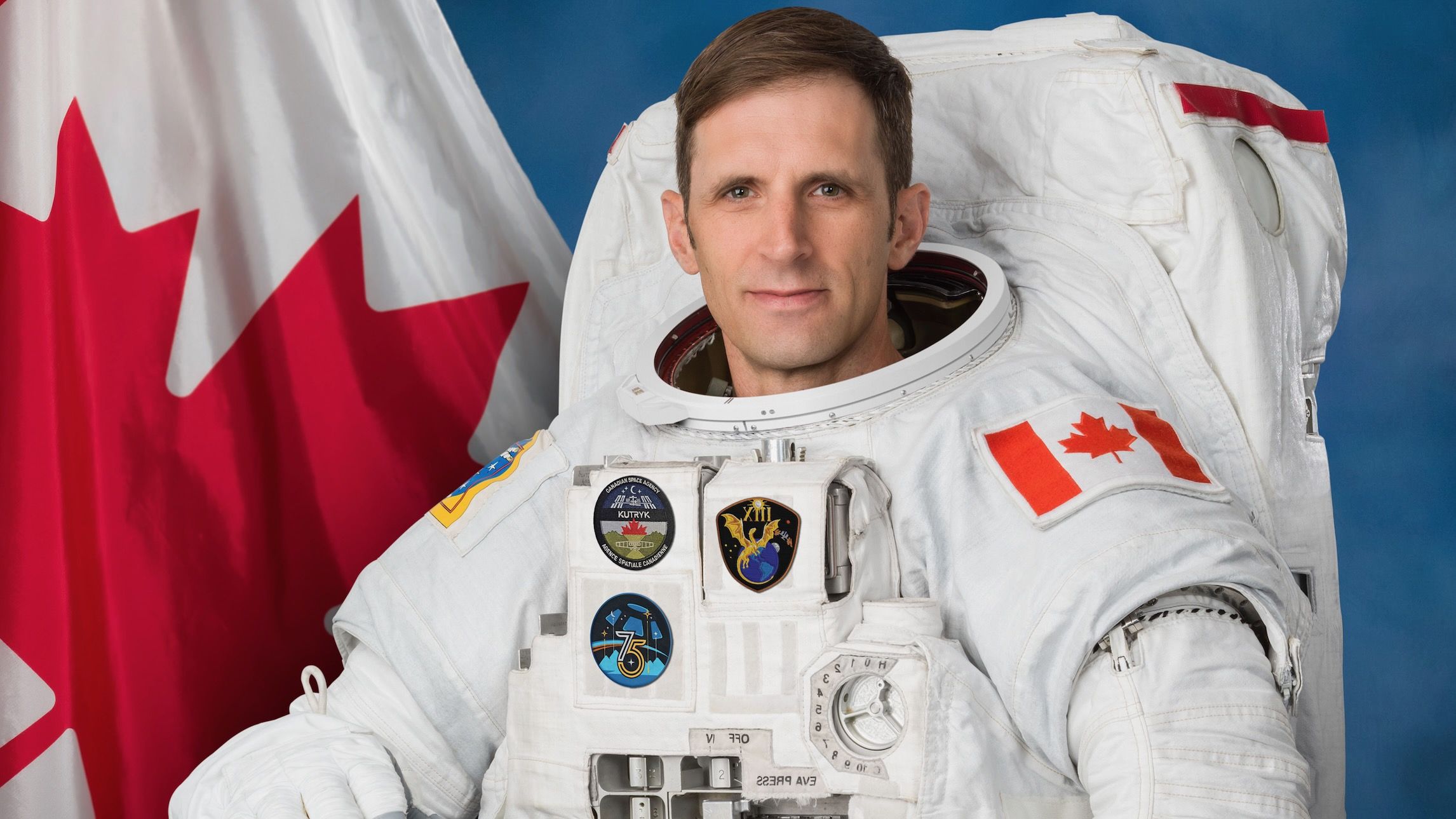
Canadian Space Agency (CSA) astronaut Joshua Kutryk is scheduled to step outside the International Space Station on Thursday (Oct. 29), becoming the first Canadian to perform a spacewalk in seven years, according to Space. He will be joined by NASA astronaut Anil Menon for the excursion, which is set to begin at 8 a.m. EDT (1200 GMT) and run for about six hours and 45 minutes.
The spacewalk is the first of two planned outings for the pair, with the second expected no earlier than Nov. 5. Both are aimed at expanding the station's power capacity.
Space reports that coverage of the event will be carried live, courtesy of NASA, starting at 6:30 a.m. EDT (1030 GMT).
Why it matters
The two spacewalks are part of a long-running effort to shore up the station's aging electrical system. Kutryk and Menon will deploy the seventh and eighth International Space Station Roll-Out Solar Arrays (iROSAs), which are mounted over the original arrays that have degraded over decades in orbit.
The first iROSA was rolled out in 2021. Once all eight are installed and operating, the station's power supply is expected to climb from 160 kilowatts to roughly 215 kilowatts, an increase of about 30%, according to Space.
For Canada, the outing carries its own significance: it marks the country's first spacewalk since the CSA's previous mission seven years ago. Kutryk, a colonel in the Royal Canadian Air Force, has never walked in space before. Menon, a colonel in the U.S. Space Force, has completed three spacewalks.
A robotic arm built in Canada does much of the heavy lifting
Canadarm2, the station's Canadian-built robotic arm, will play a central role in the operation. Menon said in a Saturday (Oct. 24) post on X that ground controllers had recently relocated the arm to the trunk of a SpaceX Dragon cargo spacecraft, which delivered the two arrays earlier this month. The arm then lifted the iROSAs and transferred them to a transporter for the astronauts, and it even loosened bolts ahead of the spacewalks, he added.
During Thursday's activity, the arm's job grows. Kutryk and Menon will slide an array off its transport rail, after which Menon will climb onto a Canadarm2 platform so the array can be placed into his hands. From inside the station, NASA astronauts Luke Delaney and Jessica Watkins will maneuver the arm to position Menon and the hardware at the port-side installation site, which supports the 2A electrical-power channel.
Garrett Hehn, NASA's spacewalk flight director, said during an Oct. 20 press conference that each folded array measures about 10 feet (3 meters) long and weighs 750 pounds (340 kilograms) on Earth, making them demanding objects to handle. He said the agency reviewed earlier iROSA spacewalks and devised a new sequence of movements that rotates around the array's center of mass rather than the astronaut's, a change intended to reduce fatigue for Menon.
Kutryk will travel to the installation point hand over hand to join his partner. The two will then secure the iROSA to the older array using a modification kit put in place on a previous spacewalk. Hehn described a set of bolts that lock the structure in place and release the folded array, which then extends from roughly 10 feet to about 20 feet (6 meters). He compared the deployment to a snap bracelet, saying magnets along its edge release enough energy for the array to unroll steadily over about 10 minutes.
Timing matters for the next step. The astronauts must connect power cables while that section of the station is out of sunlight, and the orbiting lab circles Earth every 90 minutes. Hehn said a jumper will combine the output of the legacy arrays with that of the new roll-out arrays, producing a substantial gain in power generation.
What the second spacewalk adds
The Nov. 5 excursion will repeat the installation procedure with another array, this time on the station's starboard side. The final iROSA sits farther out, beyond Canadarm2's reach, so the crew will use a leapfrog technique to close the gap.
Under that plan, Kutryk will move to the location on his own, hand over hand, and take the array from Menon while standing on a platform mounted to the station's truss. Menon will then leave the robotics platform, relocate it from Canadarm2 to another point on the truss, and climb back aboard to hold the iROSA steady for installation on the 3B electrical-power channel. Hehn said the maneuver is how the crew covers the last stretch that the robotic arm cannot manage alone.
CSA astronaut Jenni Gibbons will serve as capsule communicator for both spacewalks. She has already filled that role on NASA's Artemis II mission around the moon last April, and she is slated to be lead capcom for Artemis III, which will test crewed lunar landers in Earth orbit next summer if schedules hold.
Watch for the second spacewalk no earlier than Nov. 5, when the crew targets the starboard side and the more distant final installation.





