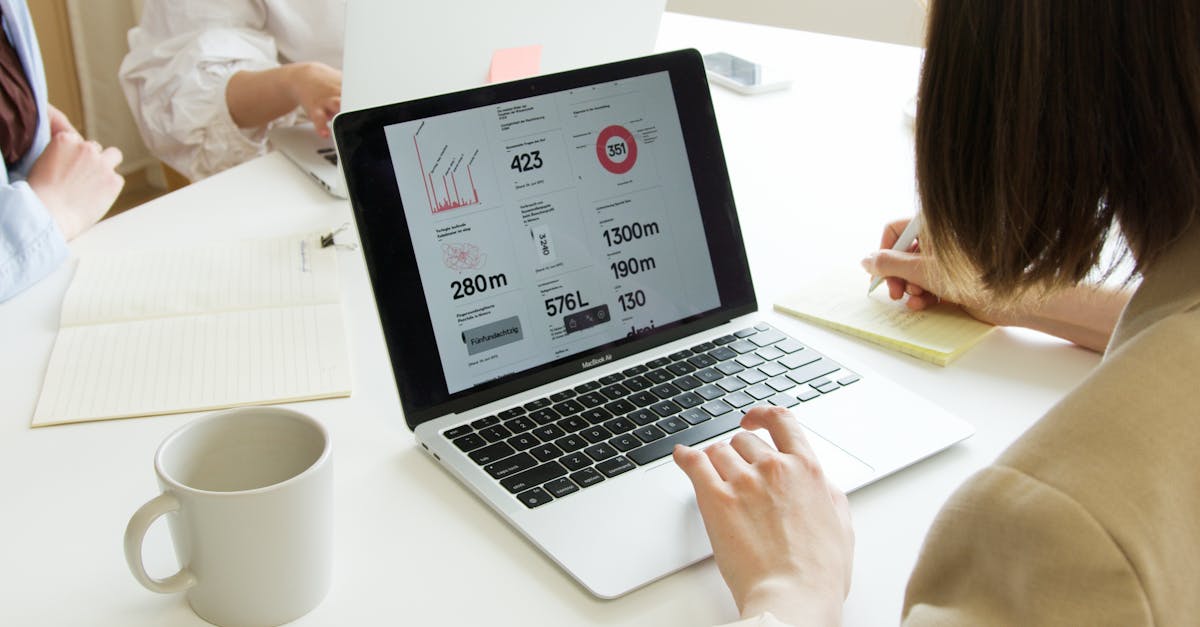
Let’s be honest: business isn’t a science. It’s a chaotic mess of human ego, market randomness, and caffeine-fueled guesswork. But here’s the controversial truth — that’s exactly why we need to treat it like one. If you want to stop gambling with your company’s future, you need to stop running it like an art project and start running it like a lab experiment. I’ve seen too many brilliant founders crash because they fell in love with their own narrative instead of the data. Science isn’t about being cold; it’s about being honest. And honestly? Most business advice is just astrology for people with LinkedIn Premium.

The Hidden Algorithm Behind Every “Lucky” Success
Here’s what most people miss: successful businesses are not built on gut feelings. They’re built on pattern recognition. I’ve spent years studying the difference between companies that survive their first five years and those that don’t. The survivors all share one secret — they treat their business model as a hypothesis, not a fact.
Think about it. Every time you launch a product, you’re running an experiment. You’re saying, “I believe X will happen if I do Y.” That’s the scientific method in a nutshell. The problem is, most entrepreneurs get emotionally attached to their hypothesis. When the market says “no,” they double down instead of pivoting. I’ve been guilty of this myself. I once spent six months perfecting a feature nobody wanted because I was too proud to admit my initial assumption was wrong.
The science of business is iterative. It’s about running small, cheap experiments to test your biggest assumptions. Here’s a quick framework I use:
- State your hypothesis clearly — “If we lower our price by 10%, conversion will increase by 20%.”
- Design a minimal experiment — A/B test with 500 visitors, not a full launch.
- Measure the signal, not the noise — Look for statistically significant changes, not emotional spikes.
- Kill your darlings — If the data contradicts your gut, trust the data.

Why Your “Intuition” Is Sabotaging Your Bottom Line
Let’s get personal for a second. You’ve got that feeling in your gut, right? That “I just know this will work” vibe. Here’s the uncomfortable truth: your intuition is mostly hindsight wearing a disguise. Neuroscience tells us that what we call intuition is often just pattern-matching from past experiences — experiences that might not apply to your current situation.
I remember consulting for a tech startup where the CEO insisted on a particular marketing strategy because it “felt right.” He was charismatic, persuasive, and honestly, I almost bought into his confidence. But the numbers told a different story. When we ran a controlled test, his “gut feel” strategy performed 40% worse than the data-driven alternative. He was shocked. I wasn’t.
Science teaches us to be humble in the face of evidence. In business, that humility is a superpower. It means you can change your mind without losing face. The best leaders I’ve worked with have a phrase I love: “I was wrong, and here’s what I learned.” That’s not weakness — that’s the scientific method in action.
Here are three signs your intuition is leading you astray:
- You’re ignoring contradictory data — If you find yourself explaining away negative results, you’re not doing science, you’re doing confirmation bias.
- You’re following “best practices” blindly — Best practices are just averages. They might not fit your unique situation. Science tests your reality, not someone else’s.
- You’re making decisions based on the loudest voice in the room — That’s politics, not science. Data doesn’t have a personality.
The 3 Scientific Principles That Predict Business Survival
After analyzing hundreds of case studies (and a few spectacular failures I’d rather not name), I’ve distilled business science down to three principles. Ignore them at your peril.
1. Falsifiability — The Courage to Be Wrong
The most powerful question you can ask is: “What evidence would prove my current strategy is wrong?” If you can’t answer that, you’re not running a business — you’re running a belief system. Great scientists design experiments that can disprove their theories. Great business leaders do the same.
I once worked with a founder who was convinced his subscription model was perfect. When I asked him what data would make him change his mind, he went quiet. That silence cost him $200,000 before he finally admitted the model was broken. If he’d built a falsifiable hypothesis from day one, he could have pivoted in weeks, not years.
2. Reproducibility — Stop Chasing One-Hit Wonders
Did your last marketing campaign do well? Great. But can you reproduce that success? If your results can’t be replicated, they’re not real — they’re luck. Science demands reproducibility. Business should too.
I’ve seen companies spend millions on a viral campaign that they couldn’t repeat. The next quarter, they were back to square one. Instead, focus on processes that generate consistent, moderate results. The science of business is boring. It’s about grinding out small wins that add up over time. That’s not sexy, but it’s survivable.
3. Peer Review — The Antidote to Founder’s Delusion
Here’s a radical idea: let someone outside your company audit your strategy. I know, it feels like inviting a food critic to your family dinner. But peer review is how science catches errors. In business, it’s how you catch blind spots.
I make it a practice to run my quarterly plans past a group of trusted peers who have no skin in the game. They’ve saved me from launching at least three terrible products. Their feedback isn’t always comfortable, but it’s always useful. If you don’t have a peer review system, you’re flying blind.

The Surprising Link Between Lab Coats and Profit Margins
You might be thinking: “This sounds great, Shanti, but my business is creative. We sell experiences, not equations.” I get it. I’ve worked with artists, chefs, and fashion designers who bristle at the word “science.” But here’s the thing — even creativity follows patterns.
The most innovative companies I’ve studied don’t just throw spaghetti at the wall. They use structured experimentation to find what works. Pixar tests their story concepts with small audiences. Spotify runs thousands of A/B tests every year. Even a Michelin-starred chef I know keeps a lab notebook of every recipe iteration, measuring customer reactions.
The science of business isn’t about killing creativity. It’s about giving creativity a target. When you know what works, you can be more creative within those constraints. Constraints, paradoxically, breed innovation. Ask any poet who writes sonnets — the structure frees them to play.
Here’s a practical takeaway: start a “failure log” today. Write down every business decision you make, the hypothesis behind it, and the outcome. After six months, you’ll have a personal dataset that reveals your own patterns. I did this, and I discovered I was consistently overestimating how much customers cared about “premium” features. That insight alone saved me tens of thousands of dollars.
The One Question That Will Change How You Lead
Let me leave you with this. The next time you’re facing a major decision — whether it’s a product launch, a hiring choice, or a pricing change — ask yourself one question:
“What would I do if I had to prove my decision was wrong?”
That question flips your brain from defending to exploring. It opens the door to evidence you might have missed. It makes you a scientist instead of a salesperson.
I’ve seen this question transform leadership teams. It takes the ego out of the room and replaces it with curiosity. And curiosity, my friends, is the most underrated business tool on the planet.
So go ahead. Run your business like a lab. Be willing to be wrong. Test everything. And remember — science doesn’t guarantee success, but it guarantees learning. And in a world that changes every five minutes, learning is the only sustainable competitive advantage.
Now, what hypothesis are you going to test tomorrow?





