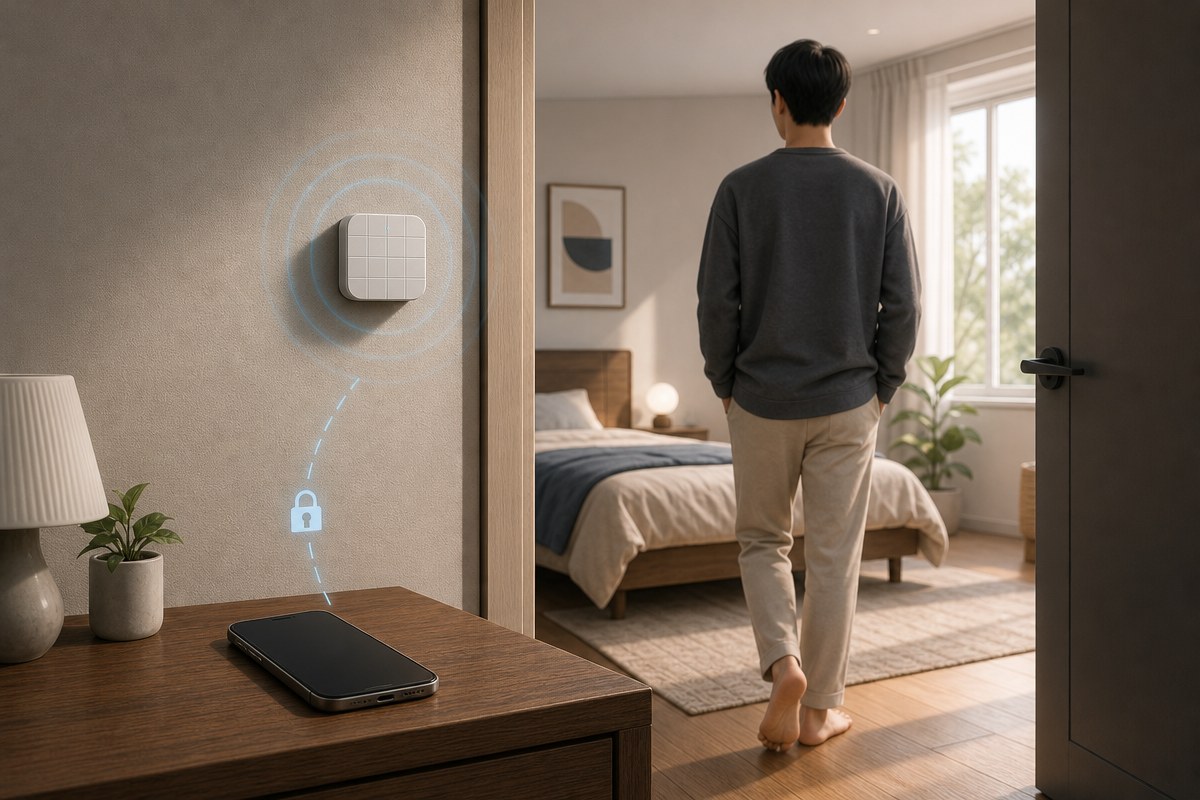
Brick, the company behind a physical app-blocking device, announced a second product on October 22 called Brick Night. The device locks selected apps automatically when a user walks into a bedroom, according to 위키트리. It is priced at $129 and sold only through Brick's official website in a single color, Midnight Blue.
The announcement was distributed through a BusinessWire press release issued in Chicago, 위키트리 reports. Brick positions the device as different from existing app blockers that depend on schedules or the user's memory. Instead, it creates friction between the phone and its owner through physical location.
Why it matters
The launch extends Brick's core idea — adding a physical obstacle to phone use rather than relying on software settings or willpower — into the bedroom, a room where many people keep their phones overnight. CNET, cited in the coverage, reports that 87 percent of American adults sleep with a phone in the bedroom, and research has linked bedtime screen time to poorer sleep quality. Brick says it sees the bedroom as one of the places where people most easily reach for their phones at the start and end of the day, which is why it chose that space for its second product.
How the device works
Setup begins in the Brick app. The user first creates a custom mode that pairs the apps to be blocked with the times they should be blocked. Next, the user defines a bedroom area, which can measure up to 25 feet by 25 feet (about 7.6 meters). Placing Brick Night inside that zone — on a nightstand, for example — completes the setup.
The device relies on Bluetooth signal strength. The Brick app estimates the distance between the phone and Brick Night, and when it judges that the user has entered the bedroom, it switches on the block for the chosen time window. Leaving the room releases the block, depending on the settings, and the apps reopen when the time window ends.
Totally the Bomb noted that the zone can extend past walls. According to that outlet, the boundary behaves more like an adjustable area than a line drawn at the bedroom door, so anyone who wants to use blocked apps in an adjacent room should check that the range does not reach it.
Price, hardware and compatibility
The original Brick costs $59. It blocks apps on days and times the user sets, and releasing the block requires physically tapping the phone against the device. Brick Night skips that tapping step and works automatically based on location. The Verge, as cited in the reporting, said the central argument for the product is that blocking happens in the background without adding a new step to a bedtime routine.
The price gap between the two products is $70. A bundle containing both sells for $169, which is $19 less than buying them separately. The Verge pointed out that Brick Night costs more than twice as much as the original and lacks NFC, so one device cannot handle both location-based and tap-based blocking. In other words, it does not replace the original Brick.
Brick Night runs on batteries and does not need charging. Two CR2477 batteries are included, and CNET reported they last at least two years. According to the product page cited by Totally the Bomb, the device measures 73 by 73 by 45 millimeters and does not require Wi-Fi.
It works with iPhones running iOS 17 or later and Android phones running Android 12 or later, according to Brick's compatibility FAQ. Multiple people can share a single Brick Night: each person connects their own phone's Brick app and sets their own apps, time windows, zones and modes, so couples or roommates sharing a bedroom do not affect each other's settings.
There is currently no subscription fee. Under Brick's payment terms, the app and cloud services are included with the hardware purchase, though the terms leave open the possibility of optional subscription products in the future. Totally the Bomb advised reading this as meaning there is no monthly charge for now.
Brick lists free shipping on the product page, and the threshold for free standard shipping in the U.S. is $75 after discounts and before tax. Returns must be requested within 30 days of delivery, and the item must be sent back within 14 days of the request. ChannelNews reported that the device goes on sale in Australia from October 23 at 206 dollars.
Sleep claims and the wider trend
ChannelNews reported that Brick referenced research on the connection between screen use in bed, short sleep duration and insomnia. Brick does not market Brick Night as a medical device, however. The company describes it as a boundary that reduces late-night and early-morning scrolling rather than a treatment for sleep problems.
The original Brick came from the idea of adding physical friction instead of depending on software settings or willpower. Brick Night automates that friction through location detection. ChannelNews framed the launch as part of a broader shift in digital wellbeing products, which are moving beyond notifications, timers and screen-time features toward the physical environment and automation.
Brick says the original device suits work, study, family time and mindfulness, while Brick Night is aimed at sleep, winding down the day, waking up and running no-scroll zones. Both products use the same Brick app.
Watch for whether Brick follows through on the optional subscription products its terms allow, and how buyers respond to the $70 premium over the original.