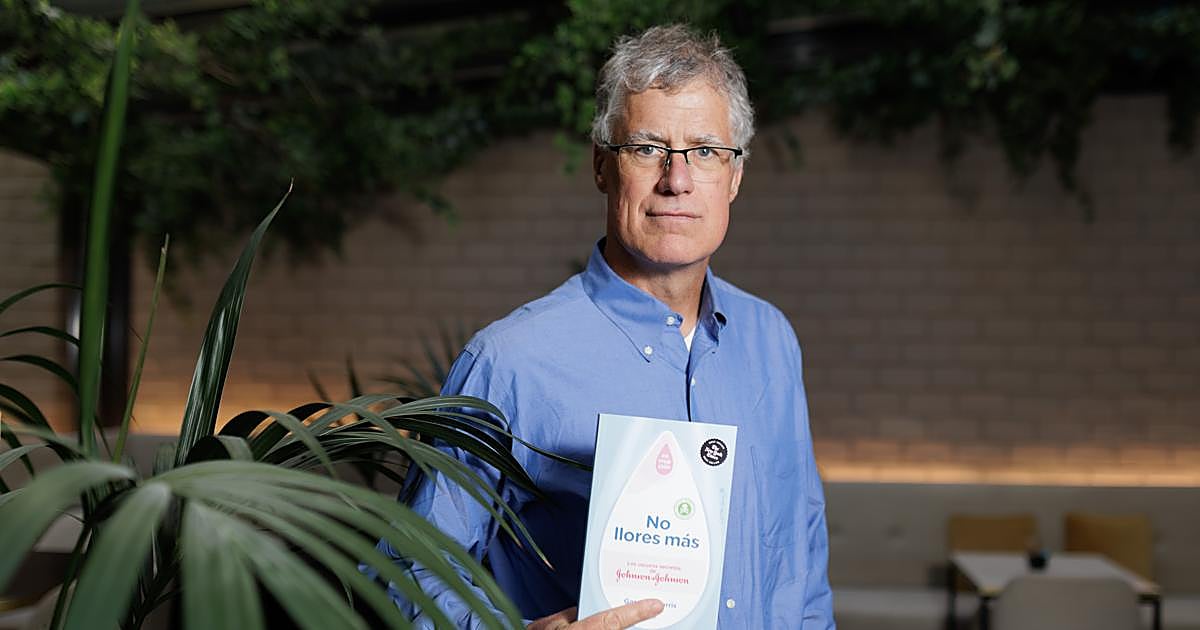
A new book by veteran pharmaceutical journalist Gardiner Harris accuses Johnson & Johnson of causing roughly two million deaths in the United States through three of its products alone, according to an interview published by ABC. Harris, who covered the drug industry for The New York Times and The Wall Street Journal, makes the claim in No llores más: Los oscuros secretos de Johnson & Johnson (Capitán Swing, 2026). In the ABC interview, he describes what he calls an extreme gap between the company's public image and its actual conduct.
Harris told ABC the death estimate covers three products and does not include metal-on-metal hip implants or vaginal mesh. He also said the company's conduct has had consequences beyond the United States, including in Spain.
Why it matters
Harris argues the case is not only about one company. In his account to ABC, the same pattern runs through the recent history of American health care, which he describes as both the best and the worst in the world. He points to a single structural cause: in the United States, Johnson & Johnson is allowed to pay doctors to work as part-time salespeople. In his view, that practice underlies the corruption in every story he examines, from opioids to the antipsychotic Risperdal. He told ABC that the opioid crisis would never have become so severe if large drugmakers had been barred from paying physicians.
He also described how the money works on the receiving end. Many doctors, he said, convince themselves they are acting correctly while taking extra payments, reasoning that they would prescribe the same drugs anyway and that the sums are trivial. Harris called that reasoning false.
A company that kept its reputation while scandals piled up
ABC asked Harris why he focused on Johnson & Johnson rather than Merck, Pfizer or other competitors. He gave two reasons. The first is reputation: in surveys of the most admired brands, Merck and Pfizer were once among the most respected in the world but fell as prices rose and reporting on Big Pharma problems grew. Johnson & Johnson, by contrast, stayed at the top. Harris told ABC that no other company on Earth shows a wider gap between reputation and behavior, and that this hypocrisy is what most angers journalists — someone claiming to be beyond reproach while, in his words, being detestable.
The second reason, he said, was that while covering the whole industry he came to see Johnson & Johnson as different in degree. He said that at one point in 2003, six of the company's seven best-selling drugs were tied to criminal activity. He argued that mafia families may draw a larger share of their income from legal business than Johnson & Johnson did at that time, and that the company has behaved like a criminal organization for much of its history, with no reason to assume it has improved.
Harris also traced the arc of the company's best-selling product in each decade, from baby-boom talcum powder to the painkiller Tylenol (paracetamol), early antipsychotics and fentanyl. Each blockbuster, he told ABC, came with its own scandal and, in a sense, taught the company how to contain the next one.
The EPO case and the cost in Spain
The interview turns to erythropoietin, or EPO, and cancer. Harris told ABC that the company withheld what it knew about EPO for more than a decade while oncologists in Spain used it in cancer patients. He said the doctors were misled because the company lied, and that researchers who knew the truth stayed quiet — because of confidentiality agreements, because they wanted to keep the money, or because they feared that a trial showing EPO killed patients was an anomaly. He called it a crime that cost at least 500,000 lives, with certainly several thousand in Spain.
ABC put the counterargument to him: should the lives saved by the company's products be subtracted from the toll? Harris rejected the framing. He said the company does have some life-saving products, but that this is its job and the two sides cannot be balanced against each other.
He named Alex Gorsky as the executive behind many of the episodes, saying Gorsky led the Risperdal team and was at the helm for opioids and hip prostheses. Harris told ABC that Gorsky is clearly responsible for more deaths and injuries than almost anyone alive, adding that this probably includes Vladimir Putin, since he does not believe the war in Ukraine has produced two million dead or anything close.
What the reporting cost
Harris described an investigation that brought threats, editorial blocks in several countries and legal scrutiny that cut his original manuscript in half. The published book runs to more than 500 pages. In it, he maintains that the health care giant operated for much of its modern history with practices he associates with organized crime, backed by a large legal team and by a medicines regulator, the FDA, that he says was progressively colonized by the interests of the industry it was meant to police.
According to ABC, the book is published by Capitán Swing. The interview was published on 10 October 2026.
What to watch next: whether Johnson & Johnson responds to the specific allegations in the book, and whether the claims about EPO and Spain prompt any regulatory or legal review in Europe.





