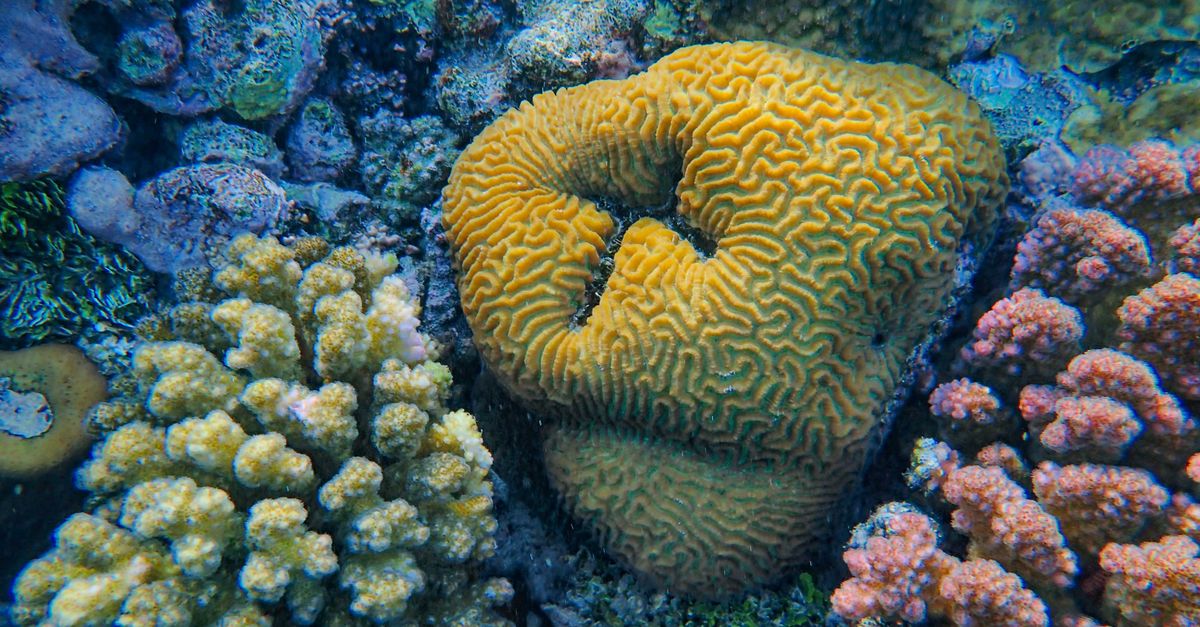
Researchers have found that bleached corals can recover quickly when they come into direct contact with healthy corals, according to a study reported by Science | AAAS and covered by Stanford University's Doerr School of Sustainability. The work describes the recovery as happening at record speed, with one account reporting that a healthy coral reversed bleaching in a neighboring coral after about a week of contact.
The mechanism appears to involve the transfer of symbionts — the microscopic partners that live inside coral tissue and give reefs much of their color and energy. Bleached corals lose these symbionts, which is why they turn white. The new findings suggest that a bleached coral does not necessarily have to recover on its own; a healthy neighbor can pass the needed symbionts along through physical contact.
The results were picked up widely, including by The New York Times, Yahoo and ScienceAlert. Coverage framed the finding as evidence that bleached corals are not a lost cause, even as reefs face mounting pressure. The Stanford Doerr School of Sustainability described the approach as a way to reverse bleaching at record speed.
The study does not, based on the available reporting, claim to solve the broader threats reefs face. It points to a recovery route that works at the scale of individual corals in contact with one another.
What to watch next: whether researchers can apply the contact-based transfer method beyond the lab or small-scale settings, and how it might factor into reef restoration efforts.





