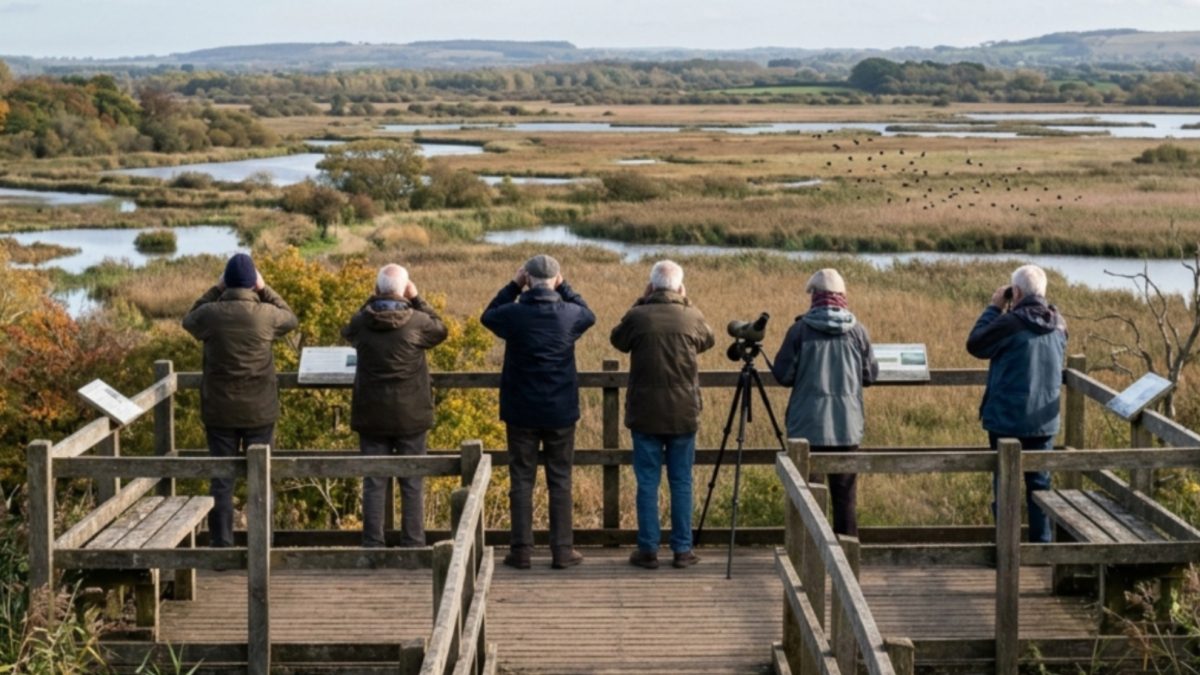
Birdwatching may do more than fill a quiet afternoon. According to MARCA, new research indicates that the hobby can reshape the brain and may help slow the mental decline that comes with age. The work was led by Erik Wing at the Baycrest Academy for Research and Education in Toronto, Canada.
MARCA reports that the study compared brain scans of people who were highly experienced birdwatchers with those of newcomers to the activity. Researchers first assessed each participant's ability to identify birds, sorting them into expert and novice groups, and then examined their brains.
The scans showed that the two groups differed in brain structure. MARCA reports that experienced birdwatchers had different neural wiring in regions tied to attention, visual perception and visual recognition. From this, the researchers concluded that birdwatching may help slow age-related decline by keeping the brain more organized.
Why it matters
The finding adds a neurological explanation to what care providers have observed for years. MARCA notes that birdwatching has long been treated as a pastime for older adults and for people living with dementia, and that groups have been set up in nursing homes in the United Kingdom, Germany and the United States, according to the BBC.
The hobby keeps people mentally active because it demands close attention to the movements and habits of each species. MARCA reports that it also offers social contact and positive emotional experiences, and that it can help keep memory sharp as the years pass. The new research goes further, suggesting the activity does not merely occupy the mind but alters how the brain is arranged.
MARCA draws a comparison with physical exercise and with learning to play a musical instrument, both of which are known to change the brain. Birdwatching, on the evidence presented, appears to belong in the same category.
What the scans revealed
The design of the study was straightforward. Participants' identification skills were tested so that researchers could separate genuine experts from beginners, and brain imaging was then used to compare the two groups. MARCA reports that the experts' scans surprised the team: their brains were structured differently from those of the novices.
The differences clustered in areas that support attention, visual perception and visual recognition — precisely the faculties a dedicated birdwatcher exercises when spotting a distant shape and working out which species it belongs to. Repeatedly performing that task appears to leave a physical signature in the brain.
MARCA quotes the study's framing that acquiring this skill at an early age could generate benefits that last into old age. That claim is presented as a possibility raised by the research rather than a proven long-term outcome; the comparison described was between people who already had differing levels of experience, not a decades-long trial following children into later life.
A hobby with a low barrier
Part of the appeal, from a public health standpoint, is that birdwatching costs little and can be done almost anywhere. It requires no special equipment beyond patience and, at most, a pair of binoculars, and it can be pursued alone or in a group. For older adults, that combination of accessibility and sustained mental effort is unusual.
MARCA's report situates the study within a broader interest in how leisure activities protect the aging brain. The comparison with sport and music is instructive: both have been linked to structural changes in the brain, and both involve deliberate, repeated practice. Birdwatching fits that pattern, with the added element of time spent outdoors.
The research also offers a practical suggestion for families and care homes looking for activities that engage residents rather than simply occupy them. Watching and identifying birds gives the mind a specific problem to solve, and the difficulty rises naturally as a person learns to tell similar species apart.
What to watch
The findings described by MARCA rest on a comparison of existing experts and beginners, which shows an association between birdwatching and brain organization but does not by itself prove that the hobby caused the difference. Whether years of birdwatching in youth translate into measurable protection decades later would require long-term studies that track participants over time. Readers interested in the underlying work should look to Baycrest and to the published research for the full methods and sample details.