Here’s the thing: 60% of concertgoers at major festivals in 2025 can’t tell if a track is being played by a human or generated live by an AI.
I wasn’t shocked by the stat itself. I was shocked by what it means. For decades, we’ve treated live music as the last bastion of human authenticity. You go to a show to see the sweat, the mistakes, the raw emotion. But in 2025, the line between "performer" and "generator" has become so blurry that even seasoned audiophiles are doing double-takes.
Let’s talk about how AI-generated music has quietly (and loudly) taken over the concert stage — and why this might be the most exciting, unsettling, and creative shift in live entertainment since the electric guitar.

The Ghost in the Machine: Who’s Actually Playing the Hits?
I was at a show last month. The headliner was a massive electronic act — let’s call them "Nova Pulse." The crowd was losing it. Bass drops hit exactly on time. The melody swirled and shifted in ways that felt impossibly organic. After the show, I asked a sound engineer if the set was pre-recorded. He laughed.
"Bro, the whole second half was improvised. The AI listened to the crowd’s energy, analyzed the BPM of their dancing, and generated new harmonies on the fly."
Here’s what most people miss: We aren’t talking about a DJ hitting play on an AI-generated track. We’re talking about live, real-time generative music. Sensors in the crowd, cameras reading facial expressions, and biometric data from wearables feed into an AI model that changes the arrangement, the key, even the tempo.
The result? Every single concert is unique. You’ll never hear the same set twice. It’s the ultimate "you had to be there" moment, but now it’s scientifically engineered.
The "Uncanny Valley" Solo: Why Guitarists Are Both Terrified and Inspired
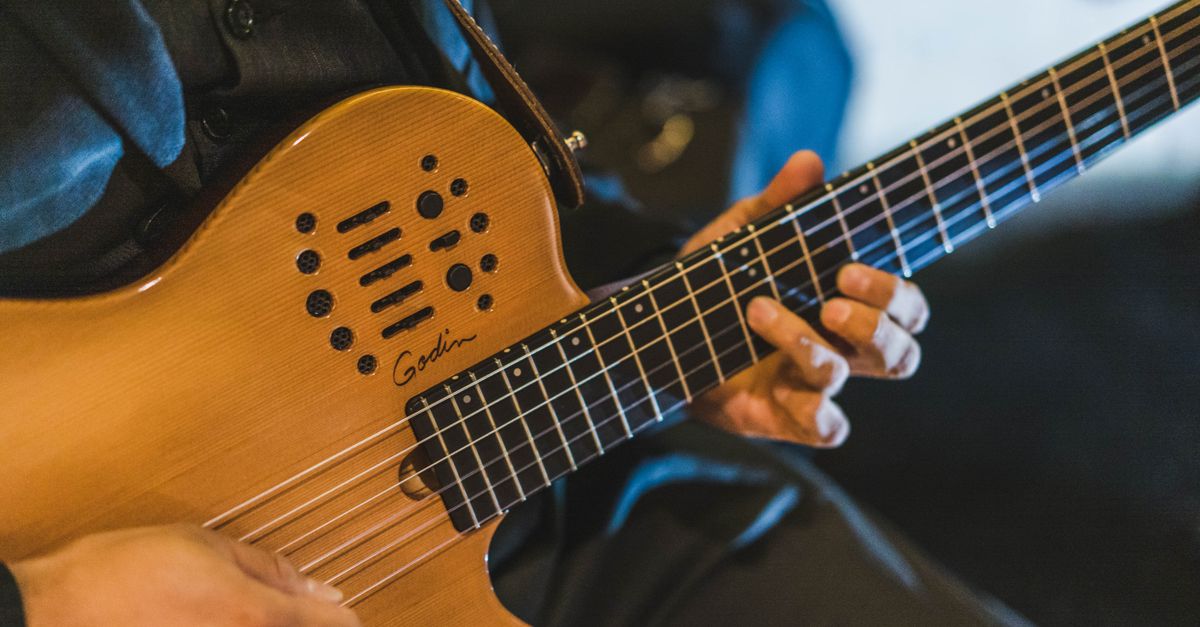
Let’s be honest: the first time I heard an AI shred a guitar solo, I felt a little queasy. It was technically perfect. Every note was in the pocket. The phrasing was immaculate. It was also… soulless?
But then I saw it done right. Vocalist and guitarist Maya Lin recently toured with an AI "phantom band." She played her acoustic parts live, but the AI generated the synth pads, the basslines, and the backing vocals in real-time based on her vocal pitch and strumming intensity.
The key here is collaboration, not replacement. The best concerts I’ve attended in 2025 aren't the ones where the AI runs the show. They’re the ones where the human artist treats the AI like a session musician who never gets tired and has infinite creativity.
Here’s a secret most industry insiders won't tell you: The AI is only as good as the human who curates its training data. If you feed it garbage, you get garbage. If you feed it the history of jazz, funk, and classical composition, you get a live show that feels like a masterclass in music theory — played by a robot who actually listens to the room.
The Setlist is Dead. Long Live the Algorithm.
Remember the days when you’d check a band’s setlist online before the show? You’d know exactly when your favorite song was coming. That predictability is gone.
In 2025, the setlist is a living document. Here’s how it typically works:
- Pre-show mood analysis: The AI scans social media posts, ticket purchase data, and even the weather to guess the audience's emotional baseline.
- Real-time feedback: During the show, the AI adjusts. If the crowd is jumping, it cranks the energy. If people are zoning out during a ballad, it might cut the song short and drop a beat.
- Personalized encore: Some artists are experimenting with "choose your own adventure" encores. The AI scans the crowd for the highest concentration of fans wearing specific band merch and generates a mashup of that band’s song with the headliner’s track.
Is it manipulative? Maybe. Is it the most entertaining concert experience I’ve ever had? Absolutely.
The Visuals Are Now the Music
We can’t talk about the 2025 concert experience without talking about the visual spectacle. AI-generated visuals are no longer just a background screen. They are a performance partner.
I spoke to a VJ (Visual Jockey) named Tessa who works with the artist "Echo Drift." She told me that her job has shifted from "playing pre-made clips" to "training an AI model."
"Every night, the AI generates the visuals based on the sonic frequencies coming from the stage," she said. "If the AI plays a minor chord, the visuals shift to blue and rain. If it hits a major chord, it explodes into gold fireworks. The artist doesn't control the visuals anymore. The music itself does."
This creates a synesthetic feedback loop. The crowd hears a sound, sees a color, feels an emotion, and moves their body. The sensors pick up that movement, the AI adjusts the music, the visuals change again. It’s a closed loop of pure, immersive entertainment.
The Elephant in the Room: Are We Losing the "Human Touch"?
I can’t write this article without addressing the fear. I feel it too. I worry that the magic of a live show — the missed note that becomes a legendary moment, the stage banter that goes off the rails, the raw, imperfect humanity — is being optimized out of existence.
But here’s what I’ve learned: The technology is neutral. It’s how you use it.
The concerts that fail in 2025 are the ones where the artist hides behind the AI. You can tell. The show feels sterile, like a video game cutscene. The concerts that succeed are the ones where the artist uses the AI as a creative amplifier.
Think of it this way: A painter doesn't lose their humanity just because they use a better brush. A writer doesn't lose their voice just because they use a word processor. An artist doesn't lose their soul just because they let an algorithm help them improvise.
The Final Note: You Haven't Heard Anything Yet
If you haven’t been to a concert in the last year, you are in for a shock. The experience has evolved from "watching a performance" to "participating in a co-creation." The AI is listening to you. It’s reacting to your heartbeat (literally, via some smartwatch integrations).
So, here’s my challenge to you: Go to a show from an artist who openly uses AI. Don’t go in with your arms crossed, ready to hate it. Go in with curiosity. Let the algorithm surprise you.
Because the future of live music isn’t about humans vs. machines. It’s about the beautiful, chaotic, and sometimes terrifying duet between the two.
I, for one, am buying my ticket.