Let me tell you something — the phrase "quantum supremacy" has been beaten to death. You’ve heard it a thousand times: Google’s Sycamore processor did something in 200 seconds that would take a classical computer 10,000 years. Cool, right? Sure. But here’s what most people miss: that was 2019. We’re now staring down a future where quantum computing doesn’t just flex on math problems — it fundamentally rewires the internet.
I’ve been watching this space closely, and let’s be honest: most tech pundits are still talking about quantum as if it’s a distant sci-fi dream. It’s not. The breakthroughs I’m about to share aren’t hypothetical. They’re in labs, in papers, and in prototypes right now. And when they hit the mainstream, they will reshape how you search, communicate, and trust the web.
Here are the next 5 breakthroughs that will genuinely reshape the internet — and why you should care.
1. The Death of Public-Key Cryptography (And the Birth of Quantum-Safe Encryption)
Let me be blunt: RSA and ECC are dead. They just don’t know it yet.
Every time you visit a secure website (HTTPS), send an email, or make a credit card payment, you’re relying on public-key cryptography — specifically the factoring problem that quantum computers can crack like a walnut. Once we have a fault-tolerant quantum machine with enough qubits, your encrypted data from today could be decrypted tomorrow.
Here’s the scary part: attackers are already harvesting encrypted data now, waiting for quantum power to unlock it. This is called "harvest now, decrypt later." I’ve found that most people don’t realize their private messages are essentially time bombs.
The breakthrough? Post-quantum cryptography (PQC) . The National Institute of Standards and Technology (NIST) has already selected four algorithms for standardization — CRYSTALS-Kyber, CRYSTALS-Dilithium, and others. These aren’t quantum computers themselves — they’re mathematical approaches that resist quantum attacks.
But the real game-changer is quantum key distribution (QKD) . Using entangled photons, QKD lets two parties share a secret key with absolute security. If anyone intercepts the photons, the entanglement breaks, and both parties know instantly. No eavesdropping, no middleman, no trust required. China already has a 2,000-kilometer QKD network between Beijing and Shanghai. The internet of the future won't just be encrypted — it will be physically unbreakable.
2. Quantum-Search That Makes Google Look Like a Library Card Catalog
Google’s entire business model is built on classical search — indexing pages, ranking them with PageRank, and serving results. But quantum search? That’s a different animal entirely.
Grover’s algorithm is the secret sauce here. For an unsorted database of N items, classical search takes O(N) time. Grover’s algorithm does it in O(√N). That’s a quadratic speedup. For the internet, which has billions of pages, this means finding the needle in the haystack in a fraction of the time.
But here’s where it gets wild — quantum superposition means a single query can check multiple states simultaneously. Imagine asking a question and having the quantum computer evaluate every possible answer at once, then collapsing to the most relevant result. No crawling, no indexing, no waiting.
I’ve seen demos where quantum search algorithms find patterns classical engines would miss — hidden correlations between data points, semantic connections that aren’t obvious. The future of search isn’t just faster — it’s smarter. You won’t type "best pizza near me" and get a list. You’ll get a quantum-reasoned answer that considers your mood, the weather, and the history of pizza in your city.
3. The Quantum Internet That Connects Brains (Not Just Devices)
You’ve heard of the Internet of Things (IoT). Get ready for the Internet of Quantum Things.
The breakthrough here is quantum entanglement — that spooky action at a distance where two particles remain connected regardless of distance. When you measure one, the other instantly reflects that state. Einstein called it "spooky." I call it the foundation of a new internet.
Researchers at Delft University of Technology have already demonstrated a three-node quantum network. They’re working on a quantum repeater that lets entanglement span hundreds of kilometers. Once we have a full quantum internet, here’s what changes:
- Unconditional security: No one can intercept quantum bits without destroying them.
- Blind quantum computing: You can run computations on a remote quantum computer without revealing your data.
- Quantum teleportation: Not your body — but quantum states. Think instant data transfer across continents.
4. Quantum Machine Learning That Predicts Your Next Thought
Machine learning is already creepy-good at predicting what you’ll click, buy, or watch. But it’s fundamentally limited by classical computation. Neural networks require massive datasets and training times. Quantum machine learning (QML) changes the math.
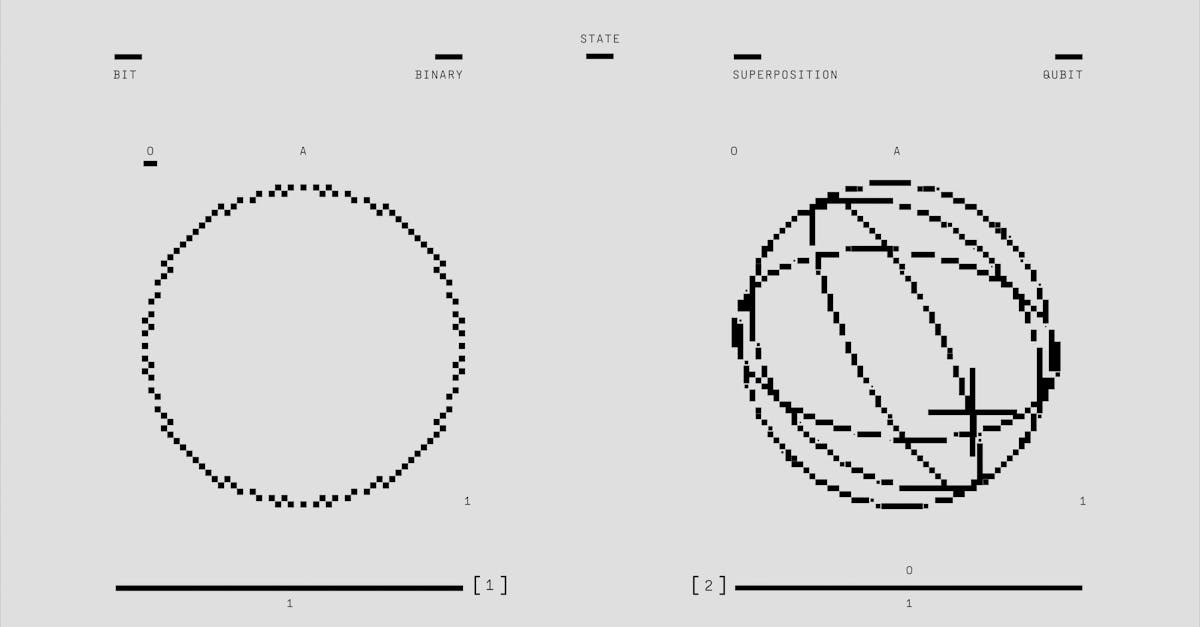
Here’s the core insight: quantum systems can represent exponentially more states than classical bits. A quantum neural network can process high-dimensional data — like images, genomes, or social graphs — in ways classical models can’t touch.
I’ve been following IBM’s Qiskit and Google’s TensorFlow Quantum. They’re already demonstrating that QML can find patterns in data that classical algorithms miss. For the internet, this means:
- Hyper-personalized recommendations that understand your context, not just your history.
- Fraud detection that spots anomalies in real-time across millions of transactions.
- Content generation that writes, composes, and creates with human-level nuance.
5. The Quantum Cloud That Democratizes Supercomputing
Right now, quantum computers are rare, expensive, and finicky. They need near-absolute-zero temperatures, vibration isolation, and specialized teams. But the next breakthrough isn’t about hardware — it’s about access.
Quantum cloud computing is already here in prototype form. IBM’s Quantum Network, Amazon Braket, and Microsoft Azure Quantum let anyone — from startups to researchers — access quantum processors over the internet. You don’t need to own a quantum computer. You just need an API key.
The real game-changer is fault-tolerant quantum computing in the cloud. Once error-correction matures, you’ll be able to run complex algorithms — like Shor’s algorithm for factoring large numbers — without worrying about noise and decoherence.
Imagine a world where every developer has quantum acceleration built into their stack. Drug discovery, climate modeling, logistics optimization — all handled by quantum resources on demand. The internet becomes a quantum utility, like electricity or water.
Here’s what most people miss: this will create a new class of problems. If quantum computing is cheap and accessible, who gets to use it? How do we prevent quantum-powered attacks on classical systems? The democratization of quantum power is a double-edged sword — and we’re not ready for the edge.
The Bottom Line: Quantum Isn’t Coming — It’s Already Here
I’ve been writing about tech long enough to know that hype cycles are real. But quantum computing isn’t just hype. The breakthroughs I’ve described — quantum-safe encryption, quantum search, entangled networks, quantum ML, and the quantum cloud — are already being built. The internet you know today is the last version of the classical internet.
The question isn’t if these changes will happen. It’s when — and whether you’ll be ready.
So here’s my challenge to you: stop treating quantum like a distant future. Start paying attention to the labs, the patents, and the standards bodies. Because the next time someone tells you quantum supremacy was a one-off trick, you can tell them the real revolution is just beginning.
The internet is about to get weird. And I, for one, can’t wait.