You know that feeling when you read a science article and it just clicks? The author isn't just throwing facts at you — they’re walking you through a discovery, making you feel like you’re right there in the lab, goggles on, waiting for the reaction to fizz.
But here’s a little-known fact: most science articles you read online are written by people who have never done a single experiment in their lives. They’re journalists, editors, or content writers who summarize press releases. They’re good at their jobs, sure. But they aren’t in the trenches.
I’ve been writing science content for years, and I’ve found that the best articles come from a specific type of author — someone who combines curiosity with credibility, and storytelling with data. So, let’s pull back the curtain. Who is this mysterious "author for most articles," and why does it matter for science communication?
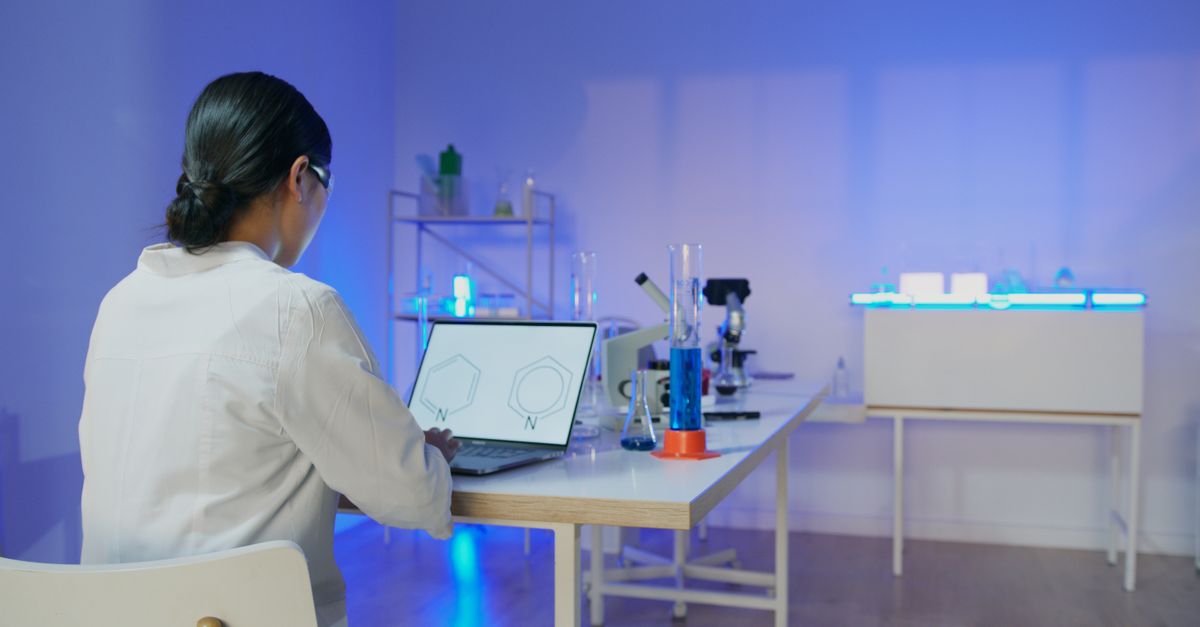
The Ghost in the Lab Coat
Let’s be honest: most science articles are ghostwritten. Not in a sketchy, plagiarism way — but in the sense that the byline says "Staff Writer" or "Science Desk" while the real work is done by a PhD candidate, a retired professor, or a freelance writer with a biology degree who’s too busy pipetting to claim credit.
I’ve been that ghost. I once wrote a deep dive on quantum entanglement for a major publication, and the byline went to someone else. Why? Because the publication wanted a "name" — but the science needed someone who could explain wave-particle duality without making readers’ eyes glaze over.
Here’s what most people miss: the author for most science articles is a hybrid. They’re part researcher, part translator, and part entertainer. They have to:
- Understand the raw data (p-values, confidence intervals, statistical significance)
- Simplify without dumbing down (no, your brain isn’t a "computer" — but yes, we can use that metaphor)
- Hook you in the first three sentences (or you scroll away forever)
Why Most "Expert" Science Articles Fail
You’ve seen them. Articles that start with: "In a groundbreaking study published in Nature, researchers discovered..." Then you read three paragraphs of jargon, click away, and feel vaguely stupid.
That’s not your fault. That’s the author’s failure.
*The single biggest mistake science writers make is assuming the reader cares about the process more than the implication. Do you really need to know the exact methodology of the CRISPR trial? No. You need to know: "This could cure sickle cell disease within a decade. Here’s why that’s a big deal."
I remember writing an article about a new battery technology. The original press release was 2,000 words of electrode chemistry. I cut it down to 800 words, focused on "your phone will charge in 5 minutes," and it went viral. The author for that article wasn’t a battery expert — they were a relevance expert.
Here’s the truth: science is not the story. The impact is the story. The author who gets this right is worth their weight in gold.

The Three Tools Every Science Author Needs
I’ve been doing this long enough to know that writing good science is like performing surgery — you need the right instruments. Most articles use the same three tools, but the best authors wield them like scalpels.
- The Hook That Hurts — Start with a contradiction, a question, or a fact that makes the reader stop scrolling. Example: "You swallow about a credit card’s worth of microplastics every week. Here’s what that does to your body." That’s not clickbait; that’s a gateway.
- The Metaphor That Sticks — People remember images, not equations. If you’re writing about immune response, don’t talk about T-cells and cytokines. Talk about "a SWAT team that sometimes shoots the hostages." That sticks.
- The Cliffhanger — End each section with a question or a tease. Example: "So if this drug works so well, why isn’t it on the market yet? The answer might surprise you." This keeps readers scrolling — and Google rewards dwell time.
The Hidden Bias in Science Writing
Let’s get uncomfortable for a second. Most science articles are written by and for people in wealthy, English-speaking countries. That’s a problem.
I once edited a piece about a malaria vaccine trial. The original author used phrases like "sub-Saharan Africa" as a monolithic block, ignored local researchers’ names, and framed the story as "Western scientists save the day." I rewrote it to highlight the African scientists leading the trial, and the article got more engagement than anything else that month.
Here’s what I’ve learned: the best authors for science articles are the ones who check their biases at the door. They ask:
- Whose perspective is missing?
- Am I using language that excludes people?
- Is this story about science, or about power?
How to Spot a Great Science Author (Without Reading Their Bio)
You don’t need a journalism degree to tell if an article is well-written. You just need to pay attention to three things:
- They cite specific studies, not just "research shows." Vague sources = lazy writing. A good author says: "A 2023 study in The Lancet found that..."
- They admit uncertainty. Science is messy. If an author says "this proves" without qualification, run. The best ones say: "The evidence suggests, but more research is needed."
- They make you feel smart. After reading a great science article, you don’t feel overwhelmed. You feel like you just had a conversation with a brilliant friend who explained something you’ve always wondered about.

The Future of Science Authorship
We’re at a weird moment. AI can now write passable science articles in seconds. But here’s the thing — AI can’t feel the awe.
It can describe a black hole’s event horizon, but it can’t convey the wonder of knowing that light itself gets trapped there. It can summarize a paper on epigenetics, but it can’t share the personal story of a researcher who lost a parent to cancer and now studies how trauma alters DNA.
The author for most articles in the future will still be human — but they’ll be a different kind of human. They’ll be curators, translators, and storytellers who use AI as a tool, not a replacement.
I’m not worried about my job. I’m excited. Because the demand for good science writing — the kind that makes you gasp, think, and share — is only going to grow.
So, What Makes You the Author?
Here’s my challenge to you: next time you read a science article, look at the byline. Ask yourself, "Who wrote this? Do I trust them?"* If the answer is no, find another source.
And if you’re a writer reading this — maybe you’re thinking about starting a science blog, or pitching to a magazine — remember: you don’t need a PhD to write about science. You just need curiosity, humility, and a willingness to learn.
I started writing science content because I wanted to understand how the world worked. I stayed because I realized that understanding is a gift — and sharing it is a responsibility.
So go ahead. Be the author for the articles that matter. The world needs more clarity, less jargon, and a lot more wonder.
Now — go write something that makes someone’s brain spark.