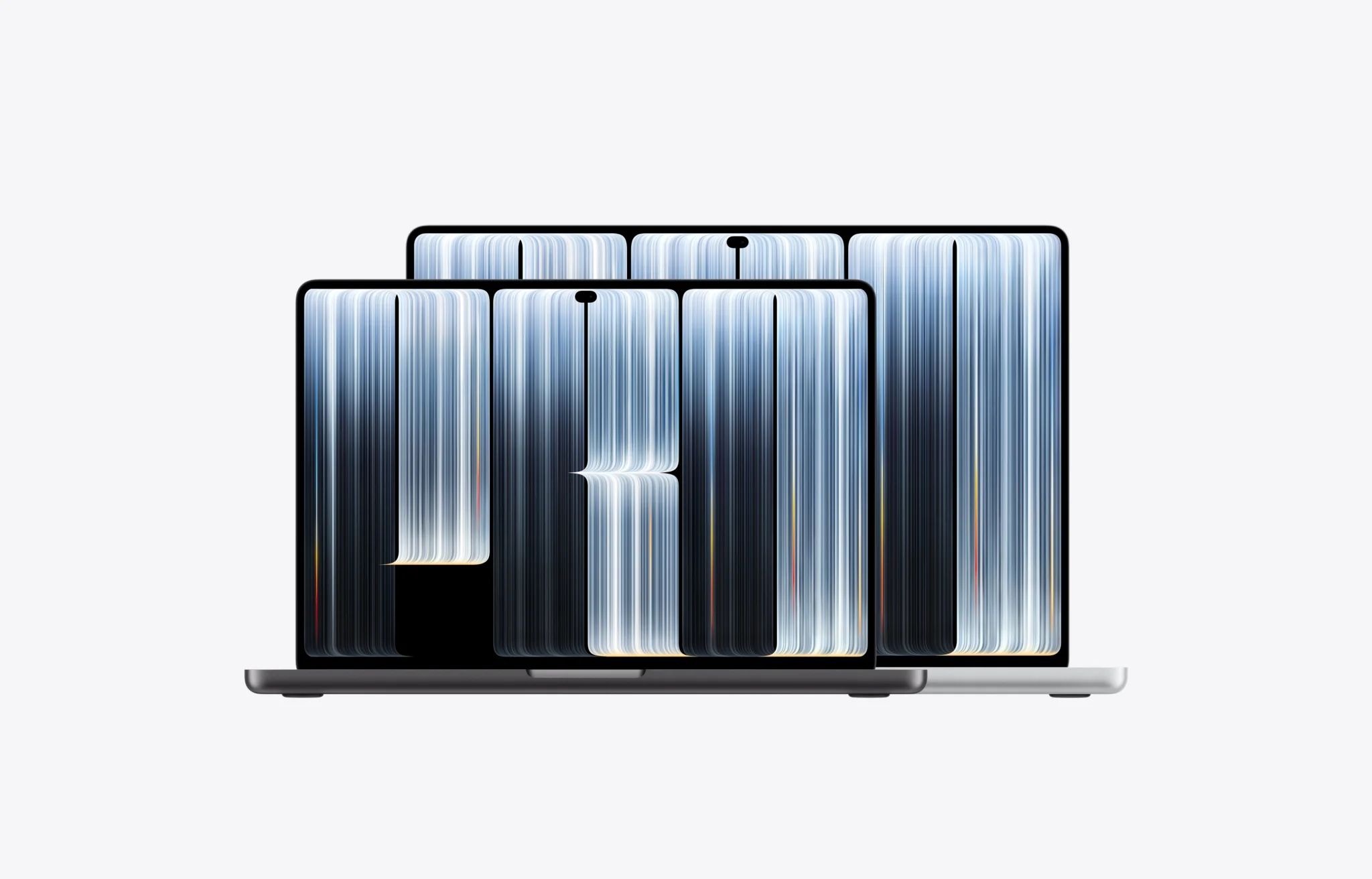
Apple announced its first MacBook Pro laptops with touch-sensitive screens during an event in Los Angeles, ending years of resistance to finger input on its computers, according to PCGuia. The new 14.2-inch and 16.3-inch models also mark the debut of PROLED XDR OLED panels on the Mac and the first major visual redesign of the professional line since 2021.
The shift runs against the position of former chief executive Steve Jobs, who said in 2010 that touchscreen laptops were ergonomically poor because users' arms would tire during long sessions. PCGuia reports that development of the new machines took place under Tim Cook and that the launch is being led by current chief executive John Ternus.
Why it matters
For more than a decade, Apple treated the touchscreen laptop as a design mistake, even as rivals built touch into their own portables. Bringing finger control to the MacBook Pro reverses that stance and changes how the company's most expensive notebooks are used, particularly by creative and media professionals.
The launch also sits inside a broader product push under Ternus. PCGuia notes that his tenure has already produced the iPhone 18 Pro, the foldable iPhone Duo, the Apple Watch Series 12 and Ultra 4, the HomeView smart home device and a new iPad Mini with an OLED panel.
A thinner body and a reinforced hinge
The redesign brings back the glowing logo on the rear lid, an element absent from Apple's laptops since 2016, and adds the Dynamic Island around the webcam so that real-time notifications appear on screen while users work, according to PCGuia.
Both models are lighter and slimmer. The 14-inch version now weighs 1.3 kg, roughly 200 grams less than the previous generation, while the 16-inch model comes in at 1.6 kg, close to half a kilogram lighter than its predecessor. Thickness falls by almost a millimetre on the larger machine and by half a millimetre on the smaller one, a reduction Apple attributes to the new stacked architecture of the OLED panels.
Because users now press directly on the display, engineers strengthened the central hinge to limit unwanted movement of the panel during touch interaction, PCGuia reports.
Display, chips and audio
The PROLED XDR panels have noticeably narrower bezels and use ProMotion to vary the refresh rate between 10 and 120 Hz, adjusting to on-screen content to save power or smooth animations. Apple claims a peak brightness of 2,000 nits, which it says keeps the screen readable in direct sunlight, and a contrast ratio of 10,000,000:1 for deep blacks and vivid colour.
Inside, the laptops run on M5 Pro and M5 Max processors, and buyers can configure up to 16 TB of internal storage and 128 GB of memory. The audio system, already well regarded among laptops, gains new tweeters for clearer high frequencies and bass that Apple says is 50% deeper, along with a dedicated equalisation profile for people who use the machine with the lid closed.
Apple has adapted its own applications for touch from launch, and PCGuia reports that third-party software is also largely ready, with Microsoft Word, Excel and PowerPoint, Zoom, Canva, Notion, Adobe Lightroom, DaVinci Resolve and Blender all responding to touch from day one.
Pricing and availability
Pre-orders are open now, with the first units reaching customers on 6 November. The 14-inch model starts at 3,399 euros and the 16-inch at 3,999 euros, according to PCGuia.
Watch for early reviews testing whether the reinforced hinge and touch-optimised software hold up in daily professional use, and whether developers beyond the launch lineup rebuild their apps around finger input.