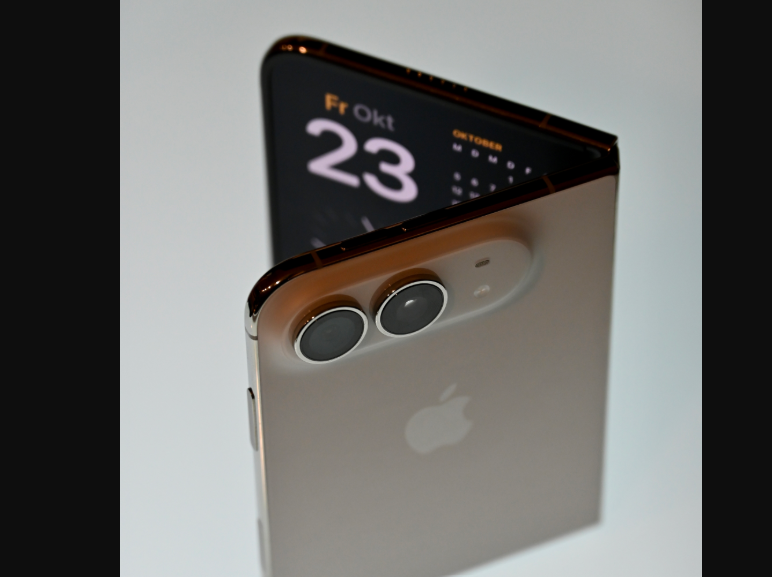
Apple's first foldable iPhone has been on sale for about a week, and the company is already acknowledging a defect. According to AcheiUSA, the iPhone Duo — which launched on October 23 with a starting price of $1,999 — has developed cracks in the inner display on a limited number of units, in some cases within hours of purchase.
Apple has confirmed that a small number of devices show faults in the internal screen and is directing affected buyers to contact AppleCare to arrange a replacement, AcheiUSA reports. The company has not announced a recall and has not said how many phones are involved.
Why it matters
The Duo is Apple's entry into the foldable category, and it arrives at the highest price point the company has ever asked for a phone. A visible screen failure in the first days of ownership puts attention on the durability of the hinge and display assembly — the components that have challenged every manufacturer that has built a folding handset.
The episode has also picked up a nickname in the Brazilian press. Folha de S.Paulo and Valor Econômico have both described the situation as "crackgate," borrowing the suffix Apple has faced before when a hardware problem spreads faster than its response. For a product this expensive, the question is less whether a defect exists than how quickly and completely the company stands behind it.
What buyers reported
AcheiUSA, citing reporting by CBS News, describes a customer in Texas who heard a snap while unfolding the phone and found a fracture running through the middle of the screen before he had even finished the initial setup. A second buyer ran into a similar problem in under a day, according to the same account. When she took the device to an Apple store, staff told her the phone would have to be swapped — but limited stock made an immediate replacement difficult.
Those two cases point to a pattern worth watching: the cracks are appearing at the crease, the point where the panel bends every time the phone is opened and closed. That is the most mechanically stressed area of any foldable, and it is where early failures tend to concentrate.
Repair specialists focus on the hinge
Independent repair specialists are examining whether parts near the hinge are pressing too hard against the display, according to AcheiUSA. The outlet notes that Apple has not confirmed this explanation, and no official cause has been given.
That distinction matters. A screen that fails under abnormal force is a different problem from one that fails under ordinary use, and the fix — a revised part, a changed assembly process, or a software adjustment to how the phone manages opening angles — depends on which it is. Until Apple says more, the hinge-pressure theory remains a hypothesis from outside the company.
Separately, the YouTube channel covered by TudoCelular published a teardown of the device and reported finding flaws in the hinge area, with the presenter arguing that Apple owes customers an apology. That is a reviewer's assessment, not a company statement, and it has not been corroborated by Apple.
A launch under scrutiny
The timing is uncomfortable. The Duo went on sale on October 23, and the complaints surfaced within days. Canaltech reports that Apple already has demonstration units in physical retail stores in Brazil, meaning shoppers there can handle the device themselves — and judge the hinge for themselves — while the crack reports circulate.
Apple's public position so far is narrow: a small number of units, a fault in the inner screen, contact AppleCare for a replacement. The company has not published a failure rate, has not identified a production batch, and has not said whether units still in boxes are affected. AcheiUSA notes that no recall has been announced.
For buyers, the practical guidance is straightforward. Anyone who sees a crack, a line, or a snap at the crease should stop opening and closing the phone and go through AppleCare rather than a third-party repair, since an unauthorized fix could complicate a warranty claim. Buyers who have had no problem have no stated reason to act.
The bigger question is whether this stays a small-number story. Foldable screens have a history of early-adopter defects that either get contained quickly or snowball once units reach more hands. Apple's language — "a small number" — is the same phrasing companies use right before they know the real scope.
Watch for three things: whether Apple publishes any figure for affected units, whether a hardware revision shows up in later production runs, and whether replacement stock catches up with demand. If buyers in Brazil and elsewhere keep reporting cracks at the crease after the first batch is replaced, the story moves from a launch hiccup to a design question.