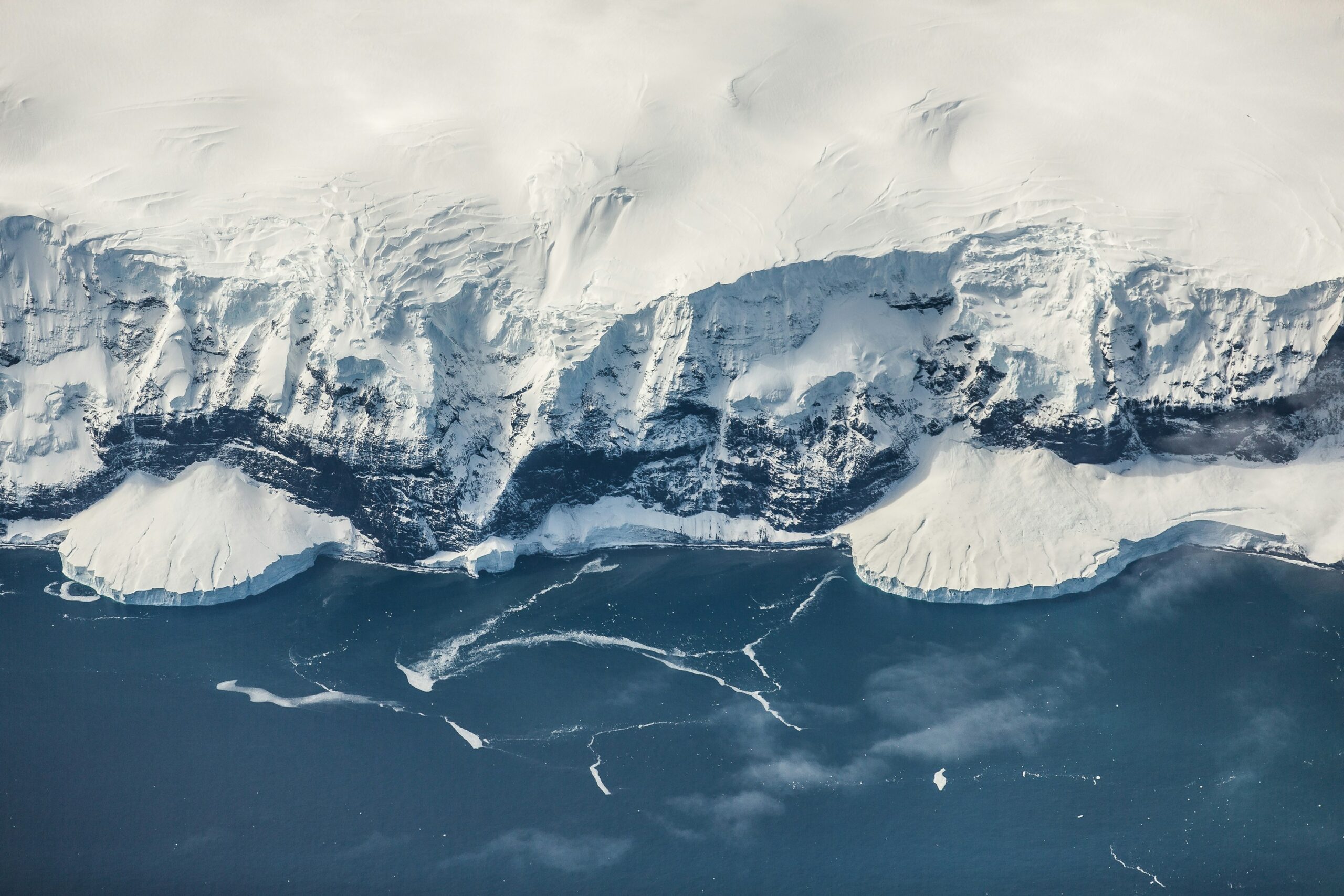
A major layer of water spanning much of the Southern Hemisphere's oceans has shifted sharply since 2016, according to research reported by Oceanographic Magazine. Scientists found that Antarctic Intermediate Water (AAIW) — which had been sustained for two decades by summer ice melt — became saltier, denser and sank deeper once that meltwater supply fell away. The findings were published in Nature Climate Change and draw on data from the global Argo programme, a fleet of roughly 4,000 robotic floats that profile the upper ocean, alongside satellite and atmospheric records.
The team behind the work came from the University of Melbourne, the Indian Institute of Sciences and the University of Southampton. According to Oceanographic Magazine, the study offers the first direct observational evidence of this change in the water layer's properties.
Why it matters
AAIW stretches across a large share of the Southern Hemisphere's ocean and is involved in moving heat, freshwater and carbon around the planet. It also stores carbon, carries oxygen and helps drive currents. Because the ocean takes up more than 90% of the heat that human activity releases into the environment, with most of it held in the upper layers, any change in how surface water descends could alter where that heat ends up.
Associate professor Bishakhdatta Gayen, who holds posts at the University of Melbourne and IISc, said the layer's previous switch occurred at the close of the last interglacial period roughly 130,000 years ago, when Antarctica held very little ice. That shift unfolded over thousands of years, he said, rather than the two decades seen now.
A freshwater engine that slowed
Gayen described the Antarctic region as the freshwater engine for oceans worldwide, noting that melting sea ice there affects circulation far beyond the polar south. Until 2016, he said, the seasonal summer melt amounted to three times the Amazon River's full annual discharge of about 6,600 cubic kilometres. From 2016 onward, Antarctic sea ice contracted to record lows, cutting off that seasonal pulse. Meltwater delivery then dropped to roughly twice the Amazon's yearly flow.
The researchers traced the period from 1995 to 2015, when summer melt kept the AAIW in its established state, and the years from 2016 to 2024, when the pattern flipped. With less freshwater entering the system, the layer grew saltier and denser and settled at greater depth.
Heat, carbon and current connections
Gayen said that if the altered AAIW changes how surface water is carried into deeper layers, it could affect how much carbon the ocean holds — though he noted the size and timing of that effect remain uncertain. He also raised the possibility that the shift marks a tipping point for the Atlantic Ocean and the AAIW current, which could bring larger and longer-lasting climate changes to the Southern Hemisphere.
Kaushik Mishra, a PhD student at IISc, said a weakened AAIW layer could push more excess heat into the deep ocean. That, he said, would imply existing models are understating deep-ocean warming and therefore misjudging regional sea level rise and long-term temperatures on both ocean and land.
Professor Alberto Naveira Garabato of the University of Southampton said the saltier, denser water mass travels north across the Atlantic, Indian and Pacific oceans. Because the layer forms part of the upper limb of the global overturning circulation, he said a sustained shift could feed into the Atlantic Meridional Overturning Circulation over years to decades — the deep current system often associated with climate stability in the North Atlantic. It could also eventually affect atmospheric circulation, weather patterns and storm tracks in the Southern Hemisphere, with effects that cascade worldwide.
What to watch: whether the saltier, denser conditions in the AAIW persist in coming years of Argo float data, and how that feeds into projections of deep-ocean heat storage and sea level.





