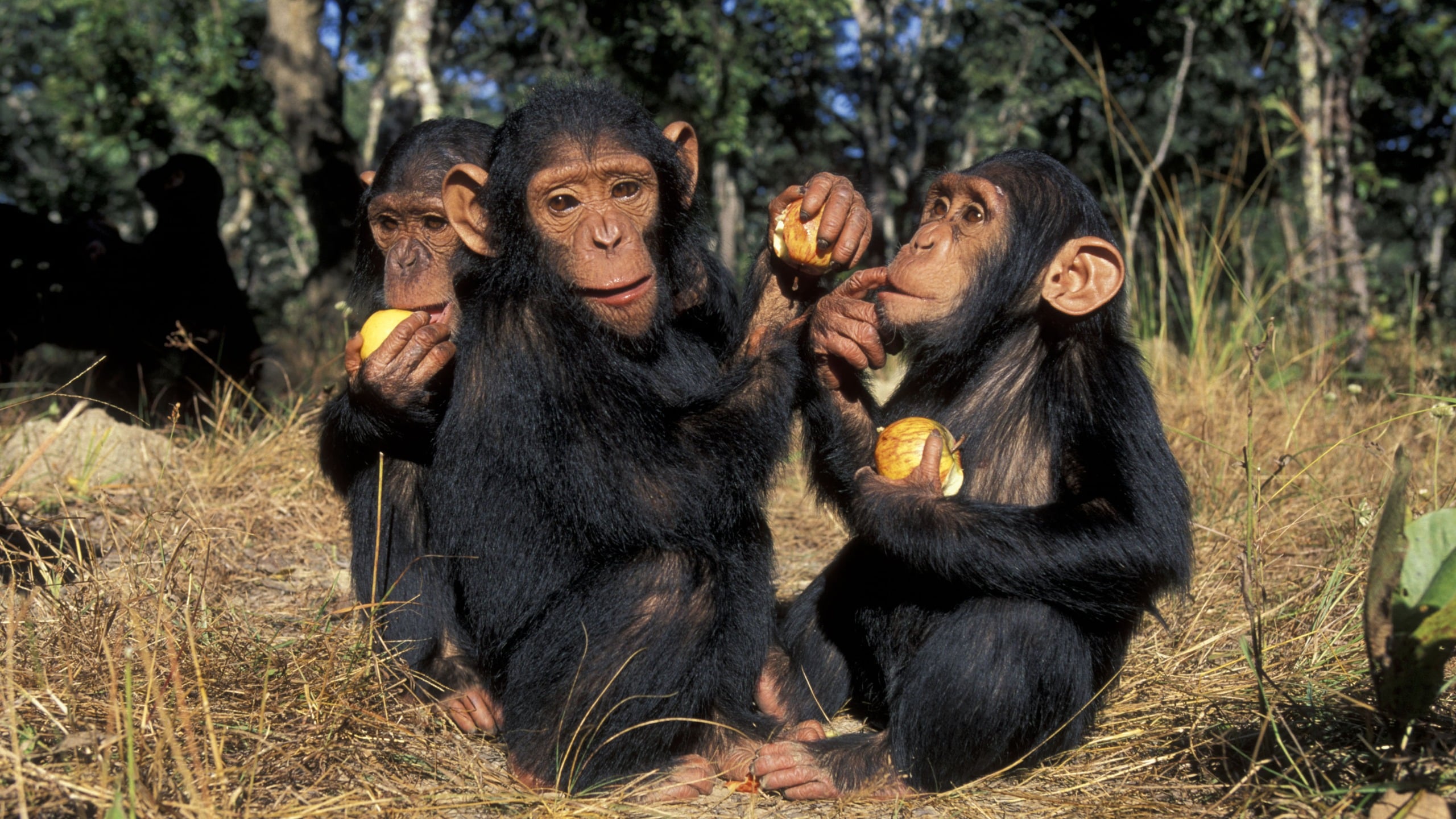
A retrovirus that entered the chimpanzee lineage roughly four million years ago but never infected humans appears to have tamped down a gene involved in brain cell development, according to a study published in Science Advances and reported by ScienceAlert. The work offers a possible genetic explanation for why human and chimpanzee brains diverge so sharply despite the two species sharing most of their protein-coding genes.
Humans and chimpanzees split from a common ancestor about five to six million years ago, and only around 1.2 percent of their DNA differs today, ScienceAlert reports. Lead author Patricia Gerdes told ScienceAlert that her team set out to understand how the brains of the two species could have evolved along such different paths when so much of their genetic machinery is alike.
Why it matters
The findings add to a growing body of evidence that viruses have shaped the evolution of life on Earth, and specifically that viral DNA left behind in animal genomes helped drive the divergence between humans and chimpanzees. Human brains are about three times the size of chimpanzee brains, a difference ScienceAlert notes is a well-established point of contrast between the species.
The study does not claim the virus alone explains that gap. Gerdes was careful to say the experiments show a mechanism, not a finished story about brain size or ability.
A viral remnant still active today
The virus in question is PTERV1, short for Pan troglodytes endogenous retrovirus-1. Gerdes told ScienceAlert it stood out as a candidate because it is present in chimpanzees and other African apes but absent from humans. When it infected chimpanzee ancestors, it inserted DNA sequences into the genome, and those sequences remain there now.
Both species carry a molecule called LINC00662, which is made from DNA and gives cells instructions for producing a particular protein. According to ScienceAlert, the researchers found LINC00662 active during early human brain development, and their experiments suggest it helps human brain cells mature and extend the projections that carry signals across the brain.
The team tested this using human brain organoids — small clusters of cells grown in a lab as a research model. When they turned LINC00662 off, neurons and their dendrites and axons did not mature or branch out as vigorously as they did when the molecule was left intact.
The viral insertion in chimpanzees sits in a position that affects their version of the gene. In the team's experiments, removing the insertion from chimpanzee stem cells restored LINC00662 activity, which Gerdes said demonstrates that the insertion contributes to shutting the gene down.
What the experiments do not show
Gerdes drew clear limits around the results. She told ScienceAlert that the full range of LINC00662's roles in the human body is still unknown, as is what losing its activity means for chimpanzees overall.
She also said the organoid work offers a preview of what might happen if PTERV1 were ever to enter the human genome and make a comparable edit. "If humans had the same insertion, it probably would have switched off LINC00662 and altered the development of brain cells," she said, according to ScienceAlert. But she added that no one can predict whether that would produce a particular brain shape, capability or behavior, since the outcome could depend on surrounding human DNA and other genes.
Nor does removing the insertion from chimpanzee cells mean their brains would develop like ours. Gerdes said the experiment shows the insertion helps switch off the gene, not that deleting it would transform brain development, and she noted that brain differences stem from many genetic and developmental factors. Editing an adult brain, she added, would not reverse development that has already taken place.
It also remains unclear why humans never caught PTERV1 when so many of our ape relatives did. ScienceAlert reports a few theories: that a distinct antiviral protein called TRIM5α shielded us, or that human and chimpanzee ancestors were living in different places when the viral outbreak occurred. The new study did not set out to settle that question.
The paper was fact-checked and edited by Fiona MacDonald, ScienceAlert notes.
What to watch: whether follow-up work pins down the rest of LINC00662's functions in humans and clarifies how much of the human-chimpanzee brain gap can be traced to viral insertions of this kind.