
I remember the exact moment I nearly choked on my coffee. It was a Tuesday morning, and I was testing a demo of a "tiny" language model — something that supposedly fit on a laptop, not a server farm the size of a small country. I asked it to rewrite a dense legal clause into something my grandmother would understand. Not only did it nail the tone, but it added a dry, witty remark about the absurdity of legalese that had me laughing out loud. Meanwhile, I'd spent the previous week wrestling with a massive, billion-parameter giant that gave me robotic, textbook answers and took thirty seconds to process a single prompt.
That was my "aha" moment. The tectonic plates of the AI world are shifting, and I'm not sure everyone has felt the tremors yet. 2024 isn't the year of the biggest model. It's the year of the smartest, smallest one. Let's unpack why the little guys are suddenly punching way above their weight class.
The Era of the Brontosaurus is Over
Let's be honest: we were obsessed with size for a while. It was the tech equivalent of a muscle car arms race. "My model has 175 billion parameters!" "Well, mine has a trillion!" It was impressive, sure, but it was also wildly inefficient. It reminded me of owning a massive SUV to drive to the corner store for a carton of milk. Sure, it can do it, but you're burning a ton of fuel and you can't find a parking spot.
Here's what most people miss: A larger model doesn't inherently mean a smarter model. It often just means a model with more memorized facts. The giants are like that friend who has an encyclopedic knowledge of every movie ever made but can't figure out how to change a flat tire. They have massive storage but sometimes lack the practical, nimble reasoning for everyday tasks.
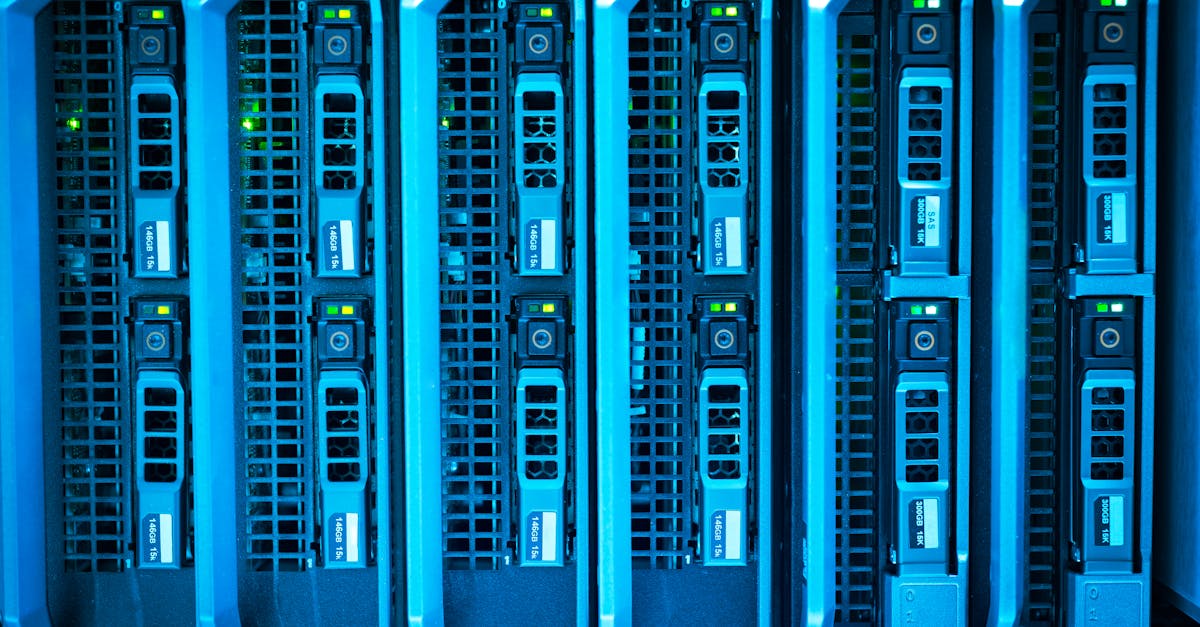
I've found that the "bigger is better" mantra created a bottleneck. The latency was terrible, the cost was astronomical (we're talking thousands of dollars a day for serious use), and the carbon footprint was frankly embarrassing. It was an unsustainable model, literally and figuratively. We needed a paradigm shift, and the industry finally delivered.
Distillation and the Art of the "Student" Model
So, how do you get a model with a fraction of the parameters to outthink a giant? It's not magic; it's a clever process called knowledge distillation. Think of it like a master chef teaching an apprentice. The giant model (the chef) doesn't just hand over the recipe book; it cooks the meal, and the small model (the apprentice) learns by observing the process, not just the ingredients.
But 2024's small models are going even further. They're being trained on higher-quality, curated data rather than the entire messy, chaotic internet. It's like the difference between attending a prestigious university with a great curriculum versus trying to learn by reading every random post on social media. The focused approach yields a sharper, more articulate mind.
The result? Models like Phi-3, Gemma, and various others are performing at or above the level of models that are 10 to 20 times their size on specific benchmarks. They're not just "good for their size." *They are simply good. Period. They're faster, cheaper, and frankly, more reliable for many specific tasks because they aren't drowning in irrelevant noise.
Privacy: The Weapon of Mass Adoption
Here's a scenario that'll make you think. You're a hospital administrator. You want to use an AI to sift through patient records to identify potential health risks. Would you send that highly sensitive data to a giant, centralized cloud server owned by a Big Tech company? Of course not. You'd be fired, sued, and possibly arrested.
This is where the small models are absolutely dominating. Because they can run locally on a device — your phone, your laptop, a server in your own hospital basement — your data never leaves your control. The privacy benefits are not just a nice-to-have; they are a legal and ethical necessity.
I've spoken to developers who are ecstatic about this. They can finally build AI-powered tools for finance, healthcare, and legal sectors without the nightmare of compliance and data governance. It's a trust revolution. It moves AI from being a mysterious "cloud oracle" to being a utility, like a calculator or a word processor, that you own and control. That's a massive psychological shift for businesses that were terrified of handing over their crown jewels.

The Practical Magic: Speed and Cost
Let’s talk about the bottom line. In the previous era, if you had a popular consumer app that used a giant model, you were bleeding money. Every query was costing you fractions of a cent, but multiply that by a million users, and you're suddenly a non-profit. It was brutal.
With small models, the economics are completely different. We're talking about a 10x to 100x reduction in inference costs. This isn't just about making companies richer; it's about enabling possibilities that were previously impossible.
- On-device assistants: Your phone's assistant can become genuinely smart, working without a connection, understanding your context, and not sending your conversations to a server.
- Real-time translation: Imagine earbuds that translate languages instantly, with near-zero lag, without needing to be connected to the internet. That's a small model's territory.
- Edge computing for industry: Smart sensors in factories can now analyze data and predict machine failures on the spot, without having to ping a distant server and wait for a response.
The Nuance of "Outsmarting"
Okay, let's pump the brakes for a second. Are small models
truly outsmarting the giants in every way? No. Absolutely not. If you need to write a complex, 100-page technical document requiring deep cross-referencing of obscure facts, the giant model with its vast memory is still your best friend.But "outsmarting" in 2024 means efficiency and applicability. It means being smarter about
how you use intelligence. A small model is like a specialist surgeon; a giant model is like a general practitioner. You don't want a GP performing a heart transplant, but you also don't want a surgeon to handle your annual flu shot. It's about using the right tool for the job.Small models are winning on reasoning with context. They are being designed to more effectively use the specific instructions and context you give them, rather than just pulling from their vast, static knowledge base. They're better at "following the rules" of a specific task, which in the business world, is often the definition of intelligence.

The Wild West of Customization
This brings me to perhaps the most exciting part: you can actually own and fine-tune these models. The giants are locked away in APIs. You can't look inside them, and you have no control over how they're updated. Small models are often open-source or available for download.
This has unleashed a wave of creativity. I've seen hobbyists build a personal assistant that's trained on their own emails and notes. I've seen startups create niche customer service bots that are more knowledgeable about their products than any human employee. The ability to
customize a model to your specific domain is a superpower.It's like the difference between buying a fully assembled, sealed computer versus building your own PC with the exact components you want. One is convenient; the other is powerful and personal. This is driving a massive "maker" movement in AI, and it's a joy to watch.
So, Where Do We Go From Here?
I'm not saying the giants are dead. They will continue to evolve and will be essential for the most complex, open-ended tasks. But their role is changing. They're becoming the "teachers" and the "brains" behind the scenes, not the final product.
The real story of 2024 is the democratization of intelligence. It's the realization that you don't need a supercomputer to get super intelligence. You just need a well-crafted, efficient, and focused mind. This trend is going to accelerate, and I, for one, am thrilled to see the true potential of AI when it's finally brought down to earth, made personal, and put in the hands of everyone.
The next time someone brags about the size of their model, just ask them, "Yeah, but what can it
do* on a plane with no Wi-Fi?"




