Did you know that over 60% of students aged 13-18 have already used generative AI like ChatGPT to complete a school assignment — and nearly a third of them did it without their teacher knowing? That’s not a future problem. That’s a 2024 stat that’s only climbing in 2025. And here’s the kicker: most schools didn’t have a plan for this two years ago. Now? They’re scrambling, innovating, and sometimes failing spectacularly. Let’s talk about what’s actually happening in classrooms right now, because the AI conversation has shifted from “should we allow it?” to “how do we survive it?” — and honestly, that’s way more interesting.
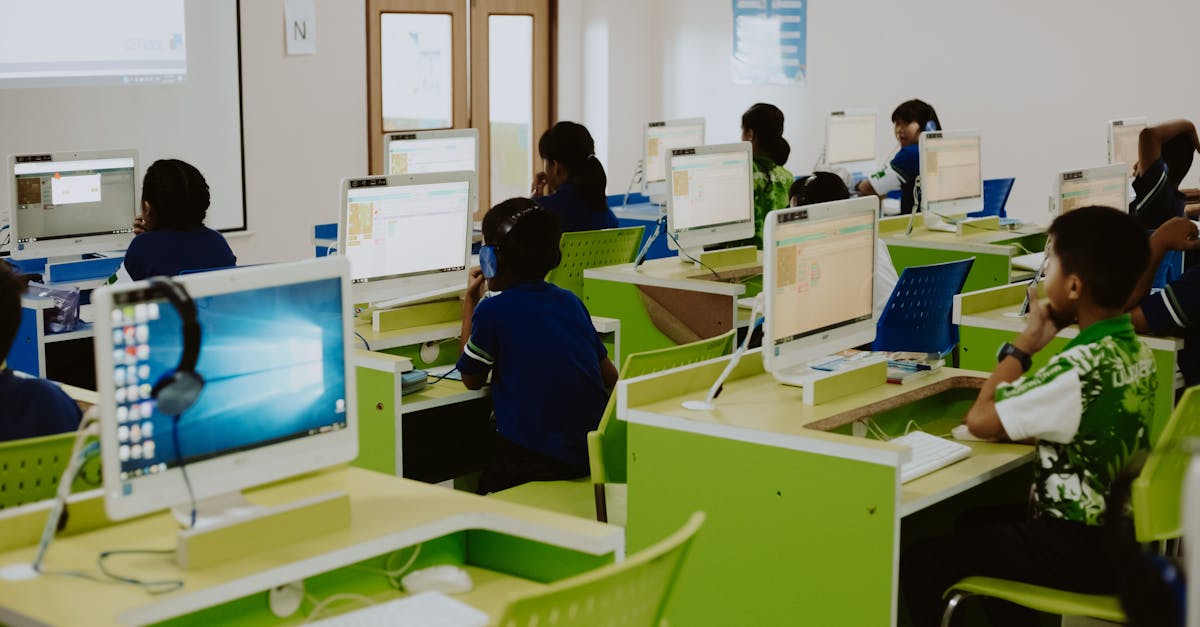
The Great Cheating Panic of 2024-2025
Let’s be real for a second. When ChatGPT first hit the scene, every teacher I know had the same reaction: this is the end of homework. And for a while, it kind of was. I’ve heard horror stories of students submitting entire essays generated in 30 seconds, complete with fake citations that sounded real but led to dead links. Schools responded with AI-detection tools, but here’s what most people miss: those detectors are wildly unreliable. Studies show they flag non-native English speakers as "AI-generated" at disproportionately high rates, and they can be fooled by simply rewriting a sentence or two.
What’s changed in 2025 is the approach. Instead of banning AI outright — which, let’s face it, is like banning calculators in a math class — forward-thinking schools are redesigning assignments to be AI-resistant. Think in-class writing sprints, oral presentations where students explain their reasoning, and projects that require personal reflection or local research that an AI can’t fake. I’ve seen teachers assign “AI-assisted” essays where students must include a log of their prompts and edits. It’s messy, but it’s honest.
The Three Ethical Landmines Nobody Wants to Talk About
Here’s where it gets sticky. Schools are navigating three massive ethical challenges right now, and most are handling them about as gracefully as a toddler with a hot potato.
1. Data privacy is a nightmare. Most free AI tools train on user data. When a student types a question into an AI platform, that information can be used to improve the model — which means a student’s personal struggles, their essay on family trauma, or their embarrassing question could end up as training data. Schools are now required to vet every tool for COPPA (Children’s Online Privacy Protection Act) compliance, but many teachers don’t have the time or training to do that. I’ve talked to educators who just tell students to use a specific “safe” version, only to find out that “safe” version still collects metadata.
2. Equity gaps are getting worse. Wealthy districts are buying premium AI subscriptions that offer better, faster, and more accurate responses. Meanwhile, underfunded schools are stuck with free versions that hallucinate facts or have strict usage limits. This creates a two-tiered education system: one where kids learn with AI as a tutor, and another where kids are punished for using it. That’s not just unfair — it’s dangerous.
3. The “AI dependency” trap. I’ve noticed something worrying: students who rely on AI for every assignment are losing basic skills. They can’t write a coherent paragraph without a prompt. They can’t brainstorm ideas without asking a chatbot. One teacher told me, “They’re using AI to generate discussion questions for a book they haven’t read.” That’s not learning — that’s outsourcing your brain.
Practical Solutions That Actually Work (From Real Schools)
I’ve been following several pilot programs across the U.S. and Europe, and a few schools are doing things right. Here’s what the smartest educators are doing in 2025:
- The “AI Literacy” curriculum. Instead of ignoring AI, some schools now teach a mandatory unit on how AI works, its biases, and its limitations. Students learn to critique AI outputs, not just consume them. One high school in Finland even has students train a small language model so they understand the mechanics. Genius.
- The “Sandbox” approach. A middle school in California created a dedicated AI lab where students can experiment with different tools under supervision. Teachers guide them on when to use AI (e.g., for grammar checking or idea generation) and when not to (e.g., for creative writing or moral reasoning). The key is context-specific rules, not blanket bans.
- The “Reverse Turing Test.” This is my favorite. One teacher I know makes students generate an AI-written paragraph, then rewrite it in their own voice, and then explain why the AI version was worse. It teaches critical thinking, writing skills, and AI awareness all at once.
- Human-centered grading. More schools are shifting away from purely written assessments. They’re using portfolios, video reflections, and in-person demonstrations. If you can’t explain it to me, you didn’t learn it — and an AI can’t fake that.
The Uncomfortable Truth: Teachers Are Exhausted
Here’s what most people miss when they talk about AI in education: teachers are drowning. They’re expected to become instant experts on technology that changes every month, while also dealing with larger class sizes, mental health crises, and administrative bloat. I’ve spoken to dozens of educators who say the AI conversation is just one more thing on their plate.
One high school teacher told me, “I spent my entire weekend learning how to detect AI writing. I have a master’s degree in English. I didn’t sign up to be a robot detective.” That’s the real crisis. Schools are investing in AI tools for students, but they’re not investing in training or support for teachers. The result? Burnout, resentment, and inconsistent policies that confuse everyone.

What’s Coming Next: The 2025-2026 Predictions
I’m not a fortune teller, but I’ve been watching this space closely. Here’s what I think will happen in the next year:
- AI will become a mandatory part of the curriculum, like typing class in the 1990s. Schools that resist will fall behind.
- We’ll see a backlash against “AI-native” education from parents who want more traditional, human-centered learning. Expect more debates at school board meetings.
- The best schools will treat AI like a calculator, not a cheat code. It’s a tool that speeds up certain tasks but doesn’t replace understanding. The question isn’t “should students use AI?” — it’s “when and how should they use it?”
- Privacy regulations will get stricter. The EU is already drafting new rules for AI in education, and the U.S. will likely follow. Schools that ignore this now will be scrambling later.
So, What Do We Actually Do?
Here’s my take, and I’ll keep it simple: stop treating AI like a enemy and start teaching students to be its boss. The kids who thrive in 2030 won’t be the ones who avoided AI — they’ll be the ones who learned when to use it, when to question it, and when to shut it off. Schools that figure that out now will be light-years ahead.
What about you? Have you seen any creative approaches to AI in your local schools? Drop a comment or send me a message — I’m genuinely curious what’s working (or failing) in your corner of the world.