
Hear me out before you sharpen the pitchforks.
I've spent the last few months listening to AI tracks flooding Spotify, watching Suno and Udio clips go viral on TikTok, and reading angry Reddit threads from session musicians. And the more I listened, the more I noticed something nobody's saying out loud. The AI stuff is competent. It's clean. It's also completely soulless. It sounds like a song that was described to someone over the phone and then rebuilt from memory.
And here's what most people miss: audiences are starting to feel it too. That's where this story gets interesting.

The Uncanny Valley of Sound
Let me tell you about the moment I knew AI music had a ceiling.
I've found that's the tell. AI can nail structure, chord progressions, even vocal timbre. What it can't do is live a life. It can't sing about getting dumped in Lagos traffic on a Tuesday. It can't put the grief of losing a parent into a three-second breath before the final verse.
Real music is a record of a human being existing. AI is a record of data being rearranged. Fans are figuring that out fast.
Artists Are Weaponizing the One Thing AI Can't Copy
Here's the counterintuitive truth: the artists fighting back hardest aren't the ones suing. They're the ones getting weirder.
I watched an indie artist I follow on Bandcamp release an album where every track was recorded live in a single take, with visible mistakes left in. She put a note on the page: "No AI. No autotune. No second chances." It sold out its first vinyl run in 72 hours.
Another artist I've been following started doing "proof of human" livestreams—writing and recording songs in real time, unedited, on camera. Fans eat it up. Why? Because in a world of infinite fake content, authenticity became the scarcest currency on earth.
Look at what's actually working:
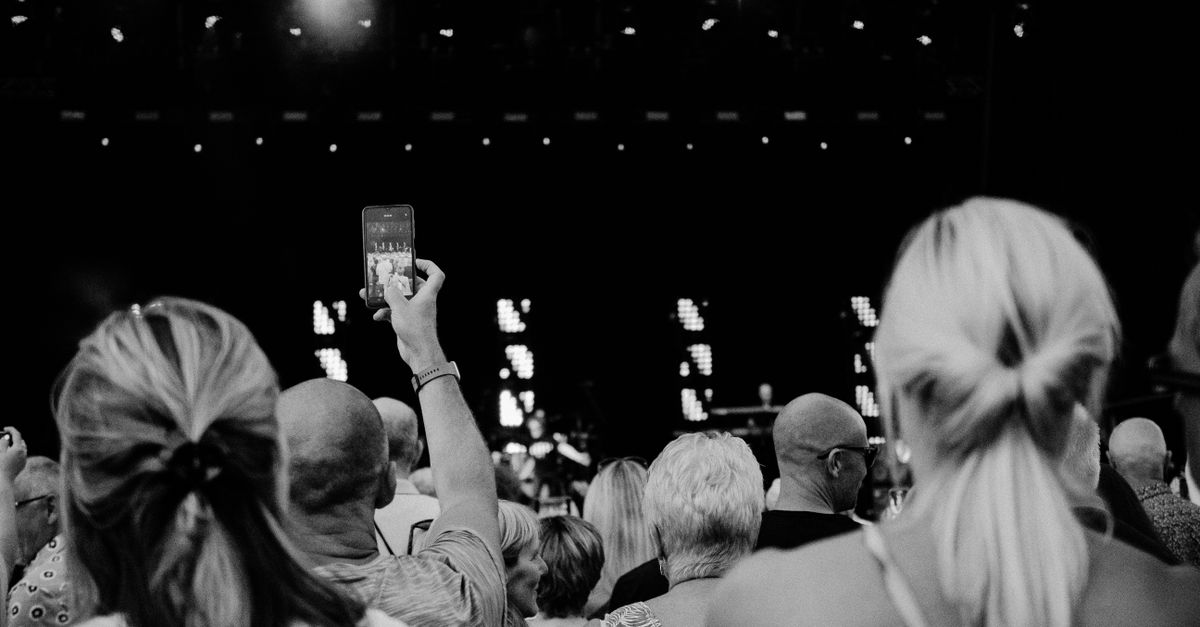
- Live performance as the product. You can't deepfake a sweaty, sold-out show where the crowd knows every word.
- Behind-the-scenes content. The messy process—voice notes, bad takes, studio arguments—is now premium content.
- Limited physical releases. Vinyl, cassettes, hand-numbered zines. Tangible proof a human made this.
- Fan co-creation. Artists running remix contests and letting fans shape the work. AI can generate; it can't collaborate.
The Legal War Nobody's Watching (But Should Be)
Let's be honest—the lawsuits are messy and slow. But they're already changing the game.
The RIAA's suits against AI music generators forced the conversation into courtrooms and boardrooms. Labels started demanding licensing deals. Some AI companies blinked and added filters. It's not a knockout punch, but it's pressure—and pressure works.
Here's the part that actually matters for working artists: the industry is quietly building a "human-made" certification layer. Think of it like organic labels for food. I've found that streaming platforms are experimenting with tags that verify a track was made by humans. It's not perfect. It's gameable. But it gives listeners a choice—and choice is power.
And artists are getting smarter about contracts. Producers I've talked to are now inserting "no AI training" clauses into their agreements. Session musicians are negotiating residuals for AI use of their likeness and sound. That's the real fight—not stopping the tech, but getting paid when it uses your work.
Why the Doom Predictions Are Overblown
Every few months someone declares "music is dead, AI killed it." I don't buy it.
Remember when streaming "killed" music? Remember when synthesizers "killed" real instruments? Remember when drum machines "killed" drummers? Every time, the industry adapted, and the best artists got more valuable, not less.
AI will absolutely flood the low end of the market—stock music, background tracks, jingles, the stuff nobody was ever going to pay a human a living wage for anyway. Good riddance. That was never the art.
But the high end? The stuff people actually love, cry to, dance to, tattoo on their arms? That's not going anywhere. Because the value of music was never the sound. It was the story behind it.
The Playbook for Artists Who Want to Win
If you're an artist reading this, here's your move—not a defense, an offense:
- Lean into your story. Your weird upbringing, your scars, your city, your obsessions. AI can't have a childhood.
- Go live constantly. Small rooms, big rooms, parking lots. Live is the last un-fakeable format.
- Build a fan community, not an audience. People who know you will follow you anywhere. People who just like the sound will leave for whatever's next.
- Use AI as a tool, not a crutch. Skip the writer's block with it. Draft lyrics. But put you into the final version.
- Document everything. The process is the proof.

So What Do We Actually Do With This?
Here's my honest take, and I'd love to hear yours.
So next time you hit play, ask yourself a question: do you want a song that sounds perfect, or a song that sounds true?
Because the market is about to make that choice real for all of us. And I know which side I'm betting on.
What's the most human song you've heard this year? Drop it in the comments—I'm building a playlist and I want the real stuff.


