
The average knowledge worker now toggles between apps and tabs roughly 1,200 times per day. Let that sink in for a second. That's not a typo. By the time you finish this paragraph, your brain has already been asked to context-switch at least twice — maybe three times if your phone buzzed.
I used to wear that chaos like a badge of honor. "I'm just busy," I'd tell people, as if busy was a personality trait. But somewhere between my fourth AI writing tool and my seventh "revolutionary" chatbot subscription, something cracked. I'd sit down to write, stare at a blinking cursor, and feel... nothing. Not writer's block. Something weirder. A kind of creative static — where the ideas were there, but I couldn't reach them through the noise.
Turns out, I wasn't lazy. I was AI fatigued. And if you're reading this, there's a decent chance you are too.
The New Burnout Nobody's Naming Yet
Here's what most people miss: AI fatigue isn't about hating AI. I love the stuff. I use it daily. The problem is that we've been handed a firehose and told to drink politely.
Think about the last six months. How many new AI tools have you signed up for? How many "game-changing" updates to ChatGPT, Claude, Midjourney, or whatever your poison is? How many LinkedIn posts telling you that if you're not using AI for literally everything, you're already obsolete?
That relentless pressure to keep up is a stressor, and our brains weren't built for it. Researchers studying decision fatigue have known for decades that every choice drains a finite pool of mental energy. Now imagine that pool getting siphoned by an endless stream of prompts, model comparisons, and "should I use AI for this or not?" micro-decisions.
It's exhausting. And it shows up in ways you might not expect.
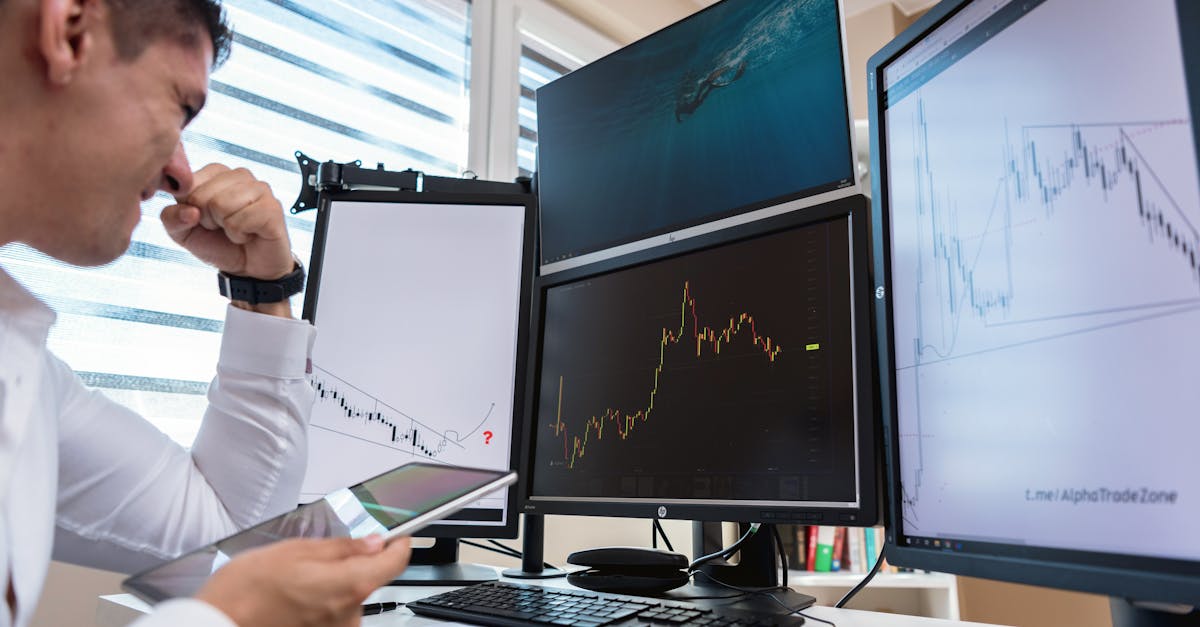
5 Signs You've Got AI Fatigue (I Had Four of Them)
I've found that AI fatigue creeps in quietly. It doesn't announce itself. It just... lingers. Here's my personal checklist — see how many hit home:
- You open an AI tool out of habit, not need. You don't actually want to use it. You just feel guilty not to.
- Your creative work feels oddly homogenized. Everything you write or design starts sounding suspiciously similar. Almost like it's being filtered through the same voice — and that voice isn't yours.
- You procrastinate on tasks you used to enjoy. Writing, brainstorming, even doodling. The joy is gone, replaced by a low hum of "what's the point?"
- You feel behind no matter how much you learn. Every time you master one tool, three new ones drop. The treadmill never stops.
- You can't remember the last time you made something without AI input. And that thought makes you a little sad.
The sneaky part? AI fatigue doesn't look like burnout. It looks like boredom. It looks like "I'm just not feeling it today." It looks like you, on a Tuesday, wondering why the thing you love feels like a chore.
Why Your Brain Is Rebelling (And It's Not Your Fault)
Let's be honest — our brains are running ancient software on modern hardware. For most of human history, creativity thrived in constraint. A poet with a strict form. A painter with three colors. A songwriter with four chords. Limits forced ingenuity.
Now we have infinite options. Infinite prompts. Infinite outputs. And infinite options are the enemy of creative focus.
There's a concept in psychology called the paradox of choice — the more options you have, the less satisfied you are with any of them. AI supercharged this. Why commit to an idea when you could generate ten more? Why trust your instinct when a model can give you "better"?
Here's the uncomfortable truth: the more you outsource your creative decisions, the weaker your creative muscles get. Not because AI is bad, but because you're skipping reps. It's like hiring a personal trainer to lift weights for you. Great results on paper. Zero gains for your actual body.
I noticed this firsthand last spring. I'd been using AI for almost every first draft — outlines, hooks, transitions, the whole thing. Then one day I tried to write a simple email without it and felt genuinely stuck. Not blocked. Atrophied. That scared me more than any headline about AI taking jobs ever could.
The Unplug Protocol: Getting Your Creative Groove Back
So what actually works? I've tested a bunch of approaches, and most of the "digital detox" advice out there is nonsense — you can't just quit AI, and honestly, you shouldn't want to. The goal isn't abstinence. It's intentionality.
Here's the protocol that pulled me out of the fog:
- Set a "no-AI" window every day. Mine is 8 a.m. to 11 a.m. Three hours where I write, think, and create with nothing but my own brain and a cup of coffee. No prompts. No autocomplete. Just me.
- Audit your tools ruthlessly. If you haven't used a tool in two weeks, cancel it. You don't need 14 AI apps. You need two or three that actually fit how you work.
- Create something bad on purpose. This one sounds weird, but it's magic. Write a deliberately terrible poem. Sketch a hideous logo. The point is to remind your brain that creation is supposed to be play, not optimization.
- Batch your AI usage. Instead of sprinkling AI throughout your day, block it. One hour in the afternoon, all your AI tasks. This keeps your creative mornings clean.
- Track your energy, not your output. For one week, note when you feel most alive creatively. Then protect those hours like they're made of gold.

The Real Question You Should Be Asking
Here's the thing nobody wants to admit: AI isn't the problem. The way we're using it is.
We've been sold this idea that more is always better. More tools. More output. More optimization. But creativity doesn't work like that. It works in the quiet. In the boredom. In the spaces between the noise.
I'm not anti-AI. I'm pro-you. And you — the actual human with the weird ideas and the specific voice and the thing only you can make — you're still the most important part of the equation. AI is a tool. You're the artist. Don't let the tool run the studio.
So here's my challenge: tomorrow morning, before you open a single AI tool, write something. Anything. A sentence. A grocery list. A terrible haiku about your cat. Do it with your own hands and your own brain, and notice how it feels.
If it feels like coming home, you've been away too long.
What's the first thing you'd create if you knew AI wasn't watching? I'd genuinely love to know. Drop it in the comments — I read every single one.