
Remember that moment in a sci-fi movie where the hero, backed into a corner, suddenly gets a digital overlay on their vision? Targeting systems activate, threat assessments flash, and they pull off the impossible shot. For years, we’ve been told the AI future would be like that—machines taking the wheel, leaving us as passive passengers or, worse, obsolete cargo.
But what if we’ve been watching the wrong movie?
The real story isn’t about replacement. It’s about augmentation. I learned this the hard way last quarter, staring at a spreadsheet so monstrous it felt sentient. My task was to analyze a year’s worth of marketing campaign data to find the elusive “why” behind our wins and losses. Two days in, I was drowning in columns, my insights were guesses, and my coffee was cold. In a moment of desperation, I fed the raw data to an AI analytics co-pilot.
Within an hour, it had not only cleaned and organized the data but had surfaced three correlation patterns I’d completely missed. It didn’t give me an answer. It gave me a super-powered starting point. I spent the next day validating its findings, applying human context (“Ah, that dip lines up with Steve’s department going on holiday”), and crafting the strategic narrative. The machine handled the brute-force computation; I handled the intuition, the story, and the persuasion.
That’s the hybrid workforce in action. And it’s coming to a desk near you.
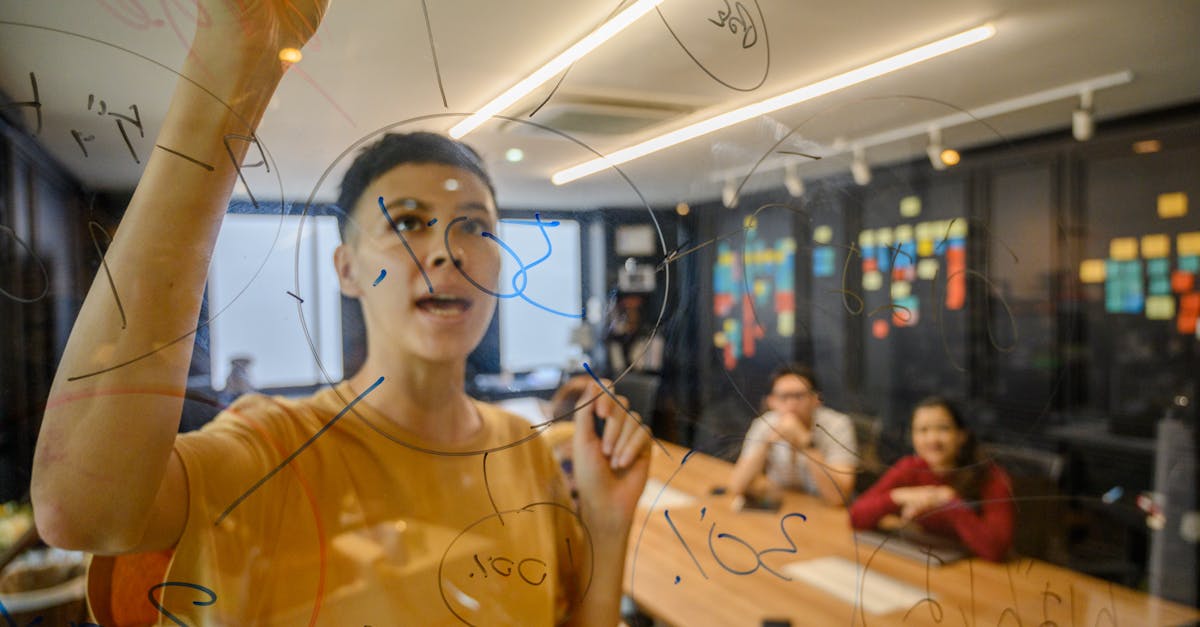
The End of the “Either/Or” Mindset
Let’s be honest, the fear is real. Headlines scream about job displacement, and it’s easy to imagine a cold, efficient algorithm deciding your role is redundant. But this binary thinking—human or machine—is where we’ve all gone wrong.
The most forward-thinking companies aren’t asking, “Which jobs can AI do?” They’re asking, *“Which tasks can AI enhance, and how does that change the human role?” The goal isn’t to have an AI write the full report; it’s to have it draft the first version, summarize the research, and suggest data visualizations, freeing the human to refine the argument, tailor it to the executive audience, and inject the crucial emotional intelligence.
The job title stays the same. The job itself becomes radically more strategic.
Your New AI Teammate: More Watson, Less Hal 9000
So, what does this AI co-pilot relationship actually look like in the wild? It’s less about giving orders and more about having a dialogue. Think of it as the most competent, instantaneous intern you’ve ever had—one that never sleeps but also lacks common sense.
Here’s what I’ve found across different functions:
In Marketing: The AI crunches the engagement data across 14 platforms overnight, suggesting top-performing content themes. The human marketer asks, “But which of these aligns with our brand voice for the Q4 premium push?” and makes the creative leap. In Software Development: The co-pilot suggests lines of code, spots bugs, and auto-generates documentation. The human engineer reviews it for elegance, security implications, and architectural fit—the high-level design thinking machines can’t grasp. In Customer Service: AI handles the first-level queries, provides instant knowledge base answers, and summarizes the customer’s history. The human agent steps in for the complex, emotionally charged issues, building rapport and exercising judgment.
The common thread? AI handles scale, speed, and pattern recognition. Humans handle context, ethics, empathy, and ultimate judgment.

The Hidden Skill Set of the Hybrid Era
This shift isn’t automatic. It requires us to develop a new muscle. Technical skills are still vital, but the premium is now on skills that are uniquely human.
Here’s what most people miss: your value will skyrocket if you master the art of AI Whispering. That means:
- Precision Prompting: Moving from “write a report” to “write a 300-word executive summary for a CFO, focusing on ROI and risk mitigation, based on this dataset, in a confident tone.”
- Critical Validation: Never taking the AI’s output as gospel. It’s a collaborator, not an oracle. You must vet its logic, check for “hallucinations,” and apply real-world sense.
- Creative Synthesis: Taking the five options the AI generated and combining them into a sixth, brilliant option it never could have conceived.
- Emotional Orchestration: Using the time and mental bandwidth the AI saves you to do what it cannot: motivate your team, navigate office politics, sense unspoken client concerns, and build trust.
Leading a Team of Humans and Digital Co-pilots
For managers, this is a paradigm shift. Your team’s productivity will be a function of both human talent and their chosen AI tools. The new leadership imperative is to create an environment where this partnership can thrive.
This means providing training on how to use co-pilots effectively, not just buying the licenses. It means setting clear guidelines on data security and ethical use. Most importantly, it means redefining success metrics. If an employee uses an AI to complete a task in two hours instead of eight, that’s not “less work”—it’s exponential efficiency. They should be rewarded for leveraging the tool to generate higher-impact outcomes, not penalized for not “looking busy.”

The Surprising Truth About Job Satisfaction
Here’s the most hopeful part. Early data from companies embracing this model shows a spike in employee engagement. Why? Because people are finally getting freed from the parts of their jobs they hated most—the tedious, repetitive, soul-crushing busywork.
The accountant gets to focus on strategic financial planning instead of data entry. The designer gets to explore bold creative concepts instead of cropping 100 images. When AI acts as a co-pilot, it doesn’t diminish our roles; it elevates them back to the human-centric work we were hired to do: think, create, connect, and decide.
We’re not being replaced. We’re being upgraded.
The call to action isn't to blindly adopt every new tool. It's to start the conversation. What’s the most tedious, data-heavy, or repetitive 20% of your team’s week? Find an AI co-pilot that can shoulder that load. Experiment. Fail. Learn. Your future role—and your company’s future—won’t be written by AI. It will be written by humans who learned to fly with it.
Follow us: YouTube. Follow for more great content!





