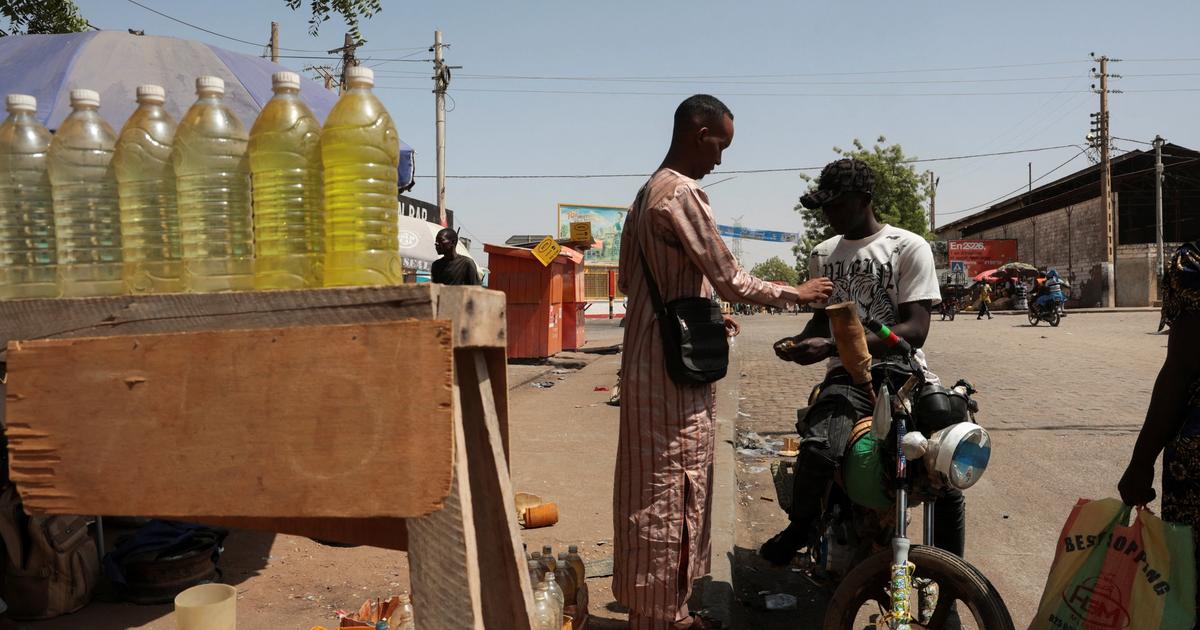
Africa's job market is not delivering secure, sustaining employment for its young people, according to a new report from the African Center for Economic Transformation (ACET) cited by Semafor. The Accra-based think tank found that fewer than one in five working young Africans has access to health coverage or social security, and only slightly more than a quarter receive paid holiday leave. Roughly a third of young Africans work informally in agriculture.
Why it matters
The findings challenge a familiar narrative. Africa's young population is routinely described as one of the continent's biggest economic advantages, but ACET's research suggests the work available to most of those young people does not come with the protections that make a job life-sustaining. Without health coverage, social security or paid leave, a large share of the continent's young workforce is exposed to financial shocks and has little cushion when they fall ill or need time away from work.
The report also points to a structural gap: the economies creating work are not necessarily the ones creating good work. That distinction matters for policymakers who have treated youth employment as a numbers problem rather than a quality problem.
Smaller domestic firms show stronger results
ACET found that small- and medium-sized domestic companies offered better job growth and superior employment conditions than larger businesses. The think tank singled out three sectors where this pattern was most visible: technology, pharmaceuticals and construction.
Mona Iddrisu of ACET told Semafor that these sectors deserve more attention so they can take on more young workers without the benefits attached to those jobs being weakened. Her point suggests a tension: scaling up employment in these firms could expand opportunity, but only if growth does not come at the cost of the conditions that make those jobs decent in the first place.
The emphasis on domestic SMEs is notable because much of the policy conversation around African employment has focused on attracting large employers and foreign investment. ACET's findings suggest that the smaller, locally rooted firms may be doing more of the heavy lifting on job quality, even if they receive less attention.
A workforce without a safety net
The coverage figures are the starkest part of the report. Fewer than 20% of young Africans in work have health coverage or social security, meaning the vast majority have no formal protection if they are injured, fall ill or reach a point where they cannot earn. The fact that just over a quarter receive paid holiday leave reinforces the picture of a workforce whose income stops when they do.
Informal agricultural work, which accounts for about a third of young Africans in employment, sits at the far end of this spectrum. Such roles typically fall outside formal labor protections altogether, leaving workers dependent on their own savings or family networks during hard periods.
The report does not offer a single explanation for why conditions are so weak, but the combination of informality and the dominance of small enterprises points to a labor market where formal protections have not kept pace with where jobs are actually being created.
What to watch
The question now is whether governments and development institutions will shift attention toward the SME sectors ACET identifies, and whether support for those firms comes with conditions that preserve job quality as they expand. Semafor reports the think tank's central message is that these sectors need more focused backing so they can absorb more young workers without diluting the benefits they currently provide.