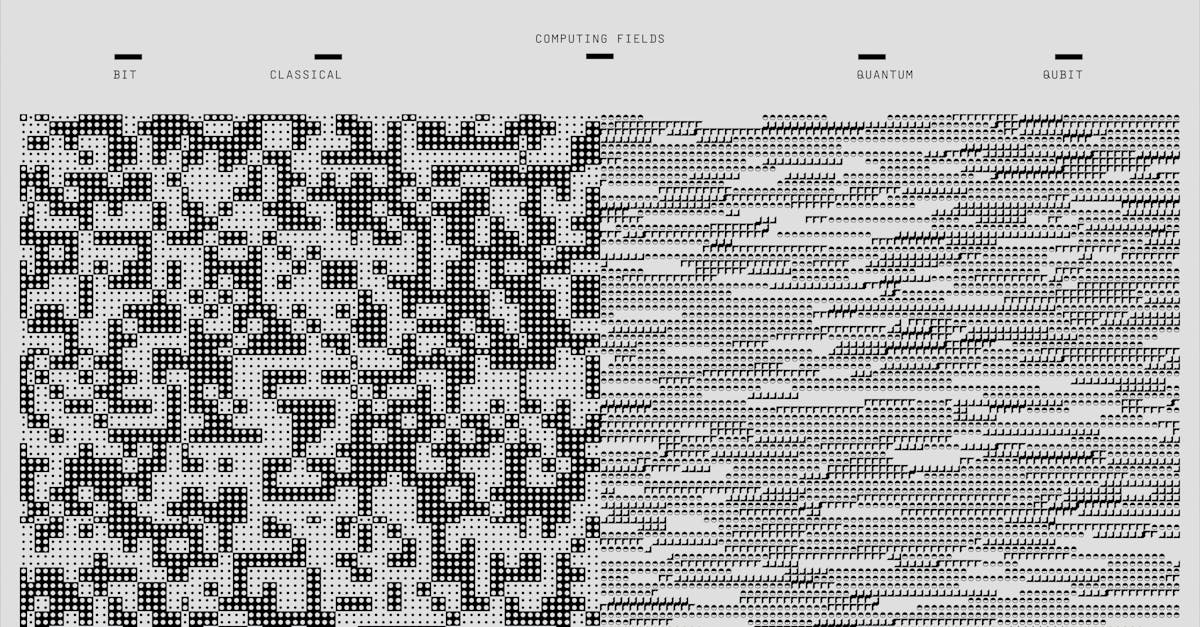
My uncle called me last Tuesday, genuinely rattled. He'd just read that Google's new quantum chip solved a problem in five minutes that would take the world's fastest supercomputer ten septillion years. "Ten septillion," he kept repeating, like the number itself was a curse. He's a retired accountant who still balances his checkbook by hand, and suddenly he felt like he'd been doing math with an abacus while everyone else moved to spreadsheets.
I laughed, but honestly? He's not wrong to feel the ground shifting. Because here's the thing nobody's saying loudly enough: the quantum computing race isn't a distant sci-fi promise anymore. It's happening right now, and 2025 is shaping up to be the year the starting gun actually fires.
The Moment Quantum Stopped Being a Buzzword
Let me be straight with you. I've been following quantum computing since it was the kind of topic that made eyes glaze over at dinner parties. For years, it was all "in a decade or two" and "theoretically possible." Every article ended the same way — with a shrug and a vague promise that the future was coming.
Then December hit, and Google dropped Willow, its latest quantum chip. The headline number — five minutes versus ten septillion years — sounds like marketing fluff until you understand what it actually means. It's not that the chip is fast. It's that error correction finally works at scale. That's the wall every quantum researcher has been banging their head against for twenty years.
I've found that most people miss the real story here. It's not the speed. It's that quantum computers can now fix their own mistakes fast enough to stay useful. That's the difference between a prototype and a product.

Why Every Tech Giant Suddenly Has a Horse in This Race
Here's what nobody tells you about the quantum computing race: it's not really about science anymore. It's about geopolitics, money, and who gets to own the next century.
- Google just proved error correction works
- IBM is shipping its Condor and Heron systems to actual customers
- Microsoft is betting big on topological qubits — the hardest path, but potentially the most powerful
- China has poured billions into quantum research and holds more quantum patents than any other nation
- Startups like PsiQuantum and IonQ are racing to hit "quantum advantage" before the giants swallow the market
Let's be honest — when nations start treating a technology like it's a nuclear program, you should pay attention. The quantum computing race has become a cold war rerun, except this time the weapons are qubits and the battlefield is your encrypted data.
The Encryption Elephant in the Room
Okay, this is the part that keeps me up at night, and it should keep you up too.
Every time you log into your bank, send a WhatsApp message, or buy something online, you're protected by encryption that relies on one simple fact: classic computers are terrible at factoring huge numbers. RSA encryption — the backbone of the internet — assumes that breaking it would take longer than the universe has existed.
A sufficiently powerful quantum computer doesn't care about that assumption. Shor's algorithm, written back in 1994, showed that a quantum machine could crack RSA in hours.
Now, before you panic-delete your banking app — we're not there yet. Current quantum computers have maybe a few hundred to a few thousand qubits. Breaking RSA-2048 would need millions of stable, error-corrected qubits. But "not there yet" and "not coming" are very different things.
This is exactly why the US government's NIST finalized post-quantum encryption standards in 2024, and why every serious tech company is quietly migrating its infrastructure. The quantum computing race isn't just about who builds the fastest machine. It's about who rebuilds the internet's security before someone else breaks it.
Your Phone Won't Have a Qubit (And That's Fine)
Here's where I want to pull you back from the hype cliff.
A lot of people hear "quantum computing race" and imagine a quantum chip in their next iPhone. That's not happening. Not in 2025, not in 2035. Quantum computers are not faster versions of regular computers. They're specialized tools for very specific problems.
Think of it this way: a Formula 1 car is faster than a pickup truck, but you're not using it to haul lumber. Quantum machines will excel at:
- Drug discovery — simulating molecular interactions that classic computers can only approximate
- Materials science — designing better batteries, superconductors, and catalysts
- Optimization — logistics, traffic, financial portfolios
- Cryptography — both breaking it and defending against it
- AI training — potentially accelerating certain machine learning tasks
The 2025 Tipping Point Nobody's Ready For
So why 2025 specifically? Three reasons, and they're stacking up like tectonic plates.
First, error correction crossed the threshold. Google's Willow result isn't just a milestone — it's proof the physics works. That changes the entire roadmap.
Second, the talent war is peaking. Quantum PhDs are getting seven-figure offers from hedge funds and tech giants. When the smartest people in the room are all pointed at one problem, breakthroughs accelerate.
Third, the commercial pressure is real. IBM, Google, and Microsoft all have roadmaps promising "useful quantum advantage" within this decade. They can't walk those back without losing investor confidence.
I'm not saying 2025 will hand us a working quantum laptop. I'm saying 2025 is when the quantum computing race stops being a physics experiment and becomes an industry. The year the conversation shifts from "if" to "how fast."

What You Should Actually Do About It
Look, you don't need to learn quantum mechanics this weekend. But you should stop treating this like trivia.
- If you work in cybersecurity, post-quantum migration is now your job, not a someday project
- If you're in finance or pharma, start asking how quantum simulation could reshape your industry
- If you're a student, quantum information science is the highest-leverage skill you can develop right now
- If you're just curious, follow the news with a healthy mix of excitement and skepticism
My uncle ended our call with, "So should I be worried?" I told him the truth: worry is useless. Pay attention instead.
The quantum era isn't knocking on the door anymore. It's already in the hallway.
The question is — will you be ready when it walks in?