
Let me be brutally honest: the biggest threat to professional sports isn't doping, gambling scandals, or even the greedy owners squeezing fans dry. It's the referee. And I say that as someone who has lost actual years of my life screaming at a TV screen while a grown man in a striped shirt stared at a monitor for four minutes and still got the call wrong.
Here's the thing I've come to believe: human referees, as we know them, are on borrowed time. Not because they're incompetent — most of them are genuinely good at an impossibly hard job — but because the technology has finally caught up to the point where keeping them as the final authority is starting to look like a choice, not a necessity.
And honestly? I'm here for it.
The Whistle Is Getting a Silicon Upgrade
I've found that most fans still think of "AI in sports" as some far-off sci-fi fantasy. Meanwhile, it's already happening in plain sight.
Tennis gave us Hawk-Eye years ago, and we all just... accepted it. Line calls stopped being arguments. The machine said out, the player shrugged, we moved on. Nobody mourns the days of John McEnroe losing his mind over a chalk mark.
Now scale that up.
- Semi-automated offside technology in football (soccer, for my American friends) uses limb-tracking cameras and a ball with a motion sensor to call offside in seconds. The Premier League rolled it out, and it's already reshaping how attackers time their runs.
- The MLB's automated ball-strike system (ABS) has been tested in the minors and is creeping toward the big leagues. Imagine a world where a batter doesn't get rung up on a pitch six inches off the plate.
- Goal-line technology and VAR in football have become standard, even if the execution still drives us insane.
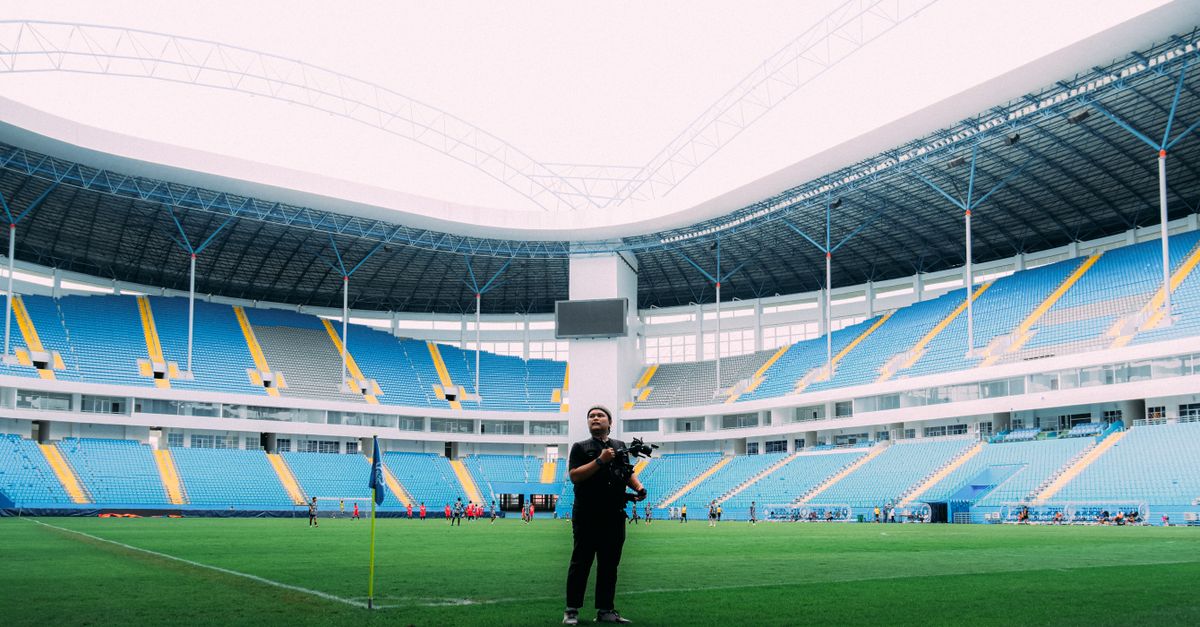
Why Human Referees Were Never the Real Problem
Let me push back on the lazy take for a second. The popular narrative is that refs are blind, biased, or bought. That's mostly nonsense.
Here's what most people miss: the human eye literally cannot process everything happening on a modern pitch or court at elite speed. A 100 mph fastball crosses the plate in about 400 milliseconds. A winger sprinting at full pace can be offside by a single shoulder for a fraction of a second. We've been asking humans to be supercomputers, then torching them when they fail.
The real problem was never the referee. It was the mismatch between human biology and the speed of the game.
So when people get misty-eyed about "the human element" of officiating, I get it — but I also think they're romanticizing error. Do you actually want the human element of a blown call deciding a championship? I don't.
AI referees don't replace judgment. They replace guesswork.
Inside the Smart Stadium Nobody's Really Talking About
This is the part that genuinely blows my mind, and I don't say that often.
While everyone argues about robot refs, the entire stadium around them is quietly becoming a connected machine. We're talking about smart stadiums that use AI for way more than whistle-blowing.
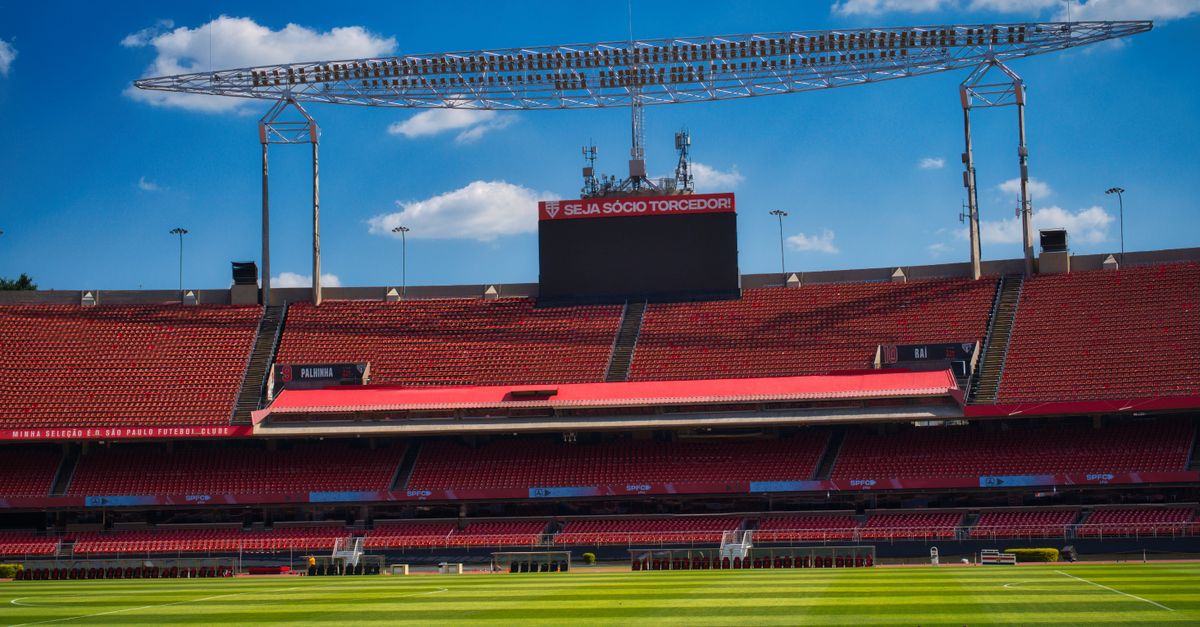
Think about what's already live or in testing:
- Crowd flow and safety AI — cameras and sensors that predict bottlenecks before they become crushes. After some of the crowd disasters we've seen in global football, this isn't a luxury. It saves lives.
- Player tracking and biometrics — wearables feeding real-time fatigue and injury-risk data to the bench. Coaches are making substitution decisions off numbers a decade ago they'd have dismissed as witchcraft.
- Broadcast augmentation — instant replays, augmented-reality overlays, and personalized camera angles generated by AI in real time.
- Fan experience engines — apps that route you to the shortest concession line, predict when your section will clear out, and even suggest when to hit the restroom to avoid the halftime crush.
And here's the kicker: the same sensor network that tracks a player's sprint speed can also tell a referee whether a ball crossed a line. One infrastructure. Two revolutions.
The Money, the Pushback, and the Ugly Truth
Let's be honest about why this is accelerating so fast. It's not just accuracy. It's money.
A controversial call costs leagues sponsors, credibility, and — increasingly — gambling revenue. When billions of dollars ride on a single decision, "we'll trust the guy with the whistle" stops sounding charming and starts sounding reckless.
But I won't pretend it's all sunshine.
The pushback is real, and some of it is legit. Lower leagues can't afford the tech stack, which risks a two-tier sport where the rich get precision and everyone else gets vibes. Player unions worry about biometric data being weaponized against them in contract talks. And there's a genuine philosophical question: if an AI makes a call, who do you appeal to?
A referee can be asked to explain himself. A black-box algorithm? Good luck.
That's the hidden cost of the AI referee revolution — not lost jobs, but lost accountability unless leagues build transparent, auditable systems. Get that wrong and you've replaced human error with corporate mystery.
What This Actually Means for You as a Fan
Here's my honest prediction, and I'll plant my flag on it.
Within a decade, the idea of a human making split-second factual calls — offside, ball in or out, strike zone — will feel as archaic as a scoreboard that only updates at halftime. Humans will still be there, but their role shifts from judge to manager — handling game flow, player safety, and the messy human stuff AI is terrible at.
The whistle won't disappear. It'll just stop lying to us.
And the smart stadium? It'll be less "wow, look at the tech" and more "why doesn't every stadium do this?" The same way we stopped marveling at instant replay and started getting annoyed when it's missing.

So here's my challenge to you. Next time your team gets robbed by a call, don't just scream at the ref. Ask yourself the harder question: why is a human still making this decision at all?
Because the tech isn't waiting for us to be ready. It's already on the field.
The only real question left is whether the people running your favorite sport are smart enough to use it right — or greedy enough to sell you the illusion of it.
I know which way I'm betting.