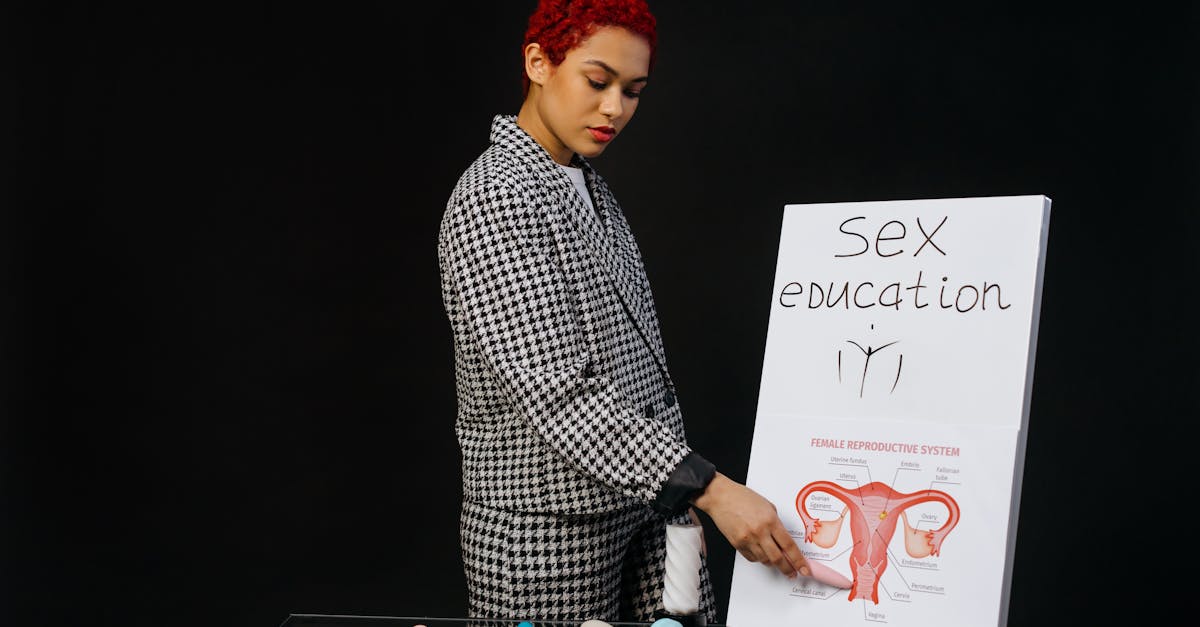
You know what keeps me up at night? It’s not caffeine or a bad Netflix cliffhanger. It’s the fact that over 260 million children worldwide are still out of school, according to UNESCO. That’s roughly the entire population of Indonesia — just vanished from the classroom. And here’s the kicker: for those who are in school, the system often feels like a factory line for test-takers, not thinkers. We’ve built a global machine that rewards memorization over curiosity, compliance over creativity. That’s where Ho Education comes in — not as a buzzword, but as a quiet rebellion against the status quo.
Let’s be honest: I’ve sat through enough boring lectures to wallpaper a small planet. I’ve watched brilliant friends burn out because the system told them they were “average.” But Ho Education isn’t about tearing down schools. It’s about reimagining what learning can be — a lifelong, messy, joyful adventure that respects your weirdness. So grab your coffee, because we’re about to flip the script on everything you thought you knew about education.
The Hidden Curriculum Nobody Talks About
Here’s what most people miss: the real education happens between the lines of the official syllabus. I call it the hidden curriculum. It’s the stuff we learn by accident — how to negotiate with a grumpy teacher, how to fake confidence during a presentation, or how to survive a group project with someone who does zero work. Sound familiar?
But Ho Education flips this on its head. Instead of treating these “soft skills” as side effects, it puts them front and center. Think about it: when was the last time a math test taught you how to handle rejection? Or a history essay taught you how to listen without interrupting? The hidden curriculum is where life actually happens, and we’ve been treating it like a footnote.
I’ve found that the most successful people I know — artists, entrepreneurs, even that one friend who started a goat yoga business — all credit their “real” education to moments outside the classroom. A failed project. A late-night debate. A book they weren’t assigned. So if Ho Education has a secret, it’s this: stop waiting for permission to learn what matters. You don’t need a diploma to master empathy, resilience, or how to fix a leaky faucet.

Why Your Brain Hates Traditional School (And What To Do About It)
Let’s get nerdy for a second. Your brain is not a filing cabinet. It’s a jungle — messy, interconnected, and prone to wandering. Yet most schools treat it like a warehouse, stacking facts in neat rows. No wonder we forget 70% of what we learn within 24 hours, according to a 2015 study in Psychological Science.
Ho Education leans into the chaos. It understands that learning sticks when it’s:
- Emotionally charged — you remember the teacher who made you laugh, not the one who droned on.
- Contextual — you’ll never forget how to change a tire if you did it in the rain at midnight.
- Social — we learn faster when we’re arguing, collaborating, or laughing together.
So if you’re stuck in a system that feels like a slog, here’s your permission slip: cheat. Not on tests, but on the method. Find a podcast that makes you curious. Join a community of weirdos who share your obsession. Your brain will thank you.
The 3 Pillars of Ho Education That Change Everything
I’ve spent years obsessing over what makes learning stick, and I’ve boiled it down to three things. Call them the Ho Education pillars if you’re fancy. Call them a survival guide if you’re practical.
1. Curiosity Over Compliance
Most schools punish curiosity. Raise your hand too many times? You’re “disruptive.” Ask a question that derails the lesson? You’re “off-topic.” But Ho Education says: follow the rabbit hole. Every great invention — from penicillin to Post-it notes — came from someone who refused to stay in their lane.I once had a student who was obsessed with why clouds look fluffy. Instead of shutting him down, I let him spend a whole week on cloud physics. By Friday, he’d built a miniature cloud chamber out of a jar and dry ice. That’s not a distraction; that’s a scientist in the making.
2. Failure as a Feature
Let’s be real: failure in traditional school is a scarlet letter. An F means you’re stupid. A dropped class means you’re weak. But Ho Education treats failure like a video game boss — you lose, you learn, you level up. I’ve failed more times than I care to admit: a startup that crashed, a blog that got zero readers, a cooking experiment that nearly set off the fire alarm. Each time, I walked away with a lesson worth more than any A+.3. Community Over Competition
Remember those group projects where one person did all the work? That’s competition disguised as collaboration. Ho Education flips it: learning is a team sport. I’ve seen strangers become lifelong friends over a shared obsession with urban gardening or obscure 80s synthpop. When you learn with people, not against them, the knowledge sticks deeper and the journey becomes way more fun.
The Digital Revolution: How Ho Education Survives the Algorithm
Here’s the uncomfortable truth: the internet was supposed to democratize education, but it mostly gave us clickbait and cat videos. YouTube is full of “how to learn anything in 5 minutes” videos, but they rarely teach you how to think. Meanwhile, algorithms feed you content that confirms what you already believe. That’s the opposite of education.
But Ho Education has a trick up its sleeve. Instead of fighting the algorithm, it uses it as a tool — not a crutch. Here’s my personal playbook:
- Curate, don’t consume. I follow 5 creators who challenge my worldview, not 50 who agree with me.
- Go deep, not wide. I’ve spent three months on the history of the Silk Road. I know nothing about the Roman Empire, and I’m okay with that.
- Build a digital garden. Not a feed, but a space where I save ideas, connect them, and revisit them. Tools like Obsidian or Roam Research are my secret weapons.
Real-World Ho Education: Stories That Prove It Works
I don’t just talk about Ho Education — I live it. And I’ve seen it transform lives in ways that textbooks never could.
Take my friend Maria. She dropped out of college at 19 because she felt suffocated by the lecture hall. Everyone told her she was throwing away her future. But Maria started a tiny podcast about urban foraging. She learned by doing — interviewing experts, testing recipes, failing publicly. Five years later, she’s a consultant for sustainable food systems, and she’s never stepped foot in a classroom since. Her education was messy, self-directed, and totally uncredentialed. But it worked.
Or consider Ahmed, a former factory worker who wanted to learn coding. He couldn’t afford bootcamps, so he used free resources — YouTube, open-source projects, Reddit communities. He built a portfolio of apps that solved real problems (like one that helps his local mosque coordinate volunteers). Today, he’s a software engineer at a startup. No degree. No debt. Just relentless curiosity.
These aren’t exceptions; they’re the new normal. The world is full of people who learned outside the system and built lives they love. The only difference between them and you? They started before they felt ready.
How to Start Your Own Ho Education Journey (Right Now)
You don’t need permission. You don’t need a syllabus. You just need to start. Here’s a no-BS plan to kick off your Ho Education today:
- Pick one thing you’re irrationally curious about. Not what you should learn — what you want to learn. Maybe it’s the history of bread. Maybe it’s how to build a chatbot. The subject doesn’t matter; the passion does.
- Spend 30 minutes a day on it. No more, no less. Consistency beats intensity. I’ve learned more about quantum mechanics in 30-minute chunks than I ever did in a semester.
- Find a community. Join a subreddit, a Discord server, or a local meetup. Share your wins and your fails. Learning alone is lonely; learning together is electric.
- Build something stupid. A blog post. A prototype. A drawing. The act of creating forces you to think. The result doesn’t have to be good — it just has to be yours.
The Final Lesson: Your Education Is Your Responsibility
I’ll leave you with this: the school system isn’t going to save you. No institution, no app, no guru can hand you a meaningful education on a silver platter. The moment you accept that, you become free.
Ho Education isn’t a product you buy or a course you complete. It’s a mindset — a stubborn refusal to let the world decide what you’re capable of. It’s the audacity to learn what you love, even if it doesn’t fit into a neat box. And it’s the courage to fail, publicly and often, until you get it right.
So here’s my call to action: start today. Pick one thing. Learn it. Share it. Fail at it. Then learn something else. The world is your classroom, and the only deadline is the one you set for yourself.
Trust me, you’ve got this. Now go learn something that scares you.