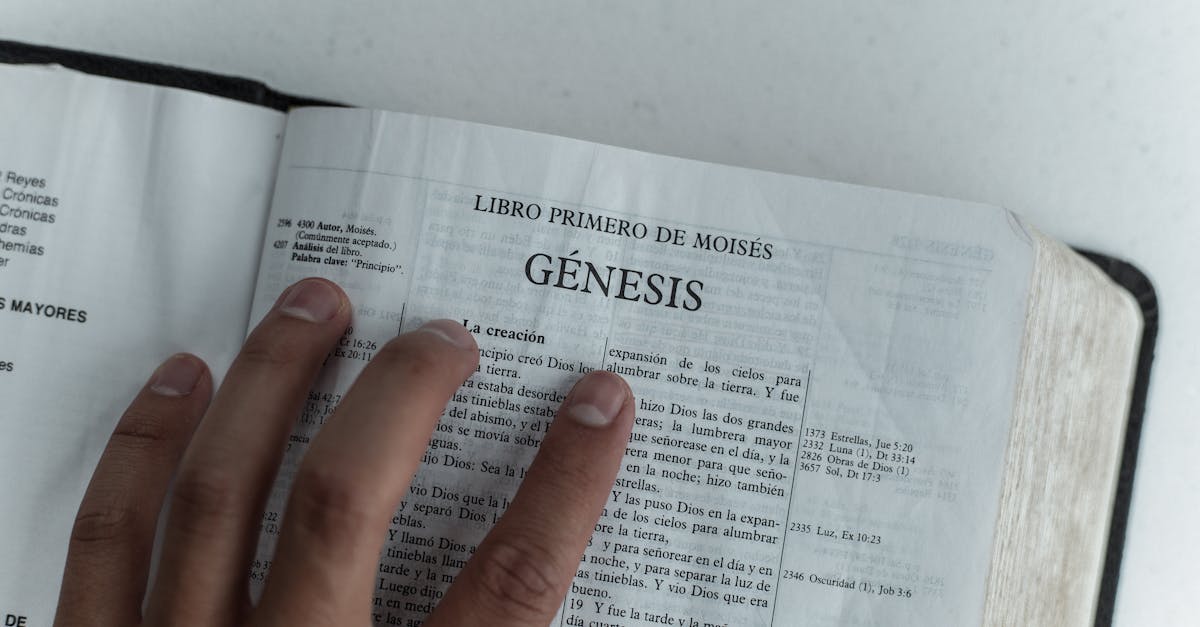
I remember sitting in my car, parked outside a gas station at 2 AM, crying to a song I’d never heard before by an artist I’d never heard of. It wasn’t sad music. It was a hyperpop track with glitchy synths and a vocal chop that sounded like a corrupted video game. But something about the lyrics — “I’m just chasing dopamine in a digital world” — hit me like a truck. That night, I realized: Gen-Z doesn’t read Bibles anymore. They listen to them.
I’m not talking about scripture. I’m talking about the sonic and lyrical manifestos that define this generation’s spiritual, emotional, and existential landscape. Gen-Z’s Bible isn’t leather-bound with gold edges. It’s a playlist. It’s an album. It’s a single track that goes viral on TikTok and somehow speaks to 20 million people at once. Let’s crack open this holy text.
The Liturgy of Loneliness: How Sad Girl / Boy Music Became Scripture
Let’s be honest: Gen-Z is the loneliest generation in history. We have more ways to connect than ever, yet we’re drowning in isolation. And music has stepped in to fill the void where community, religion, and even family used to sit.
I’ve found that the most “sacred” tracks in the Gen-Z Bible aren’t happy. They’re raw, depressive, and brutally honest. Artists like PinkPantheress, Ethel Cain, and d4vd don’t just sing about heartbreak — they articulate a specific kind of digital-era emptiness. When Ethel Cain sings about running from God in “American Teenager,” she’s not being blasphemous. She’s writing the gospel of a generation that was raised on church and then abandoned by it.
Here’s what most people miss: the production itself is the prayer. Those lo-fi beats, the slightly-off-tempo drums, the reverb that sounds like you’re in an empty mall — it’s intentional. It mimics the feeling of being half-present, scrolling through life. The Gen-Z Bible doesn’t preach clarity. It preaches the texture of confusion.
I once asked a group of 18-year-olds what song felt like “their religion.” One girl said “The Night We Met” by Lord Huron. A guy said “Heat Waves” by Glass Animals. Another said “505” by Arctic Monkeys. None of these are new. But they’re shared liturgy. They’re songs that get played at every party, every breakup, every 3 AM crying session. They’re the hymns.
The 3 Pillars of the Gen-Z Musical Bible
If you’re over 30, you might look at the charts and see noise. I see three distinct pillars that hold up this generation’s sacred music:
- Hyper-Specific Emotional Honesty — Gen-Z can’t stand vague lyrics. “I love you” is boring. But “I love you like a dog that’s been kicked one too many times” (from Phoebe Bridgers’ “Moon Song”) — that’s scripture. Specificity is the new poetry. We want the exact feeling, not the general idea.
- Genre-Blending as Identity — The Gen-Z Bible doesn’t have chapters. It has hyperlinks. One song can start as country, pivot to hyperpop, and end with a spoken-word sample from a 90s anime. Artists like 100 gecs, Brakence, and Jane Remover create music that refuses to be categorized — because Gen-Z refuses to be categorized. We’re not just one thing, so why should our music be?
- Nostalgia as Theology — Dig into any Gen-Z hit and you’ll find samples from 2000s video games, 80s synths, or 90s R&B. This isn’t just trend-chasing. It’s a generation trying to find meaning in the past because the present feels hollow. We worship the memory of a world we barely experienced.

The TikTok Temple: Where Songs Become Prayers
Here’s the part that drives old-school music critics insane: a song’s meaning is now determined by its TikTok virality. Not the artist’s intention. Not the album concept. The 15-second clip that gets 2 million views.
I used to hate this. I thought it cheapened music. But I’ve come around. TikTok is the new church. You go there, you hear a snippet of a song, and you feel something. You click through to the full track. You read the comments. You see thousands of people saying “this song saved my life” or “I can’t stop crying to this.” That’s a congregation.
The Gen-Z Bible is crowdsourced. When “Dreams” by Fleetwood Mac went viral in 2020 because of a skateboarding guy drinking cranberry juice, that wasn’t random. The algorithm surfaced a song that spoke to the collective loneliness of lockdown. The people decided it was scripture. Not the record label. Not the radio station.
I’ve found that the songs that stick in the Gen-Z Bible have one thing in common: they can be remixed into meaning. A sad song becomes a meme. A happy song becomes a sad edit. The meaning is fluid. That’s not a bug — it’s a feature. We don’t want static texts. We want living documents.
The Holy Trinity: Phoebe Bridgers, Bad Bunny, and Taylor Swift
Let’s name the prophets. If there’s a holy trinity in the Gen-Z musical Bible, it’s Phoebe Bridgers, Bad Bunny, and Taylor Swift. Each represents a different aspect of the faith.
Phoebe Bridgers is the confessor. Her album Punisher is basically the book of Lamentations for the digital age. She sings about death, guilt, and the impossibility of connection with a straight face. She’s the priest who’s seen it all and still shows up to service.
Bad Bunny is the celebrant. He makes music that’s ecstatic, sexual, and unapologetically Spanish. For a generation that’s increasingly multi-lingual and boundary-pushing, he’s proof that joy can be sacred too. His album Un Verano Sin Ti isn’t just a summer playlist — it’s a ritual of escape.
Taylor Swift is the archivist. She’s the one who writes the history. Her re-recordings, her vault tracks, her obsessive cataloging of every relationship — she’s building a canon. Gen-Z didn’t grow up with her, but we adopted her. Why? Because she treats her own life like scripture, and she invites us to annotate it.
Why the Gen-Z Bible Scares the Establishment
The music industry is terrified of this generation. Not because we don’t buy albums (we don’t), but because we’ve decentralized authority. No one needs a record label to validate a song. No one needs a radio DJ to tell them what’s good. The Gen-Z Bible is written by the people, for the people, and it’s updated in real time.
I’ve seen 16-year-olds start bands in their bedrooms, release songs on SoundCloud, and get millions of streams without ever talking to a label. That’s not just a business disruption — it’s a spiritual one. The priestly class of music executives is obsolete. We have our own prophets now, and they’re just like us.
Here’s what most people miss about this: the Gen-Z Bible isn’t about the music. It’s about the relationship. We don’t just listen to songs — we interact with them. We make edits, we write fan fiction, we analyze lyrics in comments, we create choreography. The Bible isn’t a book you read. It’s a book you live.
The Dark Side of the Canon
I’m not going to pretend the Gen-Z Bible is perfect. There’s a lot of broken theology here. The obsession with sadness can become a trap. The endless nostalgia can prevent us from making new things. The TikTok algorithm can turn sacred songs into disposable content within a week.
I’ve watched friends fall into depression spirals triggered by music that was supposed to heal them. The Gen-Z Bible has no warnings on the cover. It doesn’t tell you that listening to “Washing Machine Heart” on repeat might break yours. It doesn’t prepare you for the moment when your comfort song becomes your trigger.
But here’s the thing: no Bible is perfect. Every sacred text is a product of its time, written by flawed humans trying to make sense of chaos. The Gen-Z Bible is honest about its flaws. It doesn’t pretend to have answers. It just says, “I feel this too. You’re not alone.” And for a generation that’s starving for connection, that’s enough.
What Comes After the Last Track?
I don’t know what the next chapter of the Gen-Z Bible looks like. Maybe it’s AI-generated music. Maybe it’s immersive audio experiences in the metaverse. Maybe it’s a return to acoustic instruments and live performance. The only thing I know for sure is that it won’t be static.
Every generation thinks their music is the most important. Boomers had The Beatles. Gen-X had Nirvana. Millennials had Radiohead. But Gen-Z? We have everything and nothing at once. We have access to every song ever recorded, and yet we’re still searching for the one that makes us feel real.
So go ahead. Open your playlist. Find the songs that feel like home. That’s your Bible. Annotate it. Share it. Argue about it. Because the sacred isn’t something handed down from above. It’s something we discover together, one 3-minute song at a time.
And if you’re still reading this — go listen to something that makes you cry. That’s the first commandment.