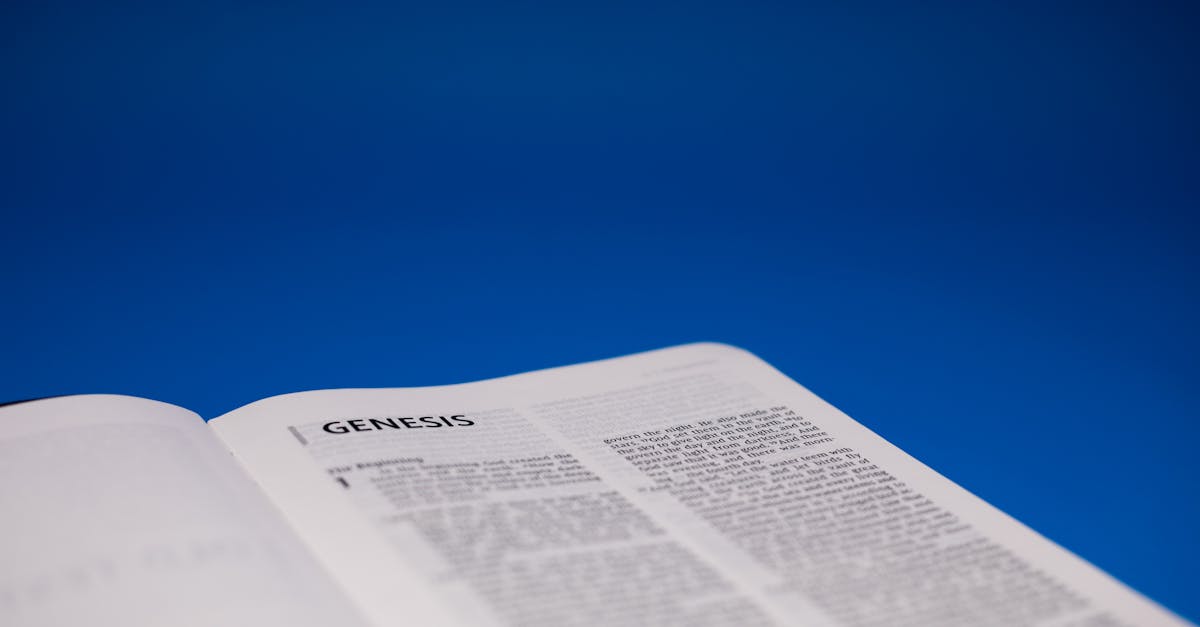
I was 15 when my grandmother handed me a worn, leather-bound King James Bible. “This is the map,” she said. “Everything you need is in here.” I nodded, placed it on my shelf, and never opened it. Fast forward to last week. I’m scrolling through TikTok at 2 AM, and a 19-year-old with blue hair is explaining how “The Book of Ecclesiastes is basically the original nihilism meme.” She had 2 million views. And that’s when it hit me: Gen-Z isn’t rejecting the Bible. They’re remixing it.
This isn’t a revival. It’s not a rebellion. It’s a digital detox wrapped in ancient text. Let me explain.
The Algorithm Found God Before You Did
Here’s what most people miss: Gen-Z doesn’t read books. They read threads. So when a 22-year-old posts a Twitter thread titled “The 7 Most Unhinged Verses in Leviticus,” that’s their Bible study. I’ve seen it happen. A friend’s niece — who calls herself “spiritual but not religious” — sent me a screenshot of Proverbs 31:25 with a caption: “She laughs without fear of the future. That’s the energy I’m manifesting.”
She didn’t know it was Scripture. She thought it was a Pinterest quote.
But here’s the twist: that’s how the Bible always worked. Oral tradition. Memes before memes. Parables designed to stick in your brain like an earworm. The difference now is the packaging. Instead of a pulpit, it’s a Reel. Instead of a sermon, it’s a 60-second breakdown of “Why Job is actually the most relatable character in literature.”

Why Your Pastor Is Terrified of This Trend
Let’s be honest: institutional religion is losing Gen-Z. Fast. A 2023 Pew study showed 34% of young adults are religiously unaffiliated. But here’s the part they don’t tell you: interest in “Bible content” on YouTube is up 47% in the same demographic.
We’re seeing a decentralization of faith. No more middleman. No more priest, pastor, or pope telling you what verses mean. Gen-Z is taking the text raw — and they’re finding things the church never taught them.
I’ve found that the most viral Bible content isn’t about salvation. It’s about survival. Verses about anxiety. About burnout. About “the wicked prosper while the righteous suffer” — which, let’s face it, hits different when you’re drowning in student debt and watching influencers buy Lamborghinis.
One TikTok creator I follow breaks down Psalm 23 like this: “He makes me lie down in green pastures? That’s a boundary. God literally forces David to rest. You need a God who tells you to stop working. ” That video has 4.3 million likes.
The 3 Books Gen-Z Actually Reads (And Why)
Not all of the Bible is trending. Trust me, nobody’s making thirst traps about the genealogies in Numbers. But three books have become unexpected bestsellers in the Gen-Z canon:
- Ecclesiastes – The ultimate “life is meaningless, so enjoy the ride” book. Perfect for a generation that saw climate change, a pandemic, and rent prices. Verse 3:1-8 (“To everything there is a season”) is being quoted in breakup playlists and graduation captions. It’s the original acceptance speech.
- Job – The suffering book. Gen-Z loves this because it validates their pain without offering cheap answers. “Job’s friends are terrible,” one commenter wrote. “They’re like internet commenters telling you to ‘just be positive.’” Job doesn’t get a reason. He gets a presence. That resonates.
- Proverbs – But not the way you think. They skip the “spare the rod” parts. They’re screenshotting Proverbs 31:25-30 — the “virtuous woman” passage — and reinterpreting it as a feminist anthem. “She makes linen garments and sells them? That’s a side hustle queen.”

The Secret Sauce: Deconstruction Through Reconstruction
Here’s the counterintuitive truth: Gen-Z is deconstructing the Bible to reconstruct something they can actually use. They’re not throwing out the text. They’re throwing out the baggage.
I talked to a 24-year-old who runs a Bible study for “exvangelicals.” She told me: “We start by asking ‘What did this mean to the original audience?’ Not ‘What does my pastor say it means?’ We treat it like archaeology, not indoctrination. ”
This is where traditionalists get it wrong. They see a generation questioning the Bible and assume rejection. But what I’m seeing is engagement at a depth I’ve never witnessed in a megachurch. These kids are reading the text with fresh eyes — and finding things that scandalize the establishment.
Case in point: the story of Tamar in Genesis 38. She poses as a prostitute to trick her father-in-law into giving her children. Traditional teaching calls her “deceptive.” Gen-Z calls her “a woman surviving a patriarchal system with limited options.” Same text. Opposite interpretation.
The Hidden Danger Nobody Warns You About
I have to be honest. This trend isn’t all sunshine and viral moments. There’s a dark side to the Gen-Z Bible phenomenon.
Without context, the Bible is a weapon. I’ve seen young people weaponize Leviticus 18:22 against LGBTQ+ friends without understanding the cultural framework. I’ve seen people cherry-pick “I can do all things through Christ who strengthens me” to justify toxic hustle culture. The Bible without community, without history, without accountability — that’s just a book of quotes you can use to win arguments.
The real challenge is this: can Gen-Z build the scaffolding that traditional religion provided? Or will they just take the verses they like and leave the rest?
I don’t have an easy answer. But I’ve noticed something hopeful. The most popular Bible content creators aren’t solo acts. They’re building communities. Discord servers. Comment sections that debate theology like it matters. They’re creating the church they wish existed.
What This Means for the Rest of Us
If you’re reading this and you’re over 35, you might be tempted to panic. Don’t. This is not the death of faith. This is the birth of a new language for it.
I’ve found that the best thing I can do is listen. When a Gen-Z friend shows me a verse they found on Instagram, I don’t correct them. I ask: “What does that mean to you?” Nine times out of ten, they’ve found something I missed.
Because here’s the thing about ancient texts: they survive because they adapt. The Bible has been translated, reinterpreted, and remixed for 2,000 years. From Latin to King James to The Message to TikTok. Each generation thinks they’re the first to “truly” understand it. And in a way, they are.
The Gen-Z Bible isn’t a book. It’s a conversation. It’s a 19-year-old in her dorm room reading Psalm 139 and crying because for the first time, she feels seen. It’s a 21-year-old atheist who can quote the Sermon on the Mount better than his grandmother. It’s messy. It’s incomplete. It’s alive.
So the next time you see a “Bible verse of the day” on your feed, don’t scroll past. Click the comments. Read what the kids are saying. You might just learn something.
And if you’re Gen-Z reading this — keep digging. Keep questioning. Keep turning the pages. The map your grandmother handed you? It still works. You just have to learn to read it in your own language.
Now, I’ve got a question for you: What’s the one Bible verse that hits different for you today? Drop it in the comments. I’m genuinely curious.