
Let's get one thing straight: Technology isn't making us dumber, but our relationship with it is making us lazier thinkers. I know, I know — every time you scroll past a hot take on social media, someone is screaming about how the algorithm is rotting our brains. And sure, there's some truth to that. But here's the kicker: the real problem isn't the tech itself. It's that we've stopped asking the hard questions about how we use it.
I've spent the last five years writing about the intersection of culture and code on CYBEV.io, and let me be honest with you — I've been guilty of the same digital laziness I'm about to call out. I've accepted autocomplete suggestions without reading them. I've trusted Google's "People also ask" box like it was gospel. But here's what most people miss: the moment we stop interrogating our tools, we hand over our agency.
So, let's talk about the hidden cost of seamless technology. The stuff nobody puts in the user manual.
The "Convenience Trap" Nobody Warned You About
You know that satisfying feeling when your phone suggests the next word in your text and it's exactly what you were going to type? Feels like magic, right? But here's the uncomfortable truth: every seamless interaction is a tiny surrender of choice.
Think about it. When was the last time you manually adjusted your thermostat? Or typed out a full URL instead of relying on autocomplete? Or memorized a phone number? (Be honest — can you even remember your partner's number without looking at your contacts?)

The tech industry has mastered the art of friction removal. And on the surface, that's great. Less friction means less cognitive load, which means we can focus on "higher-order thinking." But here's the problem that I've observed firsthand: we're not using that freed-up mental bandwidth for deep work. We're using it to scroll more, consume more, and click more.
I recently read a study that found the average person checks their phone 96 times a day. That's not a productivity tool — that's a nervous tic. And the worst part? We've normalized it. We've built entire workflows around the assumption that distraction is inevitable.
Let me be blunt: if your technology is making you forget how to be bored, it's not helping you. It's pacifying you.
7 Ways Modern Tech Is Quietly Rewiring Your Brain (For Better and Worse)
I'm not here to be a Luddite. I genuinely love technology. I run a blog on it, for crying out loud. But I've also noticed some patterns that deserve a hard look. Here are the biggest cognitive shifts I've tracked over the years:
- The Death of Deep Reading — We've swapped books for bullet points. Long-form content is dying because our brains literally can't sustain attention for more than 30 seconds without a dopamine hit. I've found that when I force myself to read a physical book for 20 minutes, I feel physically uncomfortable at first. That's a red flag.
- Outsourced Memory — You don't remember birthdays, directions, or even your own schedule anymore. Your phone does. And while that frees up RAM, it also means you lose the neural pathways that used to strengthen with recall. Want to keep your brain sharp? Try memorizing something once a week. Your phone number. A poem. Your grocery list.
- The Algorithmic Echo Chamber — Here's what most people miss: you're not searching for information anymore. Information is being served to you. That changes everything. When you search, you're active. When you scroll, you're reactive. One builds critical thinking. The other builds passive consumption.
- Multitasking Is a Lie — I used to pride myself on being a "great multitasker." Then I read the neuroscience. Your brain doesn't multitask — it task-switches. Every switch costs you time, energy, and focus. The result? You feel busy but accomplish less. Real productivity is singular focus.
- Social Validation Hijacks Dopamine — Every like, comment, and share is a tiny hit of social reward. Your brain treats it like food or sex. No wonder you can't put the phone down — you're literally chasing a chemical reward loop that never ends.
- Decision Fatigue on Steroids — Technology was supposed to simplify choices. Instead, it's given us infinite options. Netflix has 6,000 titles. Amazon has 350 million products. The paradox of choice is real: more options often lead to less satisfaction.
- The Illusion of Control — You think you're in charge of your device. But every notification, every red badge, every "suggested post" is designed to pull you back in. The tech isn't neutral — it's engineered to capture your attention. That's the uncomfortable truth.
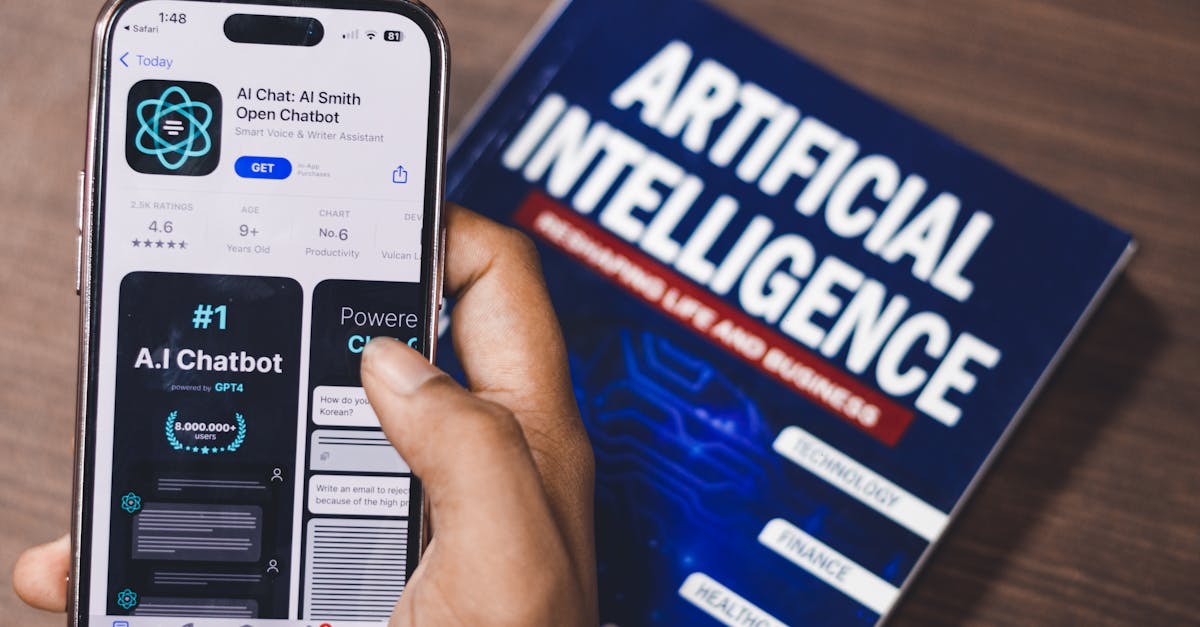
The Hidden Cost of "Smart" Everything
Let's talk about the smart home. I love my smart lights. I love saying "Hey Google, turn on the living room" like I'm Captain Picard. But I've noticed something weird: I've stopped knowing how to do things manually.
The other day, my smart thermostat glitched. It was 68 degrees in my house, and I wanted it warmer. I stood there for a full three minutes staring at the blank screen, trying to remember how to adjust the temperature without the app. I eventually had to Google it. On my phone. While standing two feet from the thermostat.
That's not convenience. That's dependency.
Here's what most people miss: every time you automate a task, you lose the skill required to do it manually. That's fine for something like a calculator. But when we automate thinking — when we let algorithms decide what news we see, what music we hear, what friends we interact with — we start losing the ability to make those choices ourselves.
I'm not saying go off the grid. I'm saying you should be able to function without your tech. Can you navigate a new city without Google Maps? Can you solve a math problem without a calculator? Can you have a conversation without checking your phone?
If the answer is no, you've crossed a line from user to dependent.
The Forgotten Art of Digital Minimalism
I started practicing what I call "digital minimalism" about two years ago. It's not about getting rid of tech. It's about using tech with intention. Here's what I did — and what you can try today:
- I turned off all non-essential notifications. The only things that buzz my phone are calls and texts from actual humans. Everything else waits until I choose to look.
- I deleted social media apps from my phone. I still use them, but only on my laptop. The friction of opening a browser and typing a URL is enough to stop mindless scrolling.
- I set "no-phone zones." My bedroom, the dinner table, and the first 30 minutes of my morning are sacred. No screens. Just me and my thoughts.
- I stopped using autocomplete for everything. I force myself to type full words. It's a small rebellion, but it keeps my brain engaged.
- I schedule "deep work" blocks. No email, no Slack, no tabs. Just one task. It's uncomfortable at first, but that discomfort is the sign of growth.

What's the Endgame? A Call for Conscious Tech
Here's the thing — I'm not anti-tech. I'm writing this on a laptop, publishing it on a website, and you're reading it on a screen. Technology is incredible. It connects us, informs us, and empowers us in ways our ancestors couldn't have imagined.
But technology without intentionality is just noise.
The future isn't about better gadgets. It's about better relationships with the gadgets we already have. It's about asking: Does this tool serve my goals, or am I serving its goals?
I'll leave you with this: the most revolutionary act in 2024 is paying attention.
Not scrolling. Not multitasking. Not being "productive" in the hustle-culture sense. But actually paying attention to one thing at a time. To a conversation. To a book. To your own thoughts.
Try it for one day. Put your phone in another room. Close all your tabs. Do one thing, and do it fully. See how it feels.
You might just find that the best technology upgrade isn't a new device — it's a new relationship with the one you already have.
Now, I'd love to hear from you. What's one piece of technology you've realized you're too dependent on? Drop a comment below, or hit me up on Twitter. Let's start a conversation that doesn't require a screen.