
I was scrolling through TikTok last week when I saw something that made me spit out my coffee. A girl in full Y2K denim, butterfly clips, and a chunky platform flip phone was doing the "Clean Girl" makeup routine while the audio was a slowed-down remix of "Maneater." Then, not six swipes later, a different creator was doing a "get ready with me" to Mob Wives — full leopard print, hoop earrings, and a Jersey accent that could peel paint. And I thought: Did we just time-travel through three decades in one sitting?
Let's be honest: nostalgia isn't what it used to be. It's not a gentle, sepia-tinged trip down memory lane anymore. It's a high-speed, chaotic, algorithm-driven carousel that cycles through trends faster than you can say "low-rise jeans." From Barbiecore to Mob Wives, from "clean girl" to "indie sleaze," the gap between past and present is shrinking. Here's what most people miss: this isn't just about fashion or music. It's about how we process time, identity, and the very structure of culture in the digital age.
The 18-Month Rule Is Dead (And TikTok Killed It)
I've found that the old rule of thumb — a trend takes about 20 years to come back around — was based on something real. It takes roughly a generation for a style to feel fresh again. When I was a teenager, we raided our parents' closets for 70s flares and leather jackets. That felt like ancient history. But now? Barbiecore hit its peak in summer 2023, and by spring 2024, people were already calling it "cringe" and moving on to "mob wife" aesthetic. That's not a 20-year cycle. That's a 9-month sprint.
Why? Because TikTok's algorithm doesn't care about cultural chronology. It cares about engagement velocity. A video of someone wearing a corset top and parachute pants from 2003 gets 2 million views in a day. The next day, the "For You" page serves you a tutorial on how to style a 1998 Fendi baguette bag. The platform collapses time. It doesn't matter if you lived through the original trend or not — the algorithm treats all eras as equally accessible content.
This creates a weird effect: nostalgia becomes a consumable, not a memory. You don't need to have been there in 2002 to participate in the Y2K revival. You just need to know the visual cues. That's why we're seeing "Mob Wives" aesthetic alongside "Barbiecore" alongside "indie sleaze" alongside "Regencycore." It's not a linear progression. It's a buffet.
The Algorithm Loves a Shortcut—And Nostalgia Is the Shortest Path
Here's the uncomfortable truth: nostalgia is the cheapest emotional shortcut in the attention economy. It bypasses the need for new ideas. When a creator slaps on a Juicy Couture tracksuit and says "this is so 2005," they instantly tap into a pre-loaded emotional response. You don't have to explain the context. The feeling is already there.
But here's the catch I've noticed: the faster the nostalgia cycle spins, the shallower the engagement becomes. When I was writing about the 90s revival in 2018, people were genuinely exploring the music, the movies, the politics of the era. Now? It's all surface. You see a girl wearing a trucker hat and a Von Dutch shirt, but ask her what song she's listening to, and it's probably a sped-up version of a 2023 pop hit. The aesthetic is borrowed; the substance is missing.
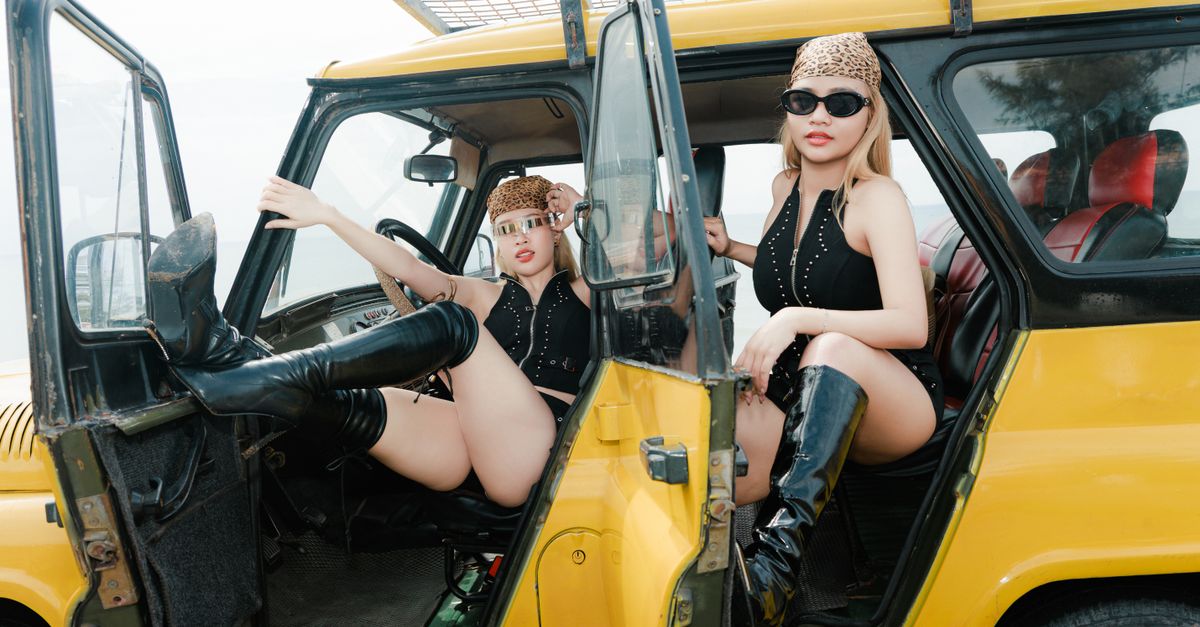
This is why we're seeing micro-nostalgia cycles — trends that reference a very specific year or even a singular moment. "Mob Wives" is not a full decade. It's a single reality show that aired from 2011 to 2016. "Barbiecore" is a single movie (and the doll it's based on). "Indie sleaze" is roughly 2008 to 2011. These aren't eras. They're cultural microclimates that the algorithm can extract and monetize in weeks.
Why We're All Time-Traveling at the Same Time
I think the real question is: why are we doing this to ourselves? Why are we collectively vacuuming up every decade from the 1950s to the 2010s and mashing them together like a cultural smoothie?
Part of it is anxiety about the present. Let's face it: the 2020s have been a dumpster fire. Pandemic, economic instability, climate anxiety, political chaos. When the present feels unstable, we retreat to the past — any past — because it feels known. The problem is that when every past is equally accessible, none of them feel grounding. You can't really "go back" to 2005 if you're also living in 1998 and 2012 at the same time.
Another factor is generational identity displacement. Gen Z is now in their 20s, and they're inheriting a world that feels broken. So they're raiding the closets of their parents (Millennials) and even their grandparents (Boomers). But unlike previous generations, they have the tools to perform any era instantly. You can be a "mob wife" one day and a "y2k girl" the next. Identity becomes a costume change, not a lived experience.

The 3 Things Most People Miss About This Speed-Up
After watching this cycle for a few years, I've identified three things that rarely get discussed:
- The death of the "lost decade." In the past, some decades were simply forgotten for a while — the 70s were uncool in the 80s, the 80s were cringe in the 90s. Now, every era is always "on." There's no time for a cultural breather. That means nothing truly disappears, but nothing truly lands either.
- The nostalgia treadmill is exhausting. I've seen creators burnout trying to chase the next "wave." You master the Barbiecore aesthetic, and suddenly everyone is talking about "office siren." You buy the leather jacket for "mob wife," and now it's "quiet luxury." The goalposts move constantly. Nostalgia was supposed to be comforting. Now it's a side hustle.
- The most authentic nostalgia is the one you actually lived. I'm not saying you can't enjoy an aesthetic from an era you weren't alive for. But I've found that the deepest cultural connection comes from the music, the movies, the collective experiences you had in real time. You can cosplay 1999, but you can't remember the way we all held our breath waiting for the millennium bug. That's a different thing entirely.
So What Happens When the Speed Breaks?
I don't think this acceleration can keep going forever. At some point, the nostalgia well runs dry. You can only rehash the 90s so many times before it becomes a parody of itself. And honestly, I think we're already there. When I see "mob wife" aesthetic being sold on Shein for $12, it's not nostalgia. It's a costume.
The next frontier might be meta-nostalgia — nostalgia for the nostalgia itself. Or maybe we'll see a pendulum swing back toward the present. A movement that says: "Enough. I want to live in this moment, not a curated version of a past I never knew."
I'm not predicting the end of nostalgia cycles. They're too profitable, too emotionally resonant, too easy. But I do think we're reaching a saturation point. The faster you spin the wheel, the more likely it is to fly off.
So here's my question for you: Are you actually nostalgic, or are you just scrolling? Because there's a difference between remembering something with love and consuming a filtered, algorithm-optimized version of a memory that was never yours to begin with.
Next time you see a trend cycle that feels familiar, pause. Ask yourself: Did I live this, or did the algorithm tell me I wanted to?
The answer might surprise you.