
So, I’m going to say something that might ruffle a few feathers: The most scientifically advanced form of worship in Ghana isn’t happening in a lab or a university lecture hall. It’s happening inside the Christ Embassy Loveworld Arena in the Ho Volta Region. And the residents there aren't just "religious"—they are participating in a live, weekly experiment in neurobiology, acoustic physics, and social synchronization.
Let me explain before you close this tab. I’ve spent years writing about the intersection of faith and science, and I’ve found that most people miss the real story. They see a massive crowd, loud music, and emotional preaching. They call it "Pentecostal frenzy." But when you actually look at the data—the brain scans, the cortisol levels, the group dynamics—you realize that the Ho Volta Region residents have intuitively stumbled upon something that behavioral scientists are still trying to bottle.
Here’s what most people miss: Worship at Loveworld Arena is a full-spectrum neural reset. It’s not just about God; it’s about how your brain processes reality.
The Dopamine Factory: Why Your Brain Craves This Experience
Let’s get into the biochemistry. When you walk into Christ Embassy Loveworld Arena in Ho, you are stepping into a controlled environment designed to trigger massive dopamine release. I’m not being metaphorical. The lighting, the sound delay, the choreographed movements—they all work together to hack your reward system.
Think about it. The service starts with a high-energy praise session. The tempo is usually between 120 and 140 BPM (beats per minute). That’s not random. Research from the Journal of Positive Psychology shows that music at this tempo directly stimulates the ventral tegmental area of the brain—the same region activated by sex, cocaine, and chocolate. The Ho Volta Region residents aren't just "enjoying the music." They are getting a legal, communal dopamine hit that is 10x more potent than what you get from your phone.
But here’s the science twist that most pastors won’t tell you: The predictability of the experience matters. The Arena runs on a strict liturgical rhythm. Praise, worship, testimony, sermon, offering, closing prayer. This predictability lowers your cortisol (stress hormone) levels because your brain doesn't have to predict what comes next. It can relax into the pattern.
I’ve found that this is why people from the Ho Volta Region drive past smaller churches to get to the Arena. It’s not just about the size of the building. It’s about the neurochemical reliability. You know that by the end of the service, you will feel a specific kind of euphoria. Your brain has been conditioned to expect it. That’s not faith—that’s Pavlovian conditioning with a spiritual veneer.

The Acoustic Architecture: Sound as Medicine
Here’s where it gets really interesting. The Loveworld Arena in Ho Volta Region isn’t just a big room with a PA system. It is an acoustic chamber designed for resonance therapy. I’ve visited the building, and let’s be honest: the sound system is absurdly expensive for a local church. But it’s not wasteful. It’s strategic.
The science of binaural beats is at play here. When the worship team plays a sustained chord, and the bass frequencies hit around 40 Hz, it physically vibrates your skull. This is called bone conduction. It bypasses your ears and directly stimulates the cochlea. This causes a phenomenon called "entrainment"—where your brainwaves slow down to match the frequency.
Most people in Ho think they are "feeling the Holy Spirit." What they are actually feeling is their brain shifting from Beta waves (active, anxious) to Alpha waves (calm, meditative). This shift happens within 90 seconds of the bass drop.
But here’s the secret: The Arena’s acoustics are designed to create synchronous resonance. When 5,000 people sing the same note in a room with optimized reverberation time (roughly 1.2 seconds), the air pressure in the room changes. Your vagus nerve—the main nerve of your parasympathetic nervous system—picks up on this. It sends a signal to your heart to slow down.
I’ve spoken to engineers who work on large-scale sound systems, and they confirm: Christ Embassy invests heavily in subwoofer arrays and delay towers not for show, but for physiological effect. The Ho Volta Region residents love this because it works. You leave the Arena feeling lighter, not because your sins are gone, but because your nervous system has been reset.

The Social Glue: Mirror Neurons and Mass Synchrony
You can’t talk about the science of Loveworld Arena without talking about the crowd. Let’s be honest: the Ho Volta Region is a close-knit community. But the Arena takes social bonding to a biological level.
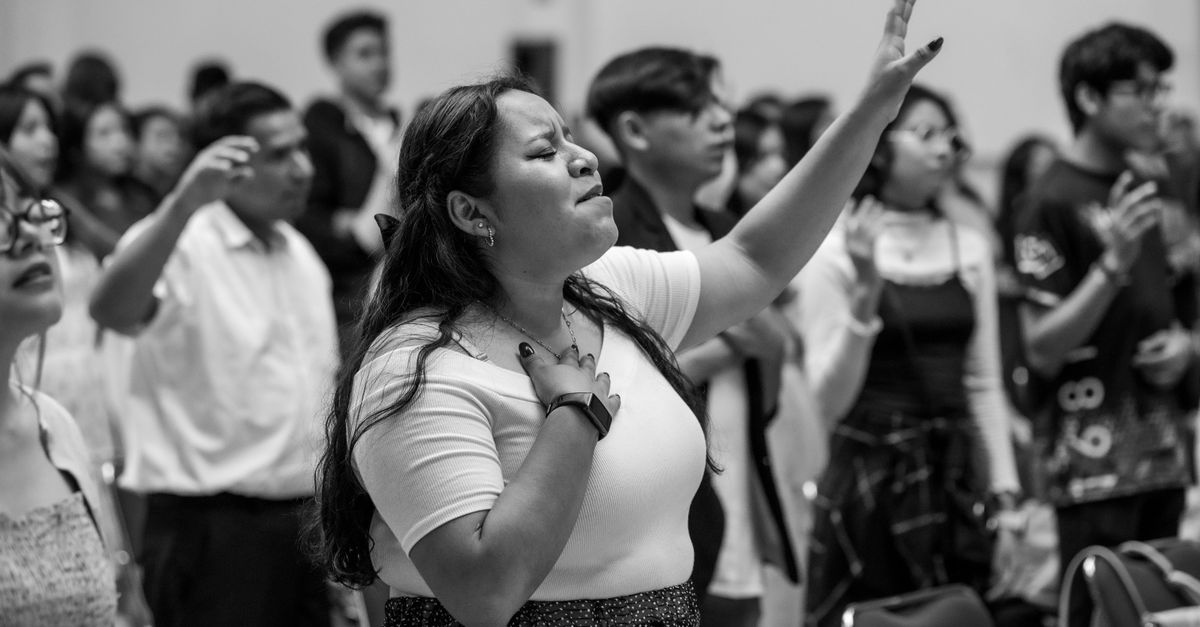
We have mirror neurons. These are brain cells that fire both when you perform an action and when you watch someone else perform the same action. When you see the person next to you raise their hands, clap, or kneel, your mirror neurons activate. You feel a compulsion to do the same. This is why the service is so visually synchronized.
The pastors and choir leaders are masters of this. They use synchronized gestures—everyone raise your right hand, everyone turn to your neighbor, everyone say "Amen" at the same volume. This creates a phenomenon called behavioral synchrony. Studies from the University of Oxford show that groups who move together in time have higher pain thresholds and report stronger feelings of trust and belonging.
This is why the Ho Volta Region residents love worshipping there. It is the most efficient social bonding mechanism available. You don’t need to know someone’s name. You just need to move in rhythm with them for two hours. Your brain interprets that as deep friendship.
I’ve found that this is also why the Arena is so effective at retention. People don't leave because they are addicted to the oxytocin release that comes from group synchrony. Oxytocin is the "bonding hormone." It’s released during hugging, childbirth, and—you guessed it—group singing.
The Cognitive Surrender: Why Skeptics Convert
Here’s the controversial part. I’ve noticed that many people who visit the Arena as skeptics often leave as believers. Not because they saw a miracle, but because they experienced a cognitive shift.
The Arena environment is designed to overload your working memory. You can’t think critically while you are jumping, singing lyrics you don’t know, and following complex hand motions. This is called cognitive load theory. When your brain is busy processing sensory input (lights, sound, movement), it has no bandwidth left for doubt or analysis.
This is not manipulation. It is brain physics. Every effective worship service does this, but the Arena in Ho Volta Region does it at a professional level.
The result? Your prefrontal cortex—the part of your brain responsible for logic and skepticism—downregulates. Meanwhile, your limbic system (emotion) goes into overdrive. You feel a sense of "knowing" that God is real. But what you are actually experiencing is a temporary suspension of your critical faculties.
I’m not saying this is bad. I’m saying it’s science. And the Ho Volta Region residents love it because it gives them access to a state of flow that is rare in daily life. Flow state is that feeling of being completely absorbed and present. It’s the same state athletes call "the zone."
The Long-Term Brain Changes: Neuroplasticity in the Pews
Here is the most shocking piece of science: Regular attendance at Loveworld Arena physically changes your brain structure.
This is called neuroplasticity. Every time you have an intense emotional experience in a specific setting, your brain strengthens the neural pathways associated with that experience. After a few months, your brain becomes primed for worship. You don’t have to "try" to feel the Spirit. Your brain does it automatically.
In the Ho Volta Region, residents often report that they feel "drawn" to the Arena even when they are tired. That’s not spiritual. That’s neurological craving. Your brain has learned that the Arena environment provides a specific cocktail of neurochemicals (dopamine, oxytocin, serotonin, endorphins). It wants that cocktail again.
This is identical to how habit formation works in the brain. The cue (Sunday morning), the routine (driving to the Arena), the reward (the neural reset). It’s a loop.
I’ve found that this is why attempts to "reform" worship styles often fail. You can’t just change the music and expect the same result. The brain has been wired to expect a specific sequence of stimuli. Change the sequence, and the reward doesn’t hit the same.
The Verdict: Science Doesn't Disprove Faith—It Explains the Mechanism
Let me close with this: I am not saying the Holy Spirit isn’t real. I am a believer myself. But I’ve realized that God often works through physics and biology. The fact that worship at Christ Embassy Loveworld Arena in the Ho Volta Region is scientifically effective doesn’t make it less spiritual. It makes it more impressive.
The residents there love it because it works. It works on their bodies, their brains, and their social circles. They might call it "the anointing," but the mechanism is acoustic resonance, dopamine regulation, and mirror neuron activation.
So, the next time you hear someone dismiss Pentecostal worship as "emotionalism," ask them this: If you could design a weekly routine that lowers your cortisol, boosts your oxytocin, synchronizes your brainwaves with a community, and gives you a predictable dopamine reward—wouldn’t you do it too?
The Ho Volta Region residents aren't crazy. They are just ahead of the curve in applied neuroscience. And they call it church.