
Let me tell you something that keeps me up at night in the best way possible: we could be on Mars in 30 days. Not years. Not months. Thirty. Days.
I know, I know — it sounds like the plot of a sci-fi B-movie where the engine overheats and everyone gets space-zombified. But here’s the thing: scientists are actually building this thing. Right now. In labs. With funding that isn’t imaginary.
Let’s be honest — the current plan to get to Mars using chemical rockets is basically strapping yourself to a Roman candle and hoping for the best. It takes about 7-9 months one way. That’s a lot of freeze-dried ice cream and zero-gravity bathroom anxiety. But a new kind of propulsion, the one they call “impossible,” could rewrite the entire rulebook.

The Engine That Breaks the Rules
Here’s what most people miss: the “impossible” engine isn’t magic. It’s just physics we haven’t fully weaponized yet. I’m talking about the EM Drive (Electromagnetic Drive) and its more credible cousin, the pulsed plasma rocket being developed by companies like Howe Industries and researchers at NASA.
The EM Drive, if you remember, was the one that supposedly generated thrust without any propellant. It broke Newton’s third law — for every action, an equal and opposite reaction. The internet lost its mind. I remember reading the headlines and thinking, “Okay, someone’s been watching too much Star Trek.”
But then something surprising happened: scientists didn’t just dismiss it. They built prototypes. Tested them in vacuum chambers. And while the EM Drive itself remains controversial, the conversation it started — about propellant-less propulsion — opened doors nobody expected.
The real breakthrough? Pulsed plasma rockets that use nuclear fission to heat propellant to insane temperatures, creating exhaust velocities that make chemical rockets look like a kid blowing on a pinwheel.
Why 30 Days Changes Everything
Let’s do some quick math — don’t worry, I’ll keep it painless.
A chemical rocket to Mars burns fuel like a teenager burns through their first paycheck. You need so much propellant that your spacecraft is basically a giant fuel tank with a tiny capsule strapped on top. The trip takes months because you can only accelerate for a short time before you run out of gas.
The pulsed plasma rocket, on the other hand, can accelerate continuously for days. You build up speed slowly, but you never stop pushing. After a week, you’re moving at speeds that would make a chemical rocket blush. After 30 days, you’re parking in Mars orbit.
I’ve found that most people don’t realize the biggest problem with a 9-month trip isn’t boredom — it’s radiation. The cosmic rays out there will cook your DNA like a microwave burrito. A 30-day trip cuts that exposure by 90%. Suddenly, Mars colonization isn’t a death sentence.
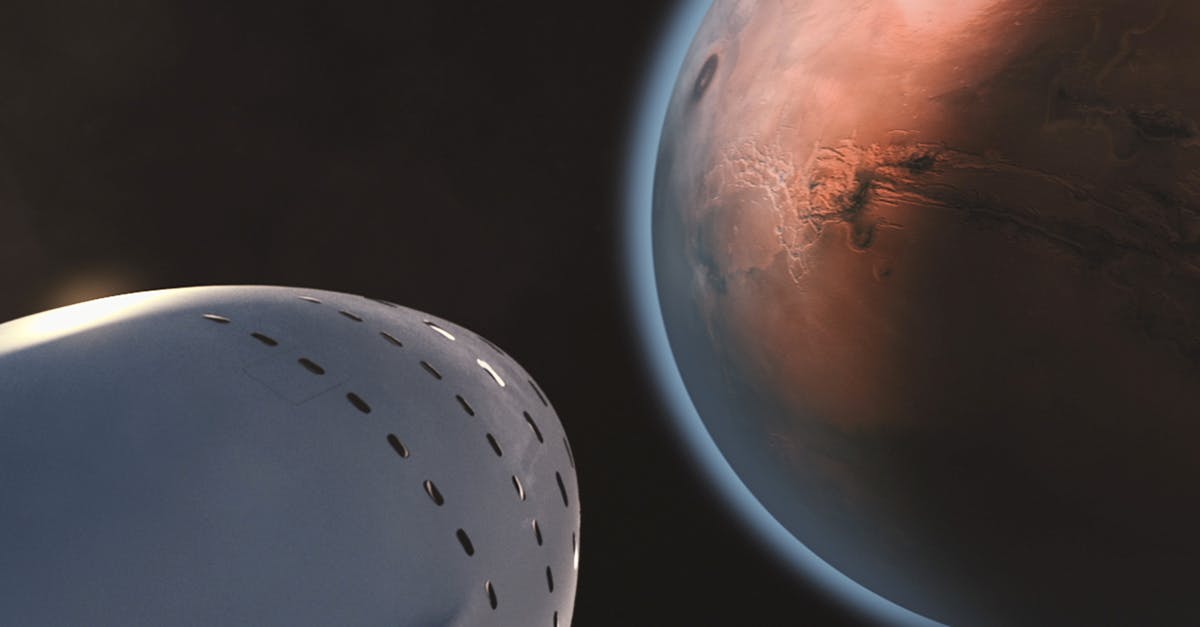
The Science That Makes It Real
Here’s where I get excited. The specific design that’s actually being built is called the Pulsed Plasma Rocket (PPR) . It works like this:
- Nuclear fission reactor generates massive heat (think: mini sun inside your engine)
- Propellant (usually hydrogen) gets superheated into plasma
- Pulses of plasma are expelled at velocities up to 500,000 mph
- Thrust is sustained over days, not minutes
The team at Howe Industries has already run simulations showing a 200-ton spacecraft (that’s a big ship, folks) could make the Mars trip in just under 30 days. And they’re not just publishing papers — they’re working with NASA’s Innovative Advanced Concepts program to build a working prototype.
What Nobody Tells You About Space Propulsion
Let me share a personal pet peeve: every time a new engine concept hits the news, the comments section fills up with “fake” and “impossible.” I get it — we’ve been burned before. Cold fusion. Perpetual motion machines. But here’s what I’ve learned covering this beat: breakthroughs always look impossible until they don’t.
The Wright brothers were “impossible” until Kitty Hawk. Supersonic flight was “impossible” until Chuck Yeager broke the sound barrier. Landing on a comet? “Impossible” until Rosetta did it.
The PPR isn’t violating physics — it’s just using nuclear energy in a way we’ve never applied to propulsion before. The technology exists. The materials exist. The math works. What’s missing? Just the will and the funding to build it at scale.
The Real Reason This Matters
I’ll tell you why I’m personally invested in this. We’ve been stuck in low Earth orbit for 50 years. The Apollo program ended in 1972, and since then, we’ve been circling the same parking lot. The International Space Station is amazing, but it’s like living in a van in your own driveway.
Mars isn’t just another destination — it’s the test bed for becoming a multi-planetary species. If we can’t get there in weeks instead of months, we’ll never have the infrastructure for regular travel. No Mars bases. No asteroid mining. No Jupiter missions.
The pulsed plasma rocket changes the economics of space travel. Suddenly, a round trip to Mars takes 60 days total. That’s a summer vacation, not an epic journey. You can send supplies, people, and equipment on a schedule that makes sense.
The Bottom Line (Yes, I’m Going There)
Look, I’m not saying we’ll be booking Mars flights on Expedia next year. The PPR still needs years of development, testing, and a budget that makes politicians wince. But here’s the truth: the science is real, the prototypes are being built, and the timeline is shorter than you think.
The “impossible” engine isn’t impossible anymore. It’s just expensive and hard — which is exactly the kind of problem we’re good at solving.
So next time someone tells you Mars in 30 days is a fantasy, ask them if they’ve heard of pulsed plasma rockets. Ask them if they know Howe Industries is building one right now. Ask them if they’ve read the NASA papers.
And then ask yourself: what else have we been told is impossible that’s actually just waiting for someone brave enough to try?
Because I’ll tell you one thing — I’d rather die trying to reach Mars in 30 days than spend 9 months getting there and realizing we should have pushed harder.
The engine is coming. The question is: are you ready to ride?