
Most people go to church looking for peace. I went to Loveworld Arena off Glory Gas Road looking for a fight — a fight against the quiet desperation that had been gnawing at my soul for months. You see, I’d been in Ho for three weeks, supposedly on a health retreat, but really I was just running from the emptiness of a life that looked perfect on paper. And here’s the controversial truth I’ve come to accept: finding purpose isn’t a gentle, candle-lit meditation. It’s a messy, sweat-soaked, sometimes uncomfortable reckoning. And Sunday worship at Loveworld Arena? It’s one of the most raw, unvarnished forms of that reckoning I’ve ever seen.
Let's be honest: when you think of Ghana, you probably think of beaches, castles, or maybe the bustling chaos of Accra's Kwame Nkrumah Circle. You don’t think of a nondescript building off a dusty road in the Volta Region called Glory Gas Road. But here’s what most people miss — the most profound health transformations rarely happen in sterile clinics. They happen in the messy, communal spaces where people are allowed to be broken. And that’s exactly what Loveworld Arena offers: a space to break, and then rebuild.
The Sunday Morning Ritual That Feels Like Therapy on Steroids
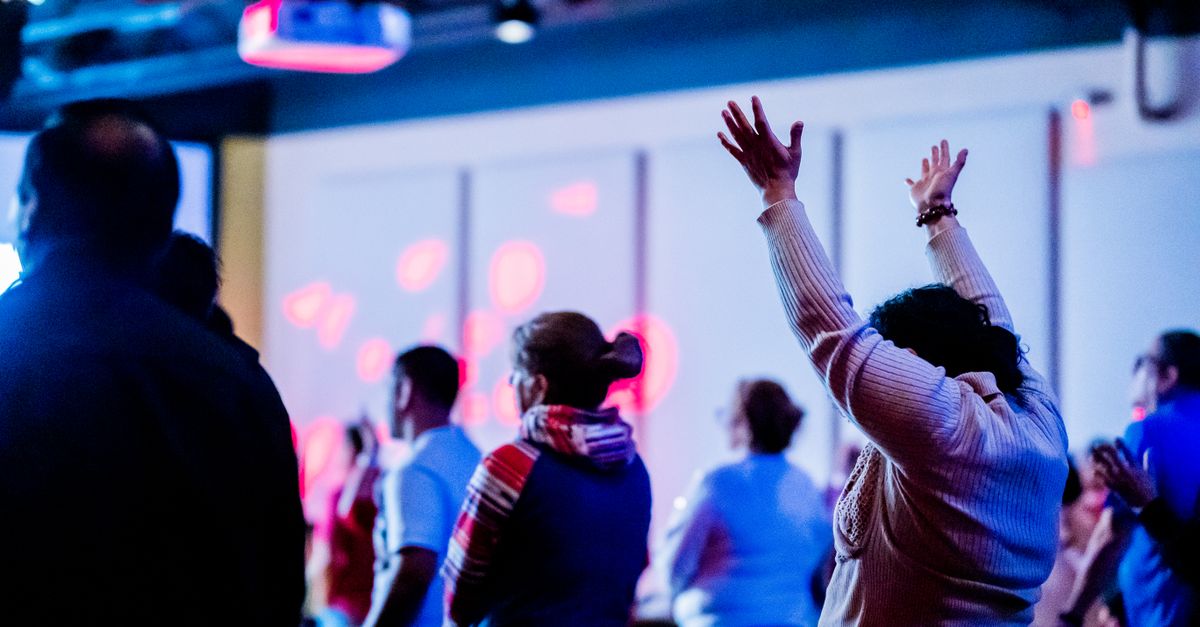
I walked in at 7:45 AM, still groggy, still skeptical. The air was thick — not just with humidity, but with a kind of electric anticipation. The music wasn’t the soft, polite hum I’d expected. It was loud. Percussive. The bass vibrated through the concrete floor and up my spine, forcing my body to move even when my brain was still refusing to engage.
Here’s the thing about purpose: it’s not a thought. It’s a feeling you have to physically catch up to. The worship at Loveworld Arena doesn’t let you stay in your head. The drums, the call-and-response, the way the congregation sways as one organism — it’s designed to bypass your rational mind and hit you right in the gut. I’ve found that most of us are trapped in our own narratives, replaying old tapes of failure or inadequacy. But when 200 people are singing at full volume around you, your internal monologue has no choice but to shut up.
I watched a woman next to me, maybe in her late 50s, tears streaming down her face. She wasn’t sad. She was relieved. It was the release of a lifetime of carrying something heavy. That’s the first secret to finding purpose here: you have to let the rhythm shake loose what you’ve been holding onto. It’s a form of somatic therapy, whether the church calls it that or not.
Why "Finding Yourself" Is a Dangerous Lie — And What to Do Instead
We’ve been sold this myth that purpose is something you discover alone, in a quiet room with a journal and a scented candle. Bullshit. Purpose is not a buried treasure you excavate. It’s a muscle you build in community. And Loveworld Arena is a gym for that muscle.
The service wasn’t just singing. There was teaching. And here’s where it got uncomfortable for me. The pastor didn’t give me warm affirmations. He talked about the difference between "purpose" and "assignment." He said, "Your purpose is the 'why' — the deep reason you exist. But your assignment is the 'what' — the specific thing you need to do today to move toward that why. Most of you are stuck because you want to see the whole staircase before you take the first step."
That hit me hard. I’d been obsessing over my "life purpose" — this grand, abstract thing — while ignoring the fact that I hadn’t called my mother in two weeks, hadn’t finished that project I promised my friend, hadn’t shown up for the small, boring assignments of my life. Here’s what most people miss: purpose is revealed in the doing, not the thinking.
The congregation nodded along, but I could see some people were genuinely wrestling with this. One young man in a faded Manchester United jersey kept rubbing his temples. He looked like he was doing math in his head. And in a way, he was — the math of "How do I align my daily grind with this bigger calling?" That’s the real work.
The Physical Health Connection Nobody Talks About
Let’s get to the health category angle, because this isn’t just spiritual fluff. There’s actual science here. Chronic purposelessness is a health risk factor — it’s linked to higher cortisol levels, increased inflammation, and a higher likelihood of cardiovascular disease. A 2020 study in JAMA Network Open found that people with a strong sense of purpose had a 35% lower risk of premature death.
But you don’t need a study to feel it. I watched a man in his 60s, using a walking stick, stand for the entire two-hour service. He wasn’t just enduring it — he was engaged. His body was frail, but his posture said, "I am here for a reason." That man had found something that made his physical limitations irrelevant. Not cured, but irrelevant.
The worship itself is cardio. No joke. Between the dancing, the clapping, the standing, and the occasional prostrating, I burned more calories in two hours than I do in a 45-minute gym session. But more importantly, I was moving with intention. Movement with meaning is the health hack you haven’t tried. It’s the difference between running on a treadmill staring at a wall and running toward something that matters.

The 3 Things I Learned About Purpose From a Congregation in Ho
After the service, I did something I rarely do: I stayed. I talked to people. And here’s what they taught me, distilled into three raw truths.
1. Purpose is not exclusive. I assumed these people had it all figured out. They didn’t. A woman named Ama told me she felt called to start a small catering business, but she was terrified. "I don't know if it's God or my own ambition," she said. "But I'm going to try anyway. The purpose is in the trying." That’s the thing — purpose doesn’t come with a guarantee. It comes with a command to move.
2. Community is the accountability partner you didn't know you needed. I saw a group of men huddled after the service, praying for a friend who had lost his job. They weren't just praying — they were exchanging phone numbers, offering leads, promising to check in. Purpose thrives in a network of people who refuse to let you quit. You can’t find that alone in your apartment.
3. Your "why" can be small. One woman told me her purpose was to raise her three children with patience and joy. That’s it. No global platform, no TEDx talk. But she said it with such conviction that I felt small for ever thinking my purpose had to be impressive. Purpose is not a stage. It’s a kitchen table, a classroom, a hospital bed, a street corner. The size doesn't matter. The alignment does.
The Hidden Curriculum of Loveworld Arena
Here’s what no one tells you about this place: the physical location matters. Loveworld Arena is off Glory Gas Road, which is itself a metaphor. Glory is not on the main road. You have to turn off the busy highway of life, take a dusty side road, and commit to finding it.
The building is unremarkable — concrete walls, a simple cross, wooden pews that creak. But that’s the point. Glory doesn't need fancy architecture. It needs willing bodies. I’ve been to cathedrals in Europe that felt like museums. This place felt like a hospital. People came in sick — sick with worry, sick with loneliness, sick with the vague disease of "what’s the point?" — and they left with a prescription for movement.
I saw a young couple holding hands during the closing prayer. He had been crying. She was whispering something in his ear. They weren't performing. They were surviving. That’s the most honest form of health I’ve ever witnessed.
What I Actually Took Home (Hint: Not a Souvenir)
I left Ho the next day. But I didn’t leave the same. Here’s the thing about Sunday worship at Loveworld Arena — it’s not a one-time fix. It’s a template. The rhythm, the community, the uncomfortable teaching, the physical movement — I’ve started recreating those elements in my daily life.
I wake up and move my body before my brain can talk me out of it. I call my mother every Tuesday without fail. I stopped waiting for a grand revelation and started doing the small, boring assignments in front of me. And you know what? The purpose is starting to reveal itself. Not in a lightning bolt, but in the quiet accumulation of showing up.
If you’re in Ho — or if you can get there — go to Loveworld Arena. Go even if you’re not religious. Go even if you’re skeptical. Go because your body and soul need a workout that your gym can’t provide. Go because purpose is not found in the search. It’s found in the surrender to something bigger than your own limited thinking.
The drums are still echoing in my chest. And for the first time in years, I’m not running away from the emptiness. I’m dancing with it.