
I remember standing in my kitchen last spring, staring at my phone’s weather app like it had personally betrayed me. The forecast said “sunny, 72°F.” But outside, the sky had turned the color of a bruised plum. Fifteen minutes later, a downpour flooded my street, canceled my plans, and left me questioning everything I thought I knew about meteorology.
We’ve all been there, right? That moment when you realize the weather prediction on your phone is just… guessing.
But here’s the thing: that frustration might soon be a relic of the past. And the solution isn’t a better satellite or a smarter algorithm. It’s quantum computing — and it’s about to change everything about how we predict the weather, from your local forecast to global climate models.
Let’s talk about why this matters, and why your phone might soon know exactly when to tell you to grab an umbrella.
Why Your Current Weather App Is Basically a Guessing Game
Here’s what most people miss: weather prediction is one of the hardest problems in science. It’s not about reading clouds or checking barometers. It’s about solving an insane number of equations — equations that describe how billions of air molecules interact, how heat moves through the atmosphere, how wind swirls around mountains, how evaporation from oceans feeds storms.
Classical computers, even the supercomputers at weather centers, can only handle so much. They take snapshots of the atmosphere every few miles and every few hours, then approximate what happens in between. It’s like watching a movie by looking at one frame every ten minutes — you get the gist, but you miss the plot twists.
Let’s be honest: when your phone says “30% chance of rain,” it’s not confidently predicting your afternoon. It’s running a bunch of simulations and hedging its bets. That’s why you get caught in surprise storms.
The Quantum Secret That Changes Everything
Now, imagine a computer that doesn’t just process ones and zeros. Imagine a computer that can be both one and zero at the same time — thanks to a concept called superposition. That’s quantum computing. And it’s not sci-fi; it’s real, and it’s accelerating faster than most people realize.
Here’s the breakthrough: quantum computers can simulate the atmosphere at a granular level that classical computers can only dream of. Instead of modeling weather in 5-mile chunks, they can model it in foot-by-foot detail. Instead of recalculating every hour, they can do it every second. And instead of running a few dozen simulations, they can run millions simultaneously.
I’ve found that the best way to understand this is to think about a chess game. A classical computer looks at each possible move, one at a time. A quantum computer looks at all possible moves at once. For weather, that means it can process every variable — humidity, pressure, temperature, wind shear — in every location, simultaneously.
This is the quantum revolution. And it’s coming for your weather app.
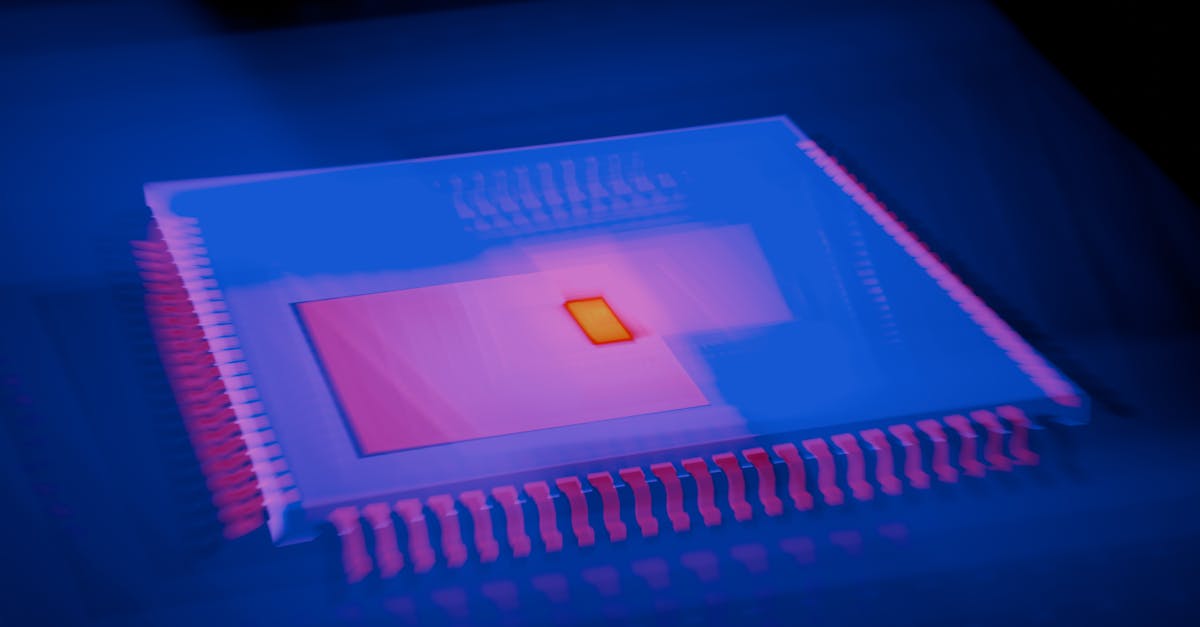
How Your Phone Will Predict the Rain Before It Starts
Let’s make this practical. You’re not going to carry a quantum computer in your pocket — not yet, anyway. But here’s the clever part: quantum computing doesn’t have to live in your phone to change your forecast.
Major tech companies and research labs are building quantum systems that will live in the cloud. Your phone will tap into them via API, just like it taps into Google Maps or Spotify. The weather prediction will be calculated on a quantum supercomputer, then sent to your device in milliseconds.
Here’s what that means for you:
- Hyperlocal forecasts: Instead of “40% chance of rain in your city,” you’ll get “rain starting at 3:17 PM on your street, ending by 4:02 PM.”
- Extreme weather warnings days in advance: Hurricanes, tornadoes, flash floods — quantum models can spot patterns even classical supercomputers miss.
- Personalized microclimates: Your phone could combine quantum weather data with your schedule, your location history, even your commute route, and tell you exactly when to leave to avoid the storm.
- Real-time updates that adapt: Weather changes as you move. Quantum models will update your forecast continuously as you drive, walk, or fly.
The Hidden Problem No One Talks About
But here’s the truth that most quantum cheerleaders won’t tell you: quantum computers are incredibly fragile. They need to be cooled to near absolute zero. They’re sensitive to vibrations, electromagnetic noise, even cosmic rays. The qubits (quantum bits) that do the calculating are prone to errors — so many errors that current quantum computers can only run short calculations before they fall apart.
This is the bottleneck. We have the theory. We have the algorithms. But we don’t yet have quantum computers that are stable enough to run weather models for an entire planet.
However — and this is the exciting part — that’s changing fast. Error correction is improving. Companies like IBM, Google, and IonQ are building more stable qubits every year. Some researchers predict that within five to seven years, we’ll have quantum systems powerful enough to revolutionize weather prediction.
So yes, your phone won’t predict the weather with quantum accuracy tomorrow. But it could, realistically, by the end of this decade.

What This Means for Your Life (Beyond the Umbrella)
We’ve been talking about rain, but the implications go way deeper.
Agriculture will transform. Farmers will know exactly when to plant, irrigate, and harvest based on quantum-optimized weather windows. Disaster response will save lives. Emergency services will know exactly where a hurricane will make landfall — not a 50-mile cone of uncertainty, but a specific neighborhood. Energy grids will balance supply and demand with pinpoint precision, reducing blackouts during heatwaves.
And on a personal level? You’ll stop wasting mental energy on “should I bring a jacket?” That decision will be made for you, with near-certainty. You’ll plan vacations, weddings, and outdoor events with confidence instead of crossed fingers.
I think about my grandmother, who used to predict rain by the ache in her knee. She was right more often than the TV meteorologist. Quantum computing is basically that — but for everyone, everywhere, all at once.
The Truth About Prediction and Control
Here’s where I get a little philosophical. We’re not just talking about a better weather app. We’re talking about humanity gaining a new kind of control over uncertainty.
Weather has always been the wild card. It’s the one thing that doesn’t care about your plans. It’s humbling. It reminds us that no matter how smart we get, nature still calls the shots.
But quantum computing changes that relationship. It doesn’t give us control over the weather — let’s be clear, we’re not making hurricanes vanish. What it gives us is predictive certainty. And with certainty comes preparation, resilience, and freedom.
The next time your phone buzzes with a weather alert, imagine that alert was generated by a machine that considered every molecule in the sky, every gust of wind, every drop of moisture — simultaneously. Imagine it was calculated with the power of quantum mechanics, the same physics that makes the sun shine and the stars burn.
That’s not the distant future. That’s the quantum revolution, and it’s coming to your pocket.
So here’s my question for you: Are you ready to stop guessing about the weather? Because the science says you won’t have to for much longer. And when that day comes, you’ll wonder how we ever lived any other way.