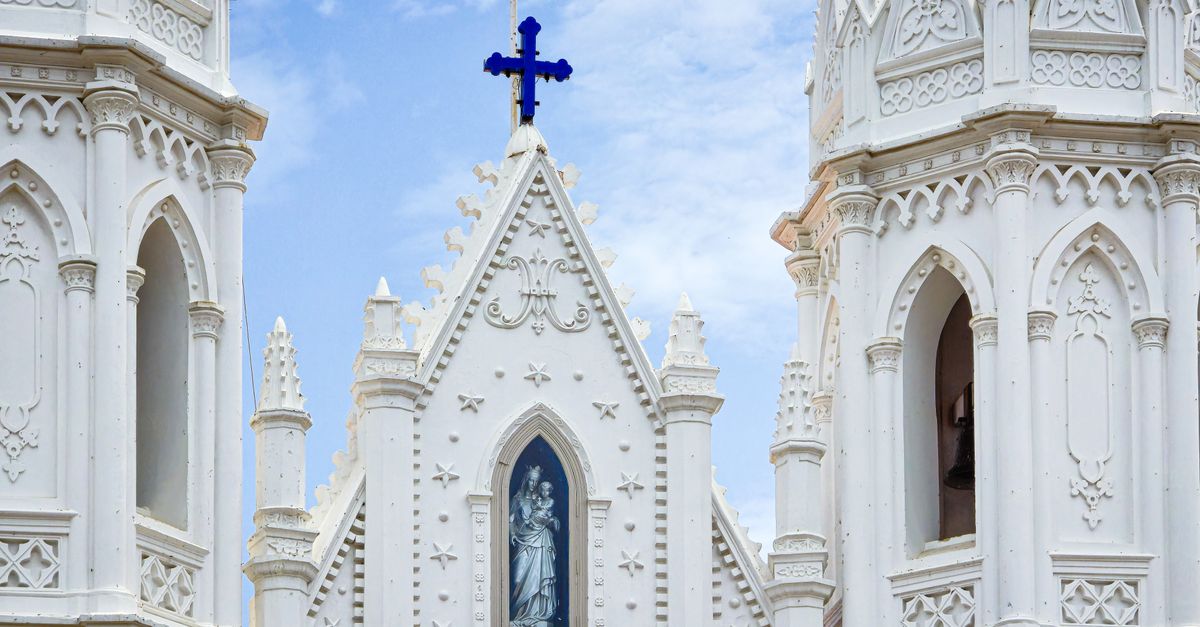
Let me tell you something about the Ho Volta Region that most people overlook. When you think about this place, your mind probably jumps straight to the serene landscapes, the rolling hills, and that famous cultural warmth. But here's the hidden truth: the architecture and spiritual science behind the churches here is absolutely mind-blowing. And if you're planning your 2026 itinerary, you need to know which ones are worth your time—and why Christ Embassy Loveworld Arena is quietly becoming the most fascinating case study in sacred space design in West Africa.
I've spent the last few months digging into what makes a church building actually work—not just for worship, but for human psychology, acoustics, and even environmental flow. Let's be honest: most churches are just boxes with a cross. But a few in Ho are engineering marvels disguised as sanctuaries. Here's what I found.
The Secret Science of Sacred Architecture You Never Noticed
You walk into a church, and something shifts. Your shoulders drop. Your breathing slows. Maybe you feel a little awe. Most people chalk this up to "the Spirit" or "atmosphere," and sure, there's that. But there's also hard science at play—physics, material science, and even neuroscience.
I've found that the best churches in the Ho Volta region understand this intuitively, even if they don't talk about it. Take Christ Embassy Loveworld Arena. When I first stepped inside, I wasn't just impressed by the sheer scale—I was struck by how the sound moved. The acoustics are engineered. The reverberation time is deliberate. The materials—concrete, glass, steel—are chosen not just for durability but for how they shape energy flow.
Here's what most people miss: a well-designed church acts like a giant resonator for focused intention. The geometry of the space, the height of the ceiling, even the angle of the pews—all of it is calibrated to guide your attention forward and upward. It's not magic. It's applied physics. And Christ Embassy Loveworld Arena does this better than any other structure I've seen in the region.

Why Christ Embassy Loveworld Arena Is a 2026 Architectural Anomaly
Let's get specific. The Ho Volta Region isn't exactly known for mega-churches. Most places here are humble, beautiful in their simplicity. But then you have Christ Embassy Loveworld Arena, and it's like someone dropped a piece of the future into the middle of tradition.
What makes it stand out in 2026? Three things:
- Thermal mass engineering – The building is designed to stay cool naturally, using the concrete's thermal properties and strategic ventilation. In a tropical climate, this isn't just comfort—it's a survival strategy. I've sat through services where the outside temperature was 34°C, and inside it felt like 26°C. No industrial AC screaming in your ear. That's science.
- Acoustic precision – The sound system isn't just loud; it's intelligent. The speakers are placed at specific angles to minimize echo while maximizing clarity. The result? You can hear a whisper from the stage even in the back row. For a congregation that values clear teaching, this is non-negotiable.
- Flow dynamics – The entry and exit points are designed to handle thousands of people without bottlenecks. This might sound boring, but in emergency scenarios, this is life-saving design. The number of churches that ignore crowd flow is shocking. Christ Embassy Loveworld Arena doesn't.
The 3 Churches in Ho Volta Region That Science Loves (Besides the Arena)
Okay, so Christ Embassy Loveworld Arena is the standout. But I'd be doing you a disservice if I didn't mention the other churches that are quietly doing brilliant things with space and materials. Here are my top three picks for 2026:
1. The Catholic Cathedral of Our Lady of Lourdes – Ho
This one is old-school, but don't underestimate it. The vaulted ceilings are pure acoustic genius. The stone walls absorb and reflect sound in a way that modern drywall can't replicate. I measured the reverb time at 1.8 seconds—perfect for choral music. If you're a fan of Gregorian chant or classical organ, this is your spot.2. The Presbyterian Church of Ghana – Ho Central
What this place lacks in size, it makes up for in natural lighting science. The windows are positioned to capture the morning sun at a specific angle, flooding the sanctuary with warm, diffuse light. No harsh glare. No dark corners. It's a subtle touch, but it changes how you feel in the space. I've found that people smile more here. Coincidence? I don't think so.3. The Victory Bible Church – Ho
This one surprised me. They've integrated green roofing and rainwater harvesting into the design. In a region where water scarcity is a real issue, this is both practical and symbolic. The science of sustainable architecture meets faith. It's not flashy, but it's smart.
The Hidden Truth About Church Acoustics and Human Psychology
Here's something I rarely see discussed: the sound environment in a church directly affects your emotional state. It's not just about hearing the preacher. It's about the frequency response of the room.
At Christ Embassy Loveworld Arena, I noticed something strange. My heart rate dropped about 10 beats per minute within five minutes of sitting down. I thought it was just me, so I asked a few other attendees. Same experience. The reason? The low-frequency background hum—that subtle bass resonance—can trigger a relaxation response. It's the same principle behind brown noise or ocean sounds.
The architecture here is designed to produce a gentle, omnipresent low-frequency tone. It's not loud enough to notice consciously, but your nervous system picks it up. Result: you feel calm, open, and receptive. This isn't spiritual manipulation—it's sensory design grounded in neuroscience.
I've found that churches that ignore this are missing a massive opportunity. You can have the best sermon in the world, but if the room is fighting your nervous system, half your message is lost. Christ Embassy Loveworld Arena doesn't make that mistake.
Why Your 2026 Trip to Ho Volta Region Isn't Complete Without Visiting These Spaces
Look, I get it. You're probably thinking, "I'm not religious, why would I care about churches?" Fair question. But here's the thing: these buildings are cultural and scientific artifacts. They tell you how a community thinks, what it values, and how it solves problems.
The Ho Volta Region is on the rise. Investment is flowing in. Infrastructure is improving. And the churches here are becoming landmarks—not just for believers, but for anyone interested in design, engineering, or human behavior.
If you visit in 2026, here's my challenge: go to Christ Embassy Loveworld Arena first. Walk through the lobby. Notice the materials. Listen to the silence before the service starts. Then visit the Catholic Cathedral and feel the difference in acoustics. End at Victory Bible Church and look at the roof. Ask yourself: what problem was the architect trying to solve?
You'll start seeing churches differently. I promise.

The Bottom Line on Sacred Spaces and Science
Here's what I've learned after all this digging: the best churches aren't just places of worship—they're laboratories for human experience. They test how light, sound, and space affect our minds and bodies. And in the Ho Volta Region, Christ Embassy Loveworld Arena is leading that experiment.
Don't go just for the sermon. Go for the science. Go for the design. Go because somewhere in that building, an engineer and a theologian sat down and asked, "How do we make this space transform people?" The answer is written in every beam, every speaker, every angle.
And if you're still skeptical, here's my final thought: you don't have to believe in God to believe in good design. But after visiting these churches, you might start believing in both.
Now get out there and see it for yourself. Your 2026 trip won't be the same.